Showing posts with label skills. Show all posts

Thursday, May 21, 2026

The joy of knowing

 Why do we have to learn things when we can just ask Google or ChatGPT? A friend told me recently about a conversation with a child when they were doing a puzzle together about capital cities. The child asked my friend why she knew so many capital cities and she said that she had memorised them. The child then wondered why she should spend time memorising such information when the answer is only a click or two away. A logical question really and it has become a reflex action to reach for your mobile whenever you're not sure of something. I sometimes get frustrated when I ask someone if they can give me directions of if they know how to fix something and they simply reply "just google it". The reason I ask is to engage in some conversation or to gain from their advice. I know I can find some kind of answer on YouTube or a web search (I don't google anymore) but prefer to ask.

It's ironic that trivia quizzes are so popular today when the answers are nearly always a few quick clicks away. There are usually strict rules to keep mobiles out of reach during quizzes and the joy of such activities is finding how much you actually know. We feel pride in what we have learnt over the years, whether it is knowledge in a particular subject area or everyday trivia. Getting an instant answer from a chatbot gives us no sense of achievement at all. 

Learning is hard work but gives us great satisfaction and pride when we find that we have mastered a skill or can remember important facts. This is particularly true with the information we learn in our hobbies. I have spent a significant part of my life learning all sorts of useless information about nature, history, sport, railways, music, languages and indeed the capital cities of the world. I get a real kick when I am able to use this knowledge and can amaze my friends. Admittedly 95% of this personal information archive will never be used except in my own head but sometimes, in a quiz for example, it suddenly comes to use. 

Increasingly we hear of  AI-enabled literature, art or music but for me these are empty vessels, devoid of human experience. They can never be more than decoration or background noise because they convey no human experience and required no thought or skill to produce. I could certainly generate this post with AI and it could well be better written, but it would not be mine and give me no sense of achievement no matter how many views it got. When I read in languages that I haven't mastered I prefer to struggle and work out the meaning myself with the help of an old-fashioned dictionary than to simply use the camera function in Google Translate. I am rather proud to have read books in, say Finnish, even if I probably missed many nuances and guessed or skipped a few words on each page. Using Google Translate wouldn't give me any satisfaction. That's the reward for years of painstaking memorising and practice and that's why we keep on struggling to learn even when there are tempting shortcuts.


Sunday, December 12, 2021

The age of the educational technologist

Photo by UX Indonesia on Unsplash

I always enjoy reading Tony Bates' posts that always offer a balanced and informed view of current trends in education. This week's post is a review of educational technology trends of the past year,  A Review of Online Learning in 2021, and has the sub-heading bad but still better. The lessons learned this year are the same as those learned in 2020 only more nuanced. There is the realisation that almost all courses are now blended in some way and this is changing how we design our courses as well as how we design our learning spaces, both on-site and online. There are plenty of new buzzwords in this field and there's a lot of learning by trial and error but we have come a long way since early 2020. 

There are all kinds of new terms for these moves toward blended learning, such as flipped, hyflex, hybrid, and these terms will continue to evolve and confuse, because there is no dominant pedagogical model or even theory for blended learning. Everyone is learning by the seat of their pants, and this may not be a bad thing, at least initially. What is important is that these developments are encouraged, recorded and evaluated, so that eventually best practices can emerge.

One group that has moved on to centre stage during the pandemic is the educational technologist (there are many other names for this role as it is still developing into a profession). Institutions who already had centres of teaching and learning to support staff in using technology handled the transition to online education much more smoothly than institutions who lacked formal support. Today we see a realisation of the need for comprehensive support for teachers in designing and running courses.  Before covid this support was mostly aimed at a minority of teachers - early adopters. That meant there was time for individual support and guidance. But now, when all teaching staff need support, the role of educational technologists and pedagogical development specialists has become a core function. 

When only 10 per cent of courses were online, one-on-one support for faculty was feasible. However with everyone moving toward some version of blended learning, the challenge of quality control and agile course design, especially for blended learning, has become urgent. How do we scale up support for instructors to ensure quality blended learning? The challenge of blended learning means moving from an ad hoc model of faculty development, based on instructors, often reluctantly, opting in, to a more systematic faculty development model that ensures everyone has exposure to best practices in blended learning.

What is important now is that support for teachers is strengthened and professionalised. In some institutions this kind of support is still offered by either the IT department, who seldom have pedagogical experience, or rely on the goodwill of more experienced colleagues, who have to combine their regular duties with being unofficial and unrecognised educational technologists. The recognised educational technologists in turn need career paths, professional development and recognition of their contribution to the institution's core business. Even if we don't really know where we are heading it would seem to be safe to predict that most if not all educational institutions now realise the vital importance of professional support to teachers in managing the transition to a more digitally dependent university.

Saturday, March 7, 2020

Why tech - the dangers of digital over-dependency


In our rush to adopt all things digital we seldom pause to consider what we are discarding from our lives. Handwriting, navigating by map, calculating in your head, remembering facts, deep reading, dealing with silence and so on. Obsolete skills you may think but extremely useful if the digital alternative breaks down. For example, here in Sweden we have virtually achieved a cashless society and although cash still exists it is becoming extremely difficult to spend it. Public transport is almost completely cashless, many shops and restaurants refuse cash and even the banks don't want to touch the stuff. Many old and vulnerable people (asylum seekers and homeless people without bank accounts) are therefore completely marginalised, but that seems to be regarded as collateral damage in the rush towards a digital future. As a result, every step your take and every move you make are being stored and exploited. At the same time we are building an extremely dangerous vulnerability into our society. If there's a power or network connectivity failure, nothing works. You can't buy anything and there's no back-up.

I have been thinking about this for a long time and have consciously reverted to some old-school habits in an attempt to keep myself in touch with both worlds, trying to become functionally ambidextrous; able to handle both the digital and the analogue. This week I stumbled across a short interview with Kris De Decker, founder of Low-tech Magazine, ”Reconsider the thinking that everything should become digital”. He's a former tech journalist who has discovered the joys of low-tech. The magazine's slogan is "doubts on progress and technology" and questions the belief that technology can solve all our problems. It contains low-tech solutions to everyday problems and the website itself runs on a solar-powered server showing that you can be low-tech and still benefit from some aspects of the digital world. It also questions many technologies that we consider green such as electric cars, wind turbines and solar cells; they all rely on batteries and manufacturing processes that have a considerable footprint. But it's not about retreating into a cave and living off-grid, but reassessing our over-reliance on a technology that is becoming frighteningly vulnerable.

In the interview, De Decker explains why we shouldn't discard our old skills.
We also lose a lot of skills. As someone who doesn’t have a smartphone, I have noticed that I have become one of the few people who still knows how to navigate a city without staring at a screen. This makes us also very vulnerable. If our complex infrastructures falter, we are helpless. Just think about the infrastructure we need to do digital payments. Cash, on the other hand, is very resilient.
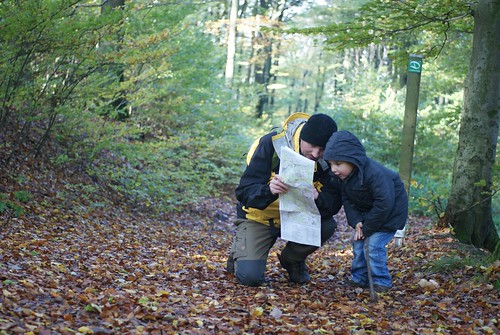
Maybe we should all challenge ourselves now and again to go retro for a while. Try visiting a city and see how well you can survive without TripAdvisor, Google Maps, Uber etc. See the sights with a map and find restaurants by asking people. It works, but just in a different way. If we lose that ability we lose our resilience.

Then there's the issue of the environmental impact of technology. I have been working enthusiastically with webinars and digital conferences as an answer to the need to reduce the carbon footprint of frequent flying but we also need to realise that technology has en enormous impact too. All our devices and gigantic server halls that store our data are extremely damaging to the environment, not to mention the ever-growing mountain of electronic waste that is all too seldom recycled.
But of course digital technology is just as physical as any other technology. There is an enormous infrastructure behind the internet. The production of computer chips requires complex factories and lots of energy and other resources.
I'm not going low-tech (yet) but I am attracted to the idea that we embrace digitalisation with more caution than before and dare to maintain contact with the skills that digitalisation is trying to make obsolete. We need to be able to work on both sides of the digital divide and develop a functional resilience. You never know when you may need to work out something for yourself again.

Sunday, February 9, 2020

The unheard students


Despite a wealth of reports and studies on the importance of lifelong learning and the need for professional development and reskilling, the focus of most higher education institutions is still firmly on traditional full-time campus programmes aimed at young students. Mature students studying part-time and mostly online are generally peripheral and invisible to the institution's core business. A new report from HEPI (Higher Education Policy Institute) in the UK, Unheard: the voices of part-time adult learners, raises this issue and gives a voice to these unheard students. There has been a dramatic reduction in the numbers of mature students studying in England over the past 5 years and even though the trend isn't completely shared by the other nations of the UK there is a need for a new approach. Higher university fees in England and Wales have certainly excluded applications from students from disadvantaged backgrounds. However it is not simply an issue of high fees. A similar trend is visible even here in Sweden where there are no fees, but a policy decision to focus on traditional campus degree programmes has led to a drop in the number of online courses available to mature students.

Of course there are open universities in many countries around the world who address this issue and offer flexible higher education to this important segment, but since demand is growing we need more institutions to widen their scope. Governments seldom make significant investments in lifelong learning and universities are still primarily research institutions with an attractive campus as their physical presence in the community. Say the word student and most people think of young people between 18 - 23 who study full-time on campus and this image is reflected in the imagery of practically every university's website. However, for most mature students full-time campus study is simply not an option. You cannot just give up your work and move your family to a campus city. The vast majority of mature students study part-time and the report outlines many of the barriers that they have to overcome. To understand this target group universities need to understand that mature part-time students have a different profile from full-time campus students:
  • They do not identify themselves primarily as students. Their identities as parents or professionals are much stronger and as a result their ties to the institution where they study are much weaker than traditional students.
  • They are interested in finding a course that is flexible and fits their existing lifestyle and are less interested in which institution provides it.
  • They tend not to join student unions and their voice is seldom heard on faculty boards and committees.
  • Because of the difficulties of managing part-time study, work and family commitments many mature students have to be very adaptive and creative to complete their studies. The existing structures do not help them.
  • They are often unfamiliar with the study skills and academic terminology that are taken for granted in a campus setting and this can cause confusion as well as creating feelings of inadequacy.
  • At the same time, mature students are often highly motivated and resourceful since course completion can help them into a new career or give them opportunities for advancement. They have clearer goals for their studies than many campus students.
The report raises concern that the current lack of incentives and opportunities for lifelong learning, particularly in England risks creating a serious level of inequality.

The crisis engulfing part-time adult learners in England points to an impoverished future in which higher education morphs into a purely full-time experience for 18-year olds fortunate enough to be born in the right place, attend the right school and gain the right A-Level grades. No more ‘second-chance’ transformations, no more learn-while-you-earn, no more enriching learning with contributions from adults who can bring different life experiences. Flexible opportunities for those disadvantaged individuals who cannot study full-time may all but vanish.

Changes are urgently needed and many of the report's recommendations can be applied in other countries around the world. One major factor is better recognition of prior learning, especially relevant workplace experience, and this would help reduce the study time necessary for a qualification. Another important factor is better guidance in the transition from adult education and non-formal learning into the formal university system. This is referred to as access pedagogy and can include preparatory courses and online guides focusing on study skills and academic writing and generally developing the students' confidence and resilience. Once accepted into a course the many students who are new to higher education will need initial extra support and tutoring is seen as particularly important:

... recognising some students will feel they do not belong, will feel they are transitioning ‘across separate worlds with no guidebook’, and will progress as a small and isolated cohort – so support students with tutors who will continue the higher education journey with them.

This support could come from various sources and not necessarily from university teachers. Support could come from local learning centres or from more experienced online students who could act as mentors. With such scaffolding in place there will be fewer dropouts and society will benefit from more people getting the chance to reskill and upskill. We keep hearing about the lack of qualified skilled people to fill vacancies in both the public and private sectors and it's time to do something about it.

Wednesday, July 24, 2019

Platform literacy - an essential future skill

Photo by Burst from Pexels
The internet is increasingly becoming an arena for surveillance and unauthorised exploitation of users' personal data. We need to raise our awareness of what our favourite platforms and apps are doing with our data and develop strategies to limit the damage. This will mean spreading our risks by using a patchwork of different platforms so that no one platform completely "owns" us. Some really useful platforms and tools will have to be ditched and replaced by something less cool but much safer. Security and integrity must come before convenience and coolness. This discussion has to be tackled in education, both in schools and universities.

This is the theme of a series of articles by Bryan Alexander on EdSurge, Follow Along With a Grad Seminar About Edtech. He describes a course he's running that gets students to discuss and investigate the pros and cons of digital technology in both society and education. Part five of the series interested me the most, Students Size Up Edtech’s Dark Side, focusing on the key problems we face today in terms of digitalisation. They identified three main areas of concern:
  • Tech addiction - social media and gaming are designed to keep us hooked.
  • Digital divides - inequalities in internet access, devices, support, digital literacy etc.
  • Privacy and digital "colonialism" - exploitation of personal data, provoking outrage as a business model, largely western and white corporations dominating the global digital space.
There are no simple answers here, not even complex answers, but we all need to become more aware of what is going on and be able to make mature decisions about which technologies, platforms and tools we should embrace and which we should steer clear of. For educators, it's about striking a balance.

The students hope to infuse an awareness of these issues into their professional practice, driving them to seek to address them through their thoughtful and creative work. Ultimately we remained committed to exploring technology in education—but with a more balanced attitude, greater concerns and a deeper awareness of edtech’s social dimension.

As a footnote to this I have recently installed a privacy app called Jumbo on my mobile devices that alerts me to possible vulnerability in Facebook, Google, Twitter and others. Seems to do the job so far but if anyone knows better please share your thoughts.


Wednesday, May 15, 2019

Offline digital resources - connecting the unconnected


In many parts of the world the idea of online education is still only a dream. Rural communities lack internet connectivity and even if mobiles are used, the networks can only offer basic services like voice and text. Refugee camps around the world are full of children who need to learn but lack books and educational resources. There are plenty of initiatives that offer education based on low bandwidth text and voice services but how can people learn basic internet skills that may be so vital for the future?

One inspiring solution to this is a non-profit initiative called KIWIX that allows you to download Wikipedia, Wiktionary, Wikimed, WikiVoyage, Project Gutenberg, and Stack Exchange as compressed content packages and then be able to browse and read them offline on virtually any device. The teacher first needs to be able to download the packages but once that is done the material can be distributed to, say, pupils in a school, using a specially designed wifi hotspot. All the software and content are all free to download and use.

KIWIX provides free software to bring free knowledge even to remote places. This may be a school on the countryside in a developing country. This may be you on a plane or in the wilderness. Wherever you go: KIWIX gives you access to Wikipedia, WikiVoyage, Project Gutenberg, and a lot more free content from the Internet – even if you don’t have an Internet connection.

Since Wikipedia is available in so many languages this solution offers schools in rural areas or refugee camps access to valuable educational resources when printed school books are either unavailable or too costly. Access to this type of online material can be vital for speakers of "smaller" languages and there are many cases of educators collaborating on developing their language's Wikipedia content. School books may be impossible to afford or even non-existent but by developing Wikipedia and using solutions like KIWIX teachers can give children access to educational resources and help them gain basic internet skills without even internet access.

The website describes successful applications of KIWIX in places like Ghana and Cuba where internet access is limited. Another option suggested is to provide access to sites that are blocked and censored in some countries, such as North Korea, though the risks of doing that may outweigh the benefits.

Sunday, December 2, 2018

When learning gets real

Photo by Headway on Unsplash
Student assignments (essays, group work, reports) are all too often written for an audience of one, namely the teacher, and for the sole purpose of providing a basis for grading. The student will adjust the effort according to the weight of the assignment (number of credits available) and try to meet that particular teacher's criteria. The idea that anyone else might benefit from the assignment or that it should have some real impact outside the confines of the classroom is seldom considered. However, the assignment can be transformed by making it public or better still aimed at a wider audience which can benefit from the findings. Learning can be transformed when the audience is expanded and the results can make a difference. In addition, most employers are looking for evidence of practical experience so let's make sure that assignments are as real as possible.

This is nothing new of course but the potential was reinforced for me during a seminar I attended in Beirut, Lebanon, this week, Skills needed for the twenty first century and their impact on Teaching and Learning in Higher Education.The afternoon session featured interesting examples of how learning is enhanced when a course becomes a stage and the results of the students' work benefit a wide and even global audience. Several speakers described how business simulations generate high levels of student engagement and provide a realistic setting for developing decision-making and teamwork skills. This is combined with teaching and plenty of feedback and tutorials from the teachers. Simulations do indeed generate a high level of student commitment but the bar can be raised even higher when you move from simulated activities to real problems in real organisations and let the students interact with professionals in their field. Two examples in particular stood out for me.

Corporate virtual mobility
One way of raising the bar for students is allowing them to do projects for companies and thus develop their skills, gain work experience and learn to collaborate online and meet real deadlines. A great example of university-industry collaboration was from Holy Spirit University of Kaslik (USEK). They had first linked business students with an international company that was interested in breaking into the Middle East market. The students spent 2 months working as marketing consultants for the company, under the supervision of their teachers and were constantly in contact with company representatives. The final product was a marketing survey that was of great practical use for the company whilst the students had been able to put their theoretical knowledge into practice and also gained practical work experience for their CVs. The success of this venture lead to the university linking up with the Spanish-based academic business network, Telanto. Telanto links companies who have problems to solve (challenges) with suitable university classes who can try to find a solution to these challenges. Students work intensively with the company to solve the challenge and the result is beneficial to both sides. In the case of USEK, several students were asked to join an internship programme with the company or even offered full-time employment on graduation. This is a further example of virtual mobility but this time the mobility is with a company rather than a university. Experience of working in virtual international teams to solve problems is extremely attractive in today's job market and I think we will see many more ventures like this in the future.
See slideshow: Teaching Through Real Cases in Collaboration with the Industry, Tina Habib (USEK)

International film festival
Notre Dame University (NDU) in Beirut organises each year an international film festival featuring short films from young film makers under the theme The power of youth. The festival has an impressive international reputation and attracts a wide audience but the most interesting aspect is how the festival is so well integrated into the academic work of the university with students of many disciplines helping to plan, produce and run it. Film students get the chance of international exposure and students from other disciplines are able to get hands-on work experience collaborating with professionals and working to strict deadlines. Workshops and master classes are run by professional film makers as part of the curriculum. Organising the festival is an all-year activity and students are able to weave their way between theory in class and practice in the festival, often working in multi-disciplinary and international teams. See the slideshow: On the ground. The case of NDU International Film Festival, Nicolas Khabbaz (NDU).

Linking theory with real-life practice and solving real problems take learning to a new level. If you then add elements of internationalisation, virtual mobility, problem-solving and collaboration into the mix, the experience becomes so much richer than in a traditional academic setting. Student engagement levels were much higher since they could see that their efforts really made a difference and there was a genuine sense of pride at contributing to a final product that gained public approval.

See all the slideshows from this seminar (including mine!).


Tuesday, May 15, 2018

Lectures as performance


The danger of lectures is that they create the illusion of teaching for teachers, and the illusion of learning for learners.

This quote, generally attributed to one of my favourite authors Albert Camus (though I can't find what work it is taken from after about twenty minutes of searching), is often used by those who want to scrap the traditional lecture and replace it with more active forms of learning where the teacher facilitates and mediates rather than being the headline act. The global stereotype of higher education is of the gigantic lecture hall filled with students and the brilliant professor on the stage. It's what many students expect and what a lot of institutions still try to provide though most lectures fall far short of the ideal. Lectures are popular because they are easy to produce, can be delivered to large groups of students and are based on the view of education as consumption of content. But today many institutions are moving towards pedagogical models that focus on active learning, co-creation and collaboration and the physical landscape of the university is changing rapidly as more and more active learning spaces replace the old lecture halls and fixed-desk classrooms. Some universities have gone as far as to scrap the lecture hall completely though they continue to produce them in a digital format on their media platforms.

However, I believe that the lecture still has an important role to play in education as long as it is used wisely and sparingly. That was reinforced for me after reading an article by Michael Merrifield in Times Higher Education, University lecturers should be engaging raconteurs, claiming that the value of a lecture is in terms of its ability to engage and inspire and as such the lecturer must be, above all, a storyteller, a performance artist. It's not about going through the facts and theories that can be read in a book or article, it's about building a narrative that will inspire, provoke thought and challenge the audience.

So what is the point of a lecture? To be honest, I think it is something rather simple. It is to impart knowledge the lecturer currently has but the students do not, through a narrative that is more entertaining than reading the same material out of a book. So, when lecturing, I am not a sage on a stage, a phrase that is clearly intended as deprecating as well as being conveniently alliterative. I am, hopefully, an entertaining storyteller, which also sounds deprecating, but I don’t think it is.

Maybe lectures are about creating illusions but not in the sense implicit in the quote at the beginning of this post. The secret to a good lecture is creating the illusion of a compelling narrative, where you teach ideas and concepts by weaving them into a story with elements of surprise, suspense and inquisitive engagement. The lecture should be an event rather than an everyday ritual and as such it can be a very valuable teaching tool but only when well planned and delivered with enthusiasm. If you want to lecture then you need to ask yourself these questions:
  • Are you sure that a lecture is the best way to engage the learners in this topic? 
  • How can I engage them in my narrative? e.g. short teaser video/quiz to stimulate interest before the lecture, interaction using digital tools, short buzzgroup activities, creating suspense, use of props.
  • What happens after the lecture? Is there a (digital) space for reflection, questions, follow-up work?
Your enthusiasm and ability to communicate effectively can make all the difference. Above all, make it unmissable! 

Sunday, October 8, 2017

Invisible skills


A recurring theme in the media is the perception that universities are not equipping students with the skills demanded by employers and that there is a serious gap between theoretical knowledge and practical work skills. One common complaint is that university degree certificates generally focus on describing mastery of content rather than the development of soft skills such as critical thinking, communication, collaboration, leadership, digital literacy etc. Of course, matters have improved over the last 20 years with learning outcomes often including practical skills and many programmes that include work experience and close cooperation with industry. However, there still seems to be a problem in reliably assessing soft skills and including this in credentials.

A new report, Skills, Competencies and Credentials, by Alan Harrison (Higher Education Quality Council of Ontario) investigates this issue and argues that university credentials still fail to provide the information that employers require when hiring staff.

This state of affairs does not serve most undergraduate students well: the graduating student’s credential and the associated transcript indicate the extent of the student’s knowledge of content, but neither directly conveys any information to employers about the level of the student’s skills. As a result, employers, in respect of most undergraduate degrees, must infer the level of skills from information about content knowledge.

The report describes an awareness gap; the problem that students themselves are often not aware of the skills they have developed at university because those skills were not explicitly part of the assessment. Developing critical thinking, for example, is integrated in all courses but is often done so in a manner invisible to the students and not explicitly tested. Many projects and assignment aim to develop creativity, teamwork, communication and organisational skills but that aim is not always clear to the students nor are the skills explicitly developed or assessed and recognised. 

Harrison then looks at several attempts to address these issues such as competency-based degrees and e-portfolios and comes to the conclusion that greater cooperation is required between universities and employers in determining key skills and agreeing on how to assess these.

Universities must come to terms with two facts: first, their undergraduate programs are where general skills are developed and second, it is these skills that make the graduates of these programs employable. Universities need to work with each other and with input from employer groups to the point where they agree on both what these skills are and how they are most effectively assessed. Once this is resolved, the next step will be to embed these skills into the curriculum and include the outcome of the assessment of these skills in a concise student record that quickly and effectively tells employers what the graduating student knows and can do. In short, the universities need to do all they can to help students make the match with employers.

One promising element missing in the report is the growing use of badges by universities to provide evidence of soft skills. Badges are awarded to students who meet set skills criteria during their course work and can be a very useful supplement to the more content-based formal credentials. However as long as badges are not tied to the hard currency of credits they may be seen as merely optional extras by students rather than as essential elements of their degrees. I wonder if badges are then the real answer. The answer lies probably in providing more comprehensive credentials that describe both the knowledge and skills acquired. 

Reference: Harrison, A. (2017) Skills, Competencies and Credentials. Toronto: Higher Education Quality Council of Ontario.

Wednesday, July 6, 2016

Roadmaps for online learning

Navigator by Tabsinthe, on Flickr
"Navigator" (CC BY 2.0) by Tabsinthe

There is no shortage of trend reports and guides on the future of online learning but sadly too few institutions who are using them as a base for their strategic planning. The challenges ahead for higher education are complex and require new approaches and innovative solutions in a sector that is so deeply rooted in tradition and history. This tradition coupled with the high level of respect and credibility that university qualifications still command makes it all too easy to think that a business-as-usual strategy is the safest course to plot.

The Canadian educational technology support organisation Contact North published earlier this year an excellent trend overview entitled The future of online learning. This describes the increased complexity of today's educational landscape with new actors, models and credentials jostling for attention and challenging the traditional setup. At the same time universities are under increasing financial and regulatory pressure to be more efficient, result-oriented and accountable with a wider than ever range of students with high expectations in terms of personalisation, flexibility and work relevance. The report examines what this means for higher education institutions and notes that a new ecosystem is developing to cater for a much more diversified and demanding target group. The gold standard of the university degree will be challenged and augmented by new types of credentials including micro-credentials like badges. Short and flexible programmes with strong links to workplace experience will allow many to combine work and study without the need to spend several years on campus. This will demand new methods for assessment, recognition of prior learning and the development of new forms of quality assurance. This doesn't mean that the traditional university model is going to be overthrown but it does mean that there will be more alternative paths to learning.

Source: UOC eLearn Center, Witthaus, Padilla, Guàrdia and Campillo (2016, p.6). 
An example of how to use these trends and feed them into a university's strategic development is seen in the results of the FUTURA (Future of University Teaching: Update and a Roadmap for Advancement) project. This describes the process of applying trends in online learning to teaching practice and university strategy at Universitat Oberta de Catalunya (UOC); read more in an article from the UOC's eLearn Center, IDEAS: a new framework for next generation pedagogy.

FUTURA identified pedagogical trends and innovations globally, and analysed related institutional examples. The FUTURA report proposes a framework for describing current and emerging practice in teaching in online higher education under the acronym, IDEAS.

The IDEAS model (explained in the image on the right) provides a sound basis for re-examining pedagogical development at any university and reinforces most of the conclusions of Contact North's analysis. Everything described here is already taking place but mostly in a fragmented way through projects or innovative faculty with few institutions developing a comprehensive strategy. I suspect that the prime movers are distance education universities since their focus is online but campus universities ignore this at their peril.

These alternative paths are already attracting an increasing number of school leavers who are becoming less likely to head straight to university campus. A new article in eCampus News, Could these 3 burgeoning nontraditional pathways be a boon for traditional institutions? describes how many American students are trying one or a combination of the following before considering campus:
  • a gap year or two with internships and self-directed learning
  • online studies via open courses
  • getting hard skills by practical experience
“College costs keep growing and student debt is over one trillion dollars,” explained Richard Wang, CEO at Coding Dojo in a statement. “These alternative education options can help keep student debt under control, while providing individuals with real-world experience and skills employers are looking for in job candidates.”

Trends are becoming reality though not always in a revolutionary and disruptive way. New opportunities and pathways emerge often largely unnoticed until they reach a level that cannot be ignored. I have previously likened these changes to a glacier; the landscape is being radically changed but the changes and the pace of change are not always evident to those who are standing on the glacier itself. Only when the glacier melts will we see the full extent of the change. Those institutions who realise they are on a glacier and start changing now will be able to meet the challenges ahead. The most dangerous option is business as usual, thinking that the ground under our feet is solid.

Wednesday, January 27, 2016

The distraction society


We live in a world where distraction is default and uninterrupted concentration a luxury that few are able to find. I'm writing this in a cafe with rather irritating and hard to ignore music in the background (it's almost impossible to find a silent cafe) as well as screens showing brightly coloured adverts and the usual billboards and logos on everything. Add to this the siren's call of my mobile buzzing to alert me to a new e-mail, text or update and it's clear that you need enormous willpower to shut out the distractions and really concentrate. We've become so used to distractions that we don't even realise their effect.

A post in Inside Higher Ed, Digital Distractions, describes the findings of a new article on digital distractions in class and student attitudes to them, Digital Distractions in the Classroom Phase II: Student Classroom Use of Digital Devices for Non-Class Related Purposes (Journal of Media Education). Most students admit there are disadvantages to multitasking in class, even resulting in lower grades, but simply can't stop themselves, citing the main reasons as wanting to keep updated and fighting boredom. However the vast majority believe that they can handle the distractions and are completely against banning devices from the classroom. The comments to the article show divided opinions among teachers from those who advocate banning mobiles completely in class to more pragmatic attitudes of allowing but trying to promote more enlightened use. I think the answer lies in the whole class agreeing on a common class culture of how to deal with distractions even if this can take time to establish. The difficulty is that society is built on distractions, digital or otherwise, and its a mindset that is hard to break.

Digital media and devices have indeed increased the distraction level significantly but there are many more forms of distraction built into today's society so the digital element is not the villain of the peace but simply a symptom of a wider trend. Digital tends to magnify existing trends in society but is not the root cause. Ubiquitous music, news updates, advertising and the ludicrously overwhelming range of shops, products and services that clamour for our attention mean that distraction is now default, especially for those born in the last thirty years or so. We simply accept distraction as perfectly normal and the problem for education is helping students to find ways of escaping and consciously creating their own bubbles of concentration. In all levels of education as well as in workplaces we need to discuss issues like distraction, attention, focus and work on consciously creating such concentration bubbles for ourselves where we allow ourselves time to think and concentrate. This is a real 21st century skill and takes time and courage to develop.

Saturday, September 26, 2015

PISA - worth digging below the headlines


Most people don't really like change and secretly hope that any new challenges will simply go away and we can all get back to normal again. This is certainly true with educational technology and every time some study indicates that technology has not made the impact many had hoped for there is a great cry of "what did I tell you" from the tech skeptics, often lead by the popular media. In the past couple of weeks we've seen a new wave of this after a new OECD/PISA report, Students, Computers and Learning, indicated that pupils' test results in reading and maths had not risen despite considerable investment in technology (laptops and tablets for all). The findings showed that pupils who spent most time on the net often had poorer test scores and this was taken as "evidence" that technology was not helping education.

... even countries which have invested heavily in information and communication technologies (ICT) for education have seen no noticeable improvement in their performances in PISA results for reading, mathematics or science.

This lead of course to headlines about the dangers of technology in education and gave fuel to arguments that the use of mobiles and laptops should be restricted. An example of the simplistic interpretation of this report was the BBC article, School technology struggles to make an impact, nicely commented on by Steve Wheeler in his blog post A message to Auntie. The truth, as ever, lies in the small print and the OECD report was actually arguing for more enlightened use of technology in education.

The OECD report explained the poor results by stressing that the focus of many schools and authorities has been on simply implementing technology without first reviewing and adapting the pedagogy and giving teachers adequate support. The report outlined several weaknesses in many schools' implementation of digital technology (see slideshow below):
  • overestimation of the teachers' and students' digital skills
  • naive policy and implementation strategies
  • resistance of teachers and students
  • inadequate pedagogy and instructional design
  • poor quality educational resources and software


What seemed on the surface to add fuel to the tech-skeptics in education was in fact a call for a deeper and more informed integration of technology where learning is always the focus but where technology offers a wide range of supportive tools and methods. Teachers need to see technology as an enabler rather than a threat and that digital tools can complement and enhance traditional methods rather than simply replace them as many fear. As I have written so often we need to stop these polarised discussions of digital versus traditional and focus on the pedagogy with a wide range of methods and tools to support it.

These issues are further discussed in an article from Merlin John Online, Computers and Learning: Missing the Connection, which describes a number of impressive examples of schools who have achieved great results by implementing a more enlightened approach to the use of educational technology. The head of one school, Jonathan Bishop of Broadclyst Community Primary School in England, makes a particularly apt statement:

ICT on its own is not going to raise the standards of education or the outcomes for children. What will raise those standards and outcomes is high-quality teaching; ICT used appropriately and effectively in the hands of capable professionals can deliver greater efficiencies, more personalised learning, enriched opportunities and greater outcomes for children.

As is often the case, we should not simply blame the technology but the superficial implementation of the technology. PISA's reports are often criticised by educators for simplifying education into league tables but if you read beyond the headlines they often have very sensible proposals down in the small print. This report is a good example where we need to dig to find the valuable information.

A final statement in the Merlin John article sums it all up:

In other words, is it the misuse of ICT, rather than the technology itself, that we should be blaming?
 

Wednesday, September 9, 2015

The end of the career path?

The highway bridge to nowhere, Cape Town by jbdodane, on Flickr
Creative Commons Creative Commons Attribution-Noncommercial 2.0 Generic License  by jbdodane

I have been working in the field of educational technology, distance learning, e-learning and so on for 11 years now. It has been a fascinating journey from my almost total ignorance at the start to a more qualified understanding today. By discovering openness and social media I was able to develop a rich global professional network and by sharing my thoughts and reflections I got invited to all sorts of interesting projects, conferences and networks. It has been indeed a life-changing experience even if I sometimes feel we keep discussing the same things and sometimes get frustrated by the painfully slow progress in the field. The field is still characterised by projects, pioneers and enthusiasts and there is still a strong common feeling of fighting the establishment that binds us all together. We all meet regularly in different constellations at conferences and in projects as we try to help our colleagues and institutions understand the potential of using today's digital media as tools for learning.

But what happens when we succeed in our mission, when all teachers use digital media and tools as a natural part of their teaching and when our authorities, schools and universities have digital strategies? A new post by Tony Bates raises this issue, Is there a future in online learning?, by stating that There is no (long-term) future in being an online learning specialist. Basically don't plan your career around this field. This seems rather surprising given the growth of educational technology but he too sees a future when educational technology becomes fully embedded into teaching and the role of the educational technologist becomes largely superfluous.

For the next five to ten years, there should be plenty of jobs for highly skilled instructional designers, but sooner rather than later institutions will be forced to ensure that their instructors are trained and qualified to teach effectively with technology. It will be a core part of their work, and as a result the demand for specialist learning technology support will decrease. The main role then will be providing some of the initial training for post-secondary instructors. 

There will always be a role for specialists but it would be unwise to plan for the log-term since there is little room for advancement in the academic world unless you can combine it with other academic pursuits. At the same time I think we will see the redefinition of many aspects of education and learning in the coming decade. The roles of universities, schools, teachers and students as well as the value of traditional credentials and educational structures are likely to be redefined. Stephen Downes comments on his blog OLDaily that there may not really be a future in teaching since the traditional teacher's role is rapidly fragmenting into different specialisations.

Maybe the notion of a traditional career path is what's really under threat and that we all need to be equipped to deal with changing roles and adapting to  new circumstances. Like many people I have changed path several times in my life and have had to learn new skills and subject areas when a previous avenue was closed. There is maybe no long-term future in being anything in particular. The idea of following a particular career path may soon be obsolete as life becomes more like a pinball machine than a straight and steady ladder. I'm sure that most of today's e-learning professionals will be doing something different in 5-10 years. What you need is the ability to learn, relearn and adapt. 

Sunday, October 19, 2014

New roads to certification

kumiyama00 by Ken OHYAMA, on Flickr
Creative Commons Creative Commons Attribution-Share Alike 2.0 Generic License  by Ken OHYAMA

When I was trying to decide what to study at university back in the mid-seventies I was told that it didn't matter so much what I studied, the possession of a good degree was enough. Once in a job the organisation would provide me with the training needed for that sector. So I studied English language and literature simply because it was interesting and didn't really think about employment until my final year when I realised that my employment prospects were somewhat limited. That sounds extremely irresponsible and naive today when higher education makes you ready for specific employment and companies expect you to be productive from day one. If degrees are the hard currency of credentials then universities still have the sole right to print that currency, accredited by national bodies and subject to rigorous controls that guarantee the credibility of that currency.

However in recent years that exclusive role has come into question as employers become increasingly critical that universities are not teaching the skills needed in the modern workplace. The degree certificate states what subjects the graduate has studied and how long it took but says little or nothing about what skills the student has mastered and concrete evidence of those skills. What really is the difference between the grades in a qualification, how much more skilled is an A student compared to a B student? An article in Harvard Business Review, The Real Revolution in Online Education Isn’t MOOCs points to competency-based learning as the game-changer in higher education rather than the over-hyped MOOCs. Competency-based learning is about credentials for proven skills, often by at least partly recognising practical work experience and validating prior learning. Traditional degrees focus on years of study whereas competency-based learning sees time as a variable.

Competency-based learning flips this on its head and centers on mastery of a subject regardless of the time it takes to get there. A student cannot move on until demonstrating fluency in each competency. As a result, an employer can rest assured that when a student can use mathematical formulas to make financial decisions; the student has mastered that competency. Learning is fixed, and time is variable.

Using this method you can be awarded credentials without attending courses if you can prove that you fulfill the requirements. This demands that the awarding institutions have sound validation processes and can verify that the candidate has the competence required but the advantages are clear. Companies can employ people knowing that they have the right skills and learners can get recognition for what they know without always having to take lengthy courses. If you have the skills and knowledge a one year course could be completed in half the time or less. Greater global mobility and migration means that fully-qualified and skilled professionals are forced to repeat all or a great deal of their education in their adopted country simply due to lack of recognition. This can often be so demotivating that the person simply gives up all hope of ever working in their field and resigns herself to lower paid and less skilled work; a lose-lose situation for the country and the individual.

One variation on this theme is MOOC pioneer Udacity's venture into customised nanodegrees; six to nine month project-based courses designed in collaboration with major companies with the aim of developing key skills for employability.

Nanodegrees are designed to help you become job-ready. Similar to our course experience, you'll work on projects. Unlike our individual courses, you'll need to submit your projects by a given deadline for validation. Each course and project builds on each other so, at the end, you'll have a portfolio of projects to demonstrate to potential employers that you're job-ready.

But is this really a university education? No it isn't but there is clearly a need for a more varied ecosystem of qualifications otherwise major companies would not be so interested in competency-based learning. Many colleges are already working in this field and many will offer both traditional 3-4 year degrees as well as competency-based certifications. I still think there is a place for the more rounded education and life experience of a traditional university education but it is no longer the only path to employment. Education is undoubtedly the key to economic development but we are beginning to realise that this does not mean simply sending everyone to university. University's do some things very well but we need credible alternatives too.

Tuesday, September 9, 2014

Take note

David Truss (@datruss) started something when he tweeted this photo showing an extreme version of a common phenomenon in classrooms and lecture halls everywhere. The ensuing Twitter discussion then lead to a blog post by David, 4 notes on taking notes.

The problem with this photo is that the students aren't taking notes at all, they're simply copying. They do this because the information shown on the board is only available at that moment and represents a pedagogy of scarcity and exclusivity. If the material was published on the net they wouldn't be jostling to get the best photo, they might instead be discussing the issues raised by the material. Of course it's handy to quickly take a photo of a diagram or slide that you see in class but it isn't worth anything until you actually process the information yourself. The questions that immediately arise for me are:
  • Why didn't the teacher make the slides available to the students in advance and used class time to discuss the material?
  • Why not devote more time to explaining how to take meaningful notes and the importance of processing and reworking information rather than simply copying verbatim.
  • Students are still stuck in the traditional view of learning as the memorisation of facts. 
In David Truss' blog post he comments that taking a photo is a lousy way to take notes since it is not searchable and you haven't processed the information presented. It's the same as copying a friend's notes on a lecture you missed. You get the bare facts but miss the internal processing of deciding what to note and how to express it that is so essential to learning. The learning is not in the notes it's in the process. Instead of copying these students should learn to use mind-maps and other note-taking methods to process and rework what they hear in class or in other learning spaces.

Take notes or create notes? There are times when copying notes might be a useful thing to do, but for the most part, that is a rather passive way to learn information (unless you use specific strategies to help you take those notes). Students creating the notes, or doing a task whereby the notes are used to help construct a learning experience, is far better than copying words onto a piece of paper, or into a digital document, or for that matter, taking a photo of the information.

This leads into another ongoing discussion about note-taking; whether it is better to take notes digitally or by hand. I have always believed that it's not the device or the medium that matters, it's how you work with them but an article in Scientific American, A Learning Secret: Don’t Take Notes with a Laptop, claims that handwritten notes are actually more effective. The reason is that we can usually type fast enough to simply write what is said whereas handwriting forces you to summarise and select the information you note and therefore allows you to internalise the information to a greater extent.

Technology offers innovative tools that are shaping educational experiences for students, often in positive and dynamic ways. The research by Mueller and Oppenheimer serves as a reminder, however, that even when technology allows us to do more in less time, it does not always foster learning. Learning involves more than the receipt and the regurgitation of information. If we want students to synthesize material, draw inferences, see new connections, evaluate evidence, and apply concepts in novel situations, we need to encourage the deep, effortful cognitive processes that underlie these abilities. When it comes to taking notes, students need fewer gigs, more brain power.

The moral of all this is not to abandon technology and return to the good old days as some might hope. It is once again a lesson that we need to learn to use the right methods and devices in the right situation and for the right reasons. Taking photos of someone else's notes or copying verbatim may give an illusion of learning but are an example of using powerful technology in the wrong way. We need to learn to use our devices wisely and be more aware of their possibilities and limitations. Instead of seeing a divide between old and new we should see a wide range of tools and methods all of which can help us learn as long as we choose wisely.

Note: I always try to credit the photos I use but in this case I don't know who took the original. If I have infringed on any copyright here I will of course remove the photo and link to it instead.

Tuesday, August 26, 2014

Someone to watch over me


One of the main arguments for online education is that it allows you to study at your own pace. Course material, asynchronous discussion and collaborative tools let you study whenever you want and wherever you are. This works for those who have the necessary self-discipline and study skills but it could be claimed that this flexibility is the Achilles heel of online education. Most people lack the necessary skills to take advantage of online education and as long as those skills are not developed in schools, adult and vocational education this mismatch will continue.

Laura Vanderkam questions whether we are overestimating our self-study skills in her article on Fast Company, Can people really learn at their own pace?. The article's focus is on corporate training but the conclusions are relevant even to higher education and in particular MOOCs. An increasing amount of training is carried out online and the flexibility and scalability of online training clearly appeals to top management since it allows training to take place whenever the staff have time and does not demand costly formal training days. However when left to our own devices it's hard to prioritise online learning since there are always more pressing tasks that demand attention. Independent online learning can work if there is a clear link to tangible career-enhancing rewards or you have high internal motivation. Otherwise it's hard to keep up the momentum and the result is that we drop out or slowly fade out of the course. I suspect that many of the people who fail to complete a MOOC simply didn't have the positive momentum that is provided by clear rewards, supportive teachers and a sense of belonging to a learning community.

Even if I feel perfectly comfortable with independent self-study I still find it hard to stay focused on an online course. I have a number of self-study projects that I start up with great enthusiasm but which fade away after a few weeks of admirable concentration. I've started studying many new languages this way acquiring a few basics but then when it gets more complicated I tend to find other things to do instead. A couple of years ago I signed up for a very traditional evening course in Arabic for beginners with the aim of at least learning the alphabet and basic phrases. The teacher was friendly but the teaching methods were extremely old-fashioned and uninspiring. I achieved my objectives mostly due to self-study but what kept me going was the "fear" of not keeping up with the class and "disappointing" the teacher. Despite my advancing years I became a schoolboy again and the simple motivation of not wanting to be worst in the class meant that I kept studying during the week. There was no interest in a continuation course so I thought I could go on independently using all the open learning opportunities I write so often about. The problem was that there was noone to impress, no class to keep up with, no teacher to please. It sounds incredibly childish but it points to a key problem with self-study.

The challenge for all online education, including MOOCs, is providing the support, encouragement, challenge and sense of common purpose needed to keep learners on track. I don't think it matters so much whether you meet a teacher face-to-face or online but most of us need to feel that someone is watching over us and has expectations. That person is often a teacher but it could also be a peer group. The most important factor is that someone out there wants me to succeed and wants to check how I'm getting on. Someone to watch over me.


Thursday, April 24, 2014

The fundamental things apply ...

Magnifying Glass by Auntie P, on Flickr
Creative Commons Attribution-Noncommercial-Share Alike 2.0 Generic License by Auntie P

Technology is driving radical changes in how we approach learning and education and this demands that students develop new skill sets to be able to work and learn in a world dominated by the application of digital technology. The question is how many of these digital skills are really uniquely digital and how many are adaptations of established principles? Aren't we often talking about fundamental skills and competences but applied in a digital context? Is being a good digital citizen so much different from being a good citizen?

An article by Sam Stecher in EdReach caught my eye this week, The Myth Of Digital Citizenship And Why We Need To Teach It Anyway. He questions whether the concept of digital citizenship is so different from just good citizenship:

The reason why is because there is no such thing as digital citizenship. It’s just citizenship. The rules don’t change just because you have a screen in front of you.

Perceived classroom problems with multitasking students is not essentially a digital issue. Students have always written notes to each other, doodled, daydreamed and messed around when the lesson becomes dull and the issue is one of classroom management rather than about digital technology. Similarly they can of course find irrelevant or misleading information on the net but they could find equally irrelevant material in the libraries and bookstores of the past unless they asked for help or had developed the skill of source criticism. The basic principles of good citizenship, argues Stecher, apply equally in the analogue and digital world; namely Is your use respectful, responsible, and safe? Whether the medium is digital or not the principles are the same. Taking control of your digital identity is all about showing respect for others' feelings and integrity, taking responsibility for your own actions and taking action to ensure the security of your passwords, profiles and keeping safe from virus attacks and suchlike.

The difference is that technology acts as a magnifying glass. Careless comments used to reach only a few ears and the damage could be controlled with a quick apology, whereas today such comments can go viral in minutes and can have disastrous consequences, destroying reputations and careers. Today everything digital is social and once you release a tweet, a Facebook comment, a photo or a film it's out of your control. We have extremely powerful tools in our hands and it takes time to learn to use them wisely. If there is a concept of digital citizenship it involves learning to apply these basic principles of respect, responsibility, critical thinking and reflection and applying them through the highly magnified digital lens.

The fundamental things apply, as time goes by.

Tuesday, September 3, 2013

MOOC limitations

We often hear claims that MOOCs will make top class higher education available to the whole world and that they will democratize higher education. This is true to some extent but a new article on E-learning Africa puts these ambitious claims into perspective: The underlying inequality of MOOCs. For many learners in the world the MOOCs are still inaccessible due to lack of infrastructure. Although there are numerous educational technology initiatives in developing countries the reality for most is that access to online learning is still a dream.

"There are a variety of mitigating factors that limit access to MOOCs, many of which are the same as those that also exclude disadvantaged groups from traditional educational models and stem from financial, geographical and educational disparity. In practical terms, sustained participation in a MOOC requires a set of resources and infrastructure that is a privilege, as many of us ... often forget. A reliable electricity supply, frequent and uninterrupted access to a device capable of going online and playing video and sound, and a secure, unrestricted Internet connection are essential starting blocks – as is a safe and comfortable space in which to learn."

Then there is the simple lack of time to study with long working days, family duties and chores that we in developed countries take for granted but that can take much longer to do in less developed countries. When you have to work 12 hours a day to keep going when do you have time to study? Our increasing interest in informal learning depends on us having significant leisure time to pursue such activities.

In addition to this is the fact that online learning requires advanced study skills, digital literacy and a high level of self-discipline that most people lack, even in affluent countries. The key to levelling the educational playing field is teaching people how to learn.

"A “basic level of education and the ability to study” spans everything from essential literacy and numeracy to self-motivation, being able to pursue independent research and practice of writing academic papers. Learners without these skills, let alone the foundation knowledge required to follow a university level course, will no doubt struggle to remain engaged."

Until these elements are in place the promise of open online learning (whatever acronym it goes under) will remain elusive for the vast majority. We have still a lot of work to do.

Tuesday, June 11, 2013

Prepare to be MOOPhD

Moo Cows by miseldine, on Flickr
Creative Commons Attribution-Noncommercial 2.0 Generic License  by miseldine

With Georgia Tech offering a degree programme in MOOC-format (or at least as an online degree) the next step in the process must surely be massive open online research. A fascinating article by Jon Dron of Athabasca University, MOOCs are so unambitious: introducing the MOOPhD takes up precisely this challenge; a massive open online PhD. It's not such a crazy idea but there are many important considerations and limitations.

Firstly the MOOPhD is not about awarding doctorates but providing resources to help students write articles and learn research skills. MOOCs can be provided to help teach research skills, improve academic writing, assessment skills, support for gaining funding as well as providing a wide network of peers to learn from and share experience. It's about providing scaffolding for the research process that is isn't always available on campus, at least to the same extent.

"A MOOPhD would, of necessity, be highly modular, offering student-controlled support for all parts of the research process, from research process teaching, through initial proposals, through project management, through community support, through paper writing etc. Students would choose the parts that would be of value to them at different times. Different students would have different needs and interests, and would need different support at different points along the journey. For some, they might just need a bit of help with writing papers. For others, the need might be for gaining specific skills such as statistical analysis or learning how to do reviews. More broadly, the role of a supervisory team in modelling practice and attitudes would be embedded throughout."

The MOOPhD would complement the formal process not compete with it. The post-grads would still have to publish peer-reviewed articles and write their thesis but would get considerable support from their peer network. The MOOC element could save universities from having to provide their own research skills courses. Dron also suggests crowd-funding as a possible source of research backing. 

It sounds promising but the last part of the article lists a number of barriers; from ethical issues to start-up costs and gaining academic acceptance. This one is not going to happen overnight but it shows yet another way the MOOC boom might benefit higher education, not through conflict nut through integration and enhancement.