Showing posts with label distance learning. Show all posts

Wednesday, December 27, 2023

Looking back - inspirations and highlights

Photo by Kalle Kortelainen on Unsplash

Oh dear, I realise that I have rather neglected my blog in recent months. After so many years of writing a post every week and sometimes more frequently I feel a bit ashamed at the long breaks this year. Since retirement my engagement in the world of educational technology has faded somewhat and I am finding other interests to fill my life. However, maybe it's good to look back at my journey over the past 15 years, remembering people and events that have inspired me and somehow summing up the experience. Since no one will have read the story through all those hundreds of blog posts through the years, here's a short retrospective.

I stumbled into higher education in 2004 after many years in adult education and corporate training. I got a job as coordinator of distance education and found the whole concept fascinating. I was inspired by the idea of higher education becoming available to all and not just for those who are able to move to campus and study full-time. I was sure that this vision would inspire governments to fund a shift in higher education towards lifelong learning and widened participation, driven by the development of digital technology. My focus was on trying to promote the benefits of distance education and persuading colleagues to offer more distance and online courses. I had a steep learning curve to understand the complexities of higher education. As a student I didn't really pay any attention to how the university was run or who does what so I felt completely lost at some of the meetings and discussions I attended in my first couple of years. Some aspects of academic life are still a mystery to me quite honestly. I made many mistakes but hopefully learned from most of them.

Inspirational visit to Canada

As I became more familiar with the field I began getting involved in networks with colleagues from other universities in Sweden and through this I got the opportunity to go on a study visit to Canada in October 2005. This was a life-changing visit, or at least career-changing. We visited universities in Vancouver and Edmonton to learn more about how they were offering distance and online education. We saw media production departments with over a hundred employees creating online course material at a time when we had no such unit. The most inspirational institution was Athabasca University, based in a tiny town in the wilds of Alberta but offering online education to students all over Canada and beyond. The idea of a distance university was never implemented in Sweden and I saw a model that we could implement if there was the political will. We had a great meeting with representatives from the university including one of my educational heroes, Terry Anderson, whose work got me really thinking about this new world I had stepped into. 

We also heard a lot about a new concept for us in the form of social software (later social media) and wondered how we could use this in education. I came home laden with notes, references and links and spent the following months investigating all sorts of digital communities and tools. We were busy getting acceptance for learning management systems but I was more interested in the future and started wondering what wonderful things we could do with these new social networks like Facebook, MySpace and Twitter as well as collaborative writing tools, blogs and wikis. As is often the case with visits like this I came home full of enthusiasm and was eager to tell eveyone about all the new things I'd seen and heard. But it's hard to transfer that enthusiasm to colleagues who are often already overworked and focused on current deadlines and priorities. 

EDEN

Another landmark event for me was my first EDEN (European Distance and E-learning Network) conference in Dublin in 2011. This was my first real taste of a major international conference in educational technology and it gave me the chance to listen to and meet some of the big names in the field as well as further developing my network. Once again, I came home with masses of references and ideas to follow up. Read my blog post on the conference and some memorable quotes. Since then I have participated in and contributed to many EDEN activities and have benefitted greatly from the expertise and experience of fellow members. The value of organisations like this was to realise that I wasn't the only person who thought that digital technology was a key to the development of education. The sense of community is so valuable when you are still trying to make sense of things and the presence of respected researchers and professors confirms that the field is not just a passing trend. 

Inspirational institutions

Over the years I been able to visit many universities around the world and opened my eyes to other ways of working with online and distance eduation. I realised that even if we have different cultures and contexts we all has so much in common in terms of how to apply educational technology in a pedagogical manner. Some visits were thanks to European or Nordic project funding whilst others were due to invitations to speak at conferences. 

One of the most inspirational was in my homeland, Scotland, namely the University of the Highlands and Islands (UHI). Their decentralised structure with 13 partner colleges and around 70 learning centres spread around the sparsely populated highlands and islands of Scotland inspired several projects in the hope of awakening interest in a similar model for Sweden. I particularly loved the way the boundaries between campus and distance have been blurred or even erased and the focus is on providing access to higher education wherever you live and with options for how you want to study. I have written several posts about UHI in this blog, most recently after a visit in 2019 as well as older visits such as in 2014.

I have always found the concept of open universities particularly interesting as the best way to open up education to all. Distance and online are essential features of these institutions since few of their target group can afford to move to a campus for several years. I have always admired people who study later on in life and manage to transform their lives through education without leaving their home area and thereby contributing to the survival of rural commuities. I have visited several open universities around the world. For example, Allama Iqbal Open University based in Islamabad, Pakistan, offering a mixture of distance and campus education to an annual enrollment of over a million students. Although the courses have a lot of online content and interaction it is simply not feasible to have everything online since so many people have limited or no internet access. I visited their publishing and mailing centre where enormous numbers of course books and compendiums are sent by post all over the country, making them one of the Pakistani post office's biggest customers. They were very much involved in digital content production and their staff were as well informed on developments as my colleagues back in Sweden but they had to offer a combination of digital and analogue in order to reach out to as many students as possible. Read my post on this visit from 2018.

In a similar vein was my visit to another open university working in difficult circumstances, Al Quds Open University, based in Ramallah in Palestine but with campuses aorund the West Bank and in Gaza. I was impressed by their TV studios and the fact they offered courses via broadcast TV to complement their online content. The difficulties of travelling between the different campuses made digital technology an essential part of all operations. I wonder how their institution will recover after the current brutalities in the West Bank not to speak of the appalling destruction going on in Gaza. Read more in my post from 2018.

Inspirational people

It would be impossible to name all the people who have inspired me over the years and helped me to better understand the field of educational technology and how it can be applied. However a few stand out and my shortlist has a distinctive Canadian flavour. As I mentioned above an early influencer was Terry Anderson of Athabasca University and in the spirit of the new networked world I discovered the concept of connectivism and openness thanks to people like George Siemens and Stephen Downes. I loved the idea of learning as part of connected networks and that people could learn together by sharing resources, discussing and collaborating. I saw a future where learning was ubiquitous and encompassed a wide range of formats, from traditional campus programmes to non-formal online study groups where the group members could decide together what and how to study. Another early influence was Morten Flate Paulsen from Norway, former president of EDEN and a leading light in Scandinavian distance and online education. I saw that online universities were not only possible but an essential factor in the development of wider access to higher education. 

However, as the years went by I began to realise that our favourite platforms, tools and communities were not as free and open as we had assumed and that they were driven by the same factors that have always existed - profit and greed. Reading Audrey Watters' now defunct blog, Hack Education, opened my eyes to the dangers of educational technology - profiting from our personal data, facilitating surveillance and locking us into proprietary solutions. Her predictions were often disregarded at the time but have proved to be disturbingly true, leading to my own disenchantment with the whole field.

My own blogging habit was developed with inspiration from long distance academic bloggers like Tony BatesMartin Weller, Maha Bali, and Steve Wheeler. I never reached their heights of course but I am amazed at how my posts have still reached far and wide. My greatest thrills early on were when one of my role models actually retweeted a link to one of my blog posts and I saw the number of site views suddenly leap. A simple retweet or like can mean a lot when you're finding your way - never dismiss such things as trivial!

Open Networked Learning

This open online problem-based learning (PBL) course started back in 2013 and I was involved as a course organiser and facilitator till 2022. It was certainly the most complex course I have ever been involved in and is run in collaboration with 12-15 universities in 5-8 different countries. Learners are divided into PBL groups to work through five scenarios on different aspects of learning in collaborative networks, aided by a facilitator and co-facilitator. We always tried to make the course as open as possible, indeed the whole course has a Creative Commons license, even if we had to move some parts behind log-ins later on to conform with the European GDPR legislation on data privacy. The course is still offered twice a year and you can find out more on the course site (Open Networked Learning).

I learned so much from each iteration of the course, both from my fellow organisers and facilitators but also from the participants. No names here but you all know who you are. Thanks so much for that amazing experience and I hope the course continues to develop in the coming years.

Networks and unexpected activities

Over the years I have built up a very valuable personal learning network based on social media activity (my blogs, Twitter, LinkedIn, Facebook and so on) as well as through the various organisations that I have belonged to and worked with. That network was a constant source of inspiration and practical help. Often I could post a question on social media and within hours I had several useful answers with links. One opening led to another and I found myself involved in several committees in Sweden, the Nordic region and internationally as well as lots of projects. Some of these took me well out of my comfort zone, working with people who were far more qualified and experienced, but as ever I learnt a lot and hopefully also contributed constructively. The most notable of those "uncomfortable" activities was being a member of the committee that wrote the standard ISO21001, Management systems for educational organizations. I had no previous experience of ISO and realised what an enormous organisation it is and the meticulous work involved in writing and developing standards. I was immensely impressed by many colleagues' attention to detail and ability to handle the constant revisions and discussions.

So, those were some highlights of my journey. I was able to follow many new paths thanks to the understanding of my university who often gave me the benefit of the doubt in terms of my external activities and projects. Often, I was able to cover a large share of my expenses through project funding and fees. It wasn't all success stories, there were quite a few flops and bumps and I was certainly a bit too hasty and enthusiastic at times, especially early on. I certainly didn't follow any traditional academic path and to a large extent let my curiosity guide me. Somehow I made it through to retirement but I hope I have managed to encourage and even inspire colleagues to try new technology and rethink their practice.

Tuesday, December 6, 2022

Back to campus - the intangible assets matter

Photo by Loïc Fürhoff on Unsplash

The pandemic revealed cracks in the value of the campus and physical work spaces that are now being hastily papered over as most institutions revert to business as usual. But we have shown that courses can be successfully run online and staff are able to do most if not all of their work from home. Many staff and students are keen to continue working online, at least a few days a week. Some institutions are offering hybrid/hyflex teaching with students able to choose between online or on-site participation. They also allow staff to choose whether they wish to work from home or from the office, in agreement with their boss and colleagues. However, other institutions have reverted to campus-only teaching and insist on staff (usually administrative staff) being physically on campus.

This creates tensions. If a significant number of staff and students choose not to go to campus so often the sense of community offered by the campus is diminished. Management naturally want to make optimal use of their expensive and often recently built or refurbished campus facilities. They are caught in a difficult position where offering flexibility is clearly positive but will result in a sparsely populated campus that will become increasingly unattractive. At the same time forcing everyone back to campus will sow dissatisfaction and create negative publicity. 

So what is the value of the physical campus and what is missing in the digital campus? This is discussed in an article by Jasmine Price, Donna Lanclos and Lawrie Phipps, COVID, Campus, Cameras, Communication, and Connection, in the Irish Journal of Technology Enhanced Learning. They interviewed students (undergraduates and post-graduates) about their learning experience during the pandemic and how they feel about returning to campus. The difficulties that arose during the terms of enforced home study are familiar from many other studies but the core of the article is about how the online experience has affected student attitudes to the physical campus. Online lectures work well, as do most administrative routines, but somehow the online environment lacks soul, presence, ambiance, a sense of fun, being part of something. These intangible factors are central to being able to identify as a student.
We found that, for the students we spoke to, a return to campus implied access to fun, spontaneity and interaction with peers, lecturers, and other staff members. Even as students did talk about the flexibility that online places and platforms afforded them around attending lectures, and taking exams, they also highlighted their need for the physical spaces of the university campus to facilitate their focus, as key locations for group work (particularly important in undergraduate second years), and for socializing.
The digital spaces work well for some things. Chat groups on Whatsapp and suchlike offer instant interaction and a sense of group identity, course material is always accessible and online meetings became valuable after an initial period of trial and error. However, the digital campus still lacks a sense of place and social interaction. The digital spaces are somehow fragmented and support services that are visible on campus are hidden online. 
The digital campus, as yet still feels difficult and obscured for some students, lacking the well-established paths and cues that are familiar on a physical campus.For the digital campus to realize the potential and possibilities exhibited on the physical campus, universities need to find ways of enabling greater transparency so that students can tell where the pathways are to meet and engage with their peers, and with staff who can teach and otherwise support them. If we are going to continue to cycle through times when we are only in digital places for university education --and it looks like that is likely--we must find ways to make visible and accessible the entirety of the potential support network.

The students did not really miss the lecture halls and classrooms during the pandemic. That part worked well online. What they missed were the intangible assets of the campus - a sense of belonging.

Saturday, June 18, 2022

The lights are on but there's no one home - the plight of the modern office

Photo by LYCS Architecture on Unsplash

How often do you go to the office these days? It looks like many people have not fully returned to the old commuting routines and are still working from home at least one day a week. We have discovered that a lot of our work can be done just as well if not better from home and the traditional workplace set-up is increasingly being questioned. Many people have realised that they work more efficiently at home away from disturbances and irritation. Online meetings are short and to the point and no one misses the commuting. Some activities are of course best performed in person and the office reinforces a sense of belonging to a community. But if we have found better ways of working, we need to rethink the value of the office or indeed the university campus. What are the unique values of a common physical working environment and when do we have to be there?

An article on VoxWhy the return to the office isn’t working, describes how many organisations are trying to adapt. Some employers have embraced home working or at least a flexible attitude towards it whilst others are demanding on-site working even if they are struggling to justify it.
The reasons the return to the office isn’t working out are numerous. Bosses and employees have different understandings of what the office is for, and after more than two years of working remotely, everyone has developed their own varied expectations about how best to spend their time. As more and more knowledge workers return to the office, their experience at work — their ability to focus, their stress levels, their level of satisfaction at work — has deteriorated. That’s a liability for their employers, as the rates of job openings and quits are near record highs for professional and business services, according to Bureau of Labor Statistics data.
The most common argument for being in the office is the interaction with colleagues and opportunities for creative work and synergy. This can apply for some but many workers spend most of their time working individually and any collaboration can be done very well in video meetings, project tools, e-mail and instant messaging. The stock image of a team working creatively around a table with post-its all over the place simply does not correspond with what most people do in the office. The challenge for employers is to find convincing reasons to come to the office, activities that must be done in-person and with clear rewards. 
For many office workers, the current state of affairs just isn’t working out. So they’re doing what they can to make their experience of work better, whether that means renting coworking space or not showing up for arbitrary in-office days. They don’t necessarily hate the office. What they hate is not having a good reason to be there.

Many have happily returned to work, glad to get back in a routine and being able to meet colleagues, but have found that the office is often sparsely populated. As a result they stay at home more often (if possible) and a vicious circle is created, at least from the office perspective. The inspiration and creativity doesn't happen if half the staff are missing. 

“If I go into the office and there are people but none of them are on my team, I don’t gain anything besides a commute,” Mathew, who works at a large payroll company in New Jersey, said. “Instead of sitting at my own desk, I’m sitting at a desk in Roseland.”

The situation is similar at some university campuses. A recent article in the Norwegian higher education news site Khrono describes the situation at one institution where the students had returned to campus but the teachers prefer to work from home (article in Norwegian: Tomme kontorlandskap i nybygg: Bekymret for at mange holder seg aktivt borte). A new building featuring activity-based working spaces is under-used and teachers only come in to do the most essential activities. This defeats one of the main attractions of the campus: the mix of faculty and students and the academic ethos. Even in the buildings where teachers have individual offices the corridors are often very quiet. So maybe it isn't simply a matter of teachers' aversion to open office space. 

Some students are also staying at home and complaining if they have to travel to campus for a lecture that could have been recorded or conducted online. For them the convenience of online delivery outweighs the advantages of social contacts and sense of community. There are also students, and even staff, whose homes are simply not pleasant working spaces and so the campus is essential for their studies. Universities also have today two very different student groups: young campus students (18-23 years old) who want the full traditional student experience with social activities, network building and a strong community spirit and older students who already have a family, job and social life where they live and are less interested in campus life. Universities are investing vast amounts of money on new campus buildings and facilities but are spending only a fraction of that on their digital campus. How does the digital campus (learning management system, student services etc) contribute to community building and a sense of belonging?  

I don't think we're going to abandon the office or campus but we do need to some creative thinking and question some deeply ingrained traditions. We need to make it clear what the advantages are and make the events there simply unmissable. Active learning on campus is more stimulating and creative and no matter what hybrid technology may be available you are always going to be a bit detached as an online participant. It's fine to demand on-site meetings as long as they live up to expectations and are not just routine information delivery. Forcing people to come to the office or having ad hoc rules simply creates resentment. Maybe 2-3 days a week on-site and make sure they are filled with activities that justify them. Plus a consistent and negotiated policy from employers so that the rules apply to all and are respected. The debate continues ...

Saturday, April 2, 2022

Some students just want to learn alone - when community becomes an inconvenience

Photo by Suganth on Unsplash

Most people learn well in groups or communities where ideas are discussed and new insights emerge in a collaborative process. We get energy and inspiration from others and develop in a supportive environment where there are common goals and a shared interest. However, there are a lot of people who find such collaboration daunting and prefer to study alone. The same applies to the workplace where the ability to work from home during the pandemic has led to a divide between those who enjoy the social interaction of the office and those who prefer the peace and quiet of the home office. Many studies of student experience during the pandemic show that the hardest part was the lack of social contact and sense of community. This is probably the main reason students chose to study on campus - the friendships, contacts and social events that come from that common experience. Online students, however, have a different perspective on their studies. They already have their social contacts and networks established where they live and see little benefit from all but the most necessary interaction with fellow students. 

This discussion is put into perspective by David White in a fascinating post, Belonging is inconvenient. When discussing student needs universities often assume that all students behave as campus students, what he calls a residential assumption

As we develop, or expand, our fully online provision it’s important not to fall into the trap of designing with ‘residential assumptions’. What I mean by this is that we can assume that online students will want what our residential students demand (or what they missed when things moved online). Part of that is the need for community and belonging.

We need to accept that there are many students who do not need the sense of community and are happy to learn on their own. Those who are combining study and work do so to get qualifications for their professional development and therefore want to learn what they need, get the certificate and move on. For them all the process of forming a community and working in groups is extremely time-consuming and offers little practical reward, in short they see belonging as an inconvenience. White discusses three modes of learning shown in the diagram below: independent learning, communal learning and networked learning. Independent learners are those who prefer to go it alone and see group work as a burden and distraction though there are some who do enjoy the experience given time to adjust. At the other end of this spectrum are the networked learners who already have their own personal learning networks and use them rather than imposed groupings in a given course.


These modes are of course very fluid but show that we are dealing with a diverse group when we offer an online course, especially the hybrid mode so often discussed today. Mixing campus and online students sounds like a good idea but they have very diverse perceptions and preferences about the course and how they learn. White suggests that we need to focus more on inclusion rather and offering a variety of ways to engage with the course.

We need to design on the basis that there are multiple authentic modes of learning for multiple communities of students. Not all of these require belonging and community but where they do we need to acknowledge that it’s hard work, time consuming, and that access-to-a-building or being-in-a-cohort is not a proxy for membership-of-a-community.

Sunday, March 13, 2022

Challenging assumptions about learning

Photo by Dom Fou on Unsplash

Do you have a clear idea of how you learn and what teaching methods help you most? I certainly don't and I'm close to retirement. However we continually ask students to evaluate their courses and draw conclusions from their feedback. Student course evaluations form the basis for future course design and administration but I wonder if we are asking the right questions. 

This is a topic discussed in a post by Zach GroshellDo Students Have a Good Idea of What Helps Them Learn? We are asking them to evaluate a complex process that they have limited insight into and often the benefits of good teaching become clear months or even years later. He refers to a recent study, On students’ (mis)judgments of learning and teaching effectiveness. Journal of Applied Research in Memory and Cognition (Journal of Applied Research in Memory and Cognition, 9(2), 137–151), that investigates the hidden biases and subjective impressions behind student course evaluations. They found for example a mismatch between what the students thought they had learned and their test results. They preferred traditional content-rich lectures to more active sessions despite studies showing that active participation leads to deeper learning. They were also highly influenced by subjective perceptions of the teacher's status, enthusiasm, gender, ethnic background and accent (as we all are). I hasten to add that we are all subject to these biases.

As we have seen, empirical research has provided a wealth of results showing that students are poor evaluators of their own learning, and that their subjective impressions of teaching effectiveness are vulnerable to many biases that are unrelated to teaching and learning… Does this make it risky for instructors to use effective learning techniques? Particularly early in their careers and in teaching-focused positions, instructors may find themselves faced with the difficult decision of whether to incorporate teaching practices that gain them recognition as effective instructors, even if such practices do not positively impact students’ learning.
This poses a tricky question to teachers - do you teach for student satisfaction or teach for learning, even if it may lead to dissatisfaction and poor evaluations? An ambitious teacher who decides to promote active learning and student collaboration runs the risk of students misunderstanding their pedagogy and even a reprimand from the head of department when the poor evaluations emerge. Most of us can remember a teacher we hated at the time but with hindsight realise had pushed and challenged us to a higher level of understanding. What we think we want is not always what we need.

On a similar theme of assumptions and biases is an article by Perry Samson in Educause Review, Students Often Prefer In-Person Classes . . . Until They Don’t. We often assume that students prefer classroom teaching and student surveys show a clear preference for this. However, in this study the students were offered three levels of participation, the hyflex model of on-site, online or asynchronous interaction. Although they at first preferred to be in class, physical attendance declined as the course went on.
Given reasonable options, students in my class did not prefer the in-person mode of course delivery. In fact, the number of students who physically attended class dropped precipitously to an average of around 20% by mid-semester (see figure 1). At the same time, about one-third of students opted to participate synchronously during class time (see figure 2), with a growing number, reaching about 30%, participating asynchronously. The number of students who didn't participate any given day was relatively consistent throughout the semester at about 15%.
The test results showed that the on-site students performed no better than the others, in fact the first-year students who studied asynchronously (recorded lectures, forum discussion etc) had better results than those who attended classes in person. The study is of course limited and offers no exploration of the students' preferences but it does show that students appreciate the choice of participation modes more than we might assume.

My conclusion here is that we need greater dialogue with students about teaching and learning, explaining in advance why we are using a particular approach and getting them to buy into the method through together discussing rules of engagement and building a framework for feedback and reflection. Expectation management is so important and so pre-course information is so much more than just presenting a syllabus. It's setting an agenda and helping students understand how to succeed.

Wednesday, February 23, 2022

The invisible students

I've read lots of articles in recent weeks about the return to campus after the pandemic. There's naturally a great feeling of relief from students and staff alike. Many articles focus on how students prefer campus teaching to online. Well of course they do - that's what they signed up for! If you commit to a traditional campus degree you naturally want the whole package even if the use of digital media and online spaces will be an integral part of the programme. They accepted online teaching as an emergency solution but although it worked well, they lost out on all the benefits of being on campus such as the network building, social events, sense of identity and being part of a major institution. No-one suggests that they should switch to completely online. The traditional university experience is a vital stage in so many people's development and a completely life-changing period for many. Most reports indicate that staff and students have realised that online spaces add important elements to the campus experience and expect a greater blend between physical and online spaces in the future. However it's sad that all too often the media and politicians want to use this to create a false polaristaion between on-site and online. 

It also brings up the question of what we mean by the term student. All too often it means an 18-23 year old, full-time campus student. However, an increasingly large student population is conveniently forgotten in media discussions. There are millions of people who sign up for an online course or degree because they simply can't move to a campus or university city. Campus is not relevant for them because they already have their identity and networks firmly established where they live with their families, work and community. This group is growing rapidly in response to the demands for lifelong learning and reskilling in an increasingly unpredictable labour market. They value the learning but have little interest in the university experience. Sadly their voice is seldom heard and no-one really represents their interests. .

The main student organisations have difficulty attracting online students. The online students see the student organisations as representatives of campus study but at the same time the student organisations can't represent the online students because they have so little contact with them. It's a vicious circle. This in turn means that the needs of online students do not reach university management and academic boards. The dominance of young campus students on university websites and brochures reinforces this disconnect.

Universities are very willing to hear the voices of their campus students and they are represented in the highest decision-making bodies. How do we give the online student community a similar voice?

Sunday, January 23, 2022

Back to the classroom - risk for a post-pandemic backlash?

Photo by Changbok Ko on Unsplash

Over the last year or so there have been countless articles and blog posts about how the pandemic has finally brought online education to the forefront and how education will now be able to take a leap forward as we fully integrate more collaborative and active learning with the help of digital platforms and tools. This is linked to similarly optimistic forecasts of how work culture will change radically as working from home becomes mainstream. Of course there will be changes in the way we teach and learn but don't underestimate the power of tradition and the desire to return to familiar ingrained practice. 

Several posts in the past week have featured the risk of a backlash against the online transformation narrative. Politicians in many countries are increasingly focusing on the need to get students back on campus and return to traditional teaching. This is understandable but it is often combined with a bias against online education as a poor substitute - the assumption that education is always best in the physical classroom. This point is discussed by Martin WellerWhy do education secretaries hate online learning? with reference to recent remarks by UK politicians.

I mean, it’s weird, right? On the one hand, all Governments like to berate education for not fully preparing students for the modern workplace. They unveil plans about how they will be a modern, 21st century, digital economy. And yet, successive education secretaries have berated online learning, which one would think was an essential component in realising both of the previous aims. And not just offer up some valid criticisms around issues of retention or engagement, say, but they use terminology that portrays online learning as, at best, a lazy, cheap option and at worst, some form of abuse.

I wish we didn't always play off the one form against the other. It would be nice to hear that the progress in online teaching gained during the pandemic will now be integrated into classroom practice in order to offer greater flexibility and active learning opportunities for students. But somehow the rhetoric of back to the traditional classroom appeals to voters and any changes to the well-worn system are viewed with suspicion.

On a similar theme is a post by James ClayPredicting is hard, and we can get it wrong, commenting on an article from HEPI (Higher Education Policy Institute), Five common predictions about COVID and education that now appear to be wrong. It outlines how several predictions have been proved wrong: the number of students has not been reduced because of covid, test results in most subjects have not suffered, drop-out rates have not increased significantly and the graduate work market has not suffered either. Despite all this, Clay notes that attitudes to online education from those in power have not responded.

One prediction made at the start of the pandemic by many involved in education technology was that the forced working from home would (post-pandemic) be a catalyst for more blended and online learning in higher education. The prediction was that following people being forced to use tools such as the VLE, Teams, Zoom, lecture capture, that this would embed such technologies into future teaching and learning. Well we know from the press this week that this may not be the case, with Nadhim Zahawi talking in the Daily Mail that “Students made to pay tuition fees for Zoom lectures should revolt”. This kind of rhetoric makes any (current and future) use of online technologies challenging for universities.

Will the experience of the pandemic period simply be seen as a temporary diversion? If we really want to change education it will require major investments in professional development as programmes are redesigned to integrate more flexible and collaborative models. Institutions will need to change their organisation and strategies, teachers will need to learn new methods and students will also have to adapt. This all costs time, effort and money as opponents will be quick to point out. With many institutions under financial pressure, the temptation is strong to return to familiar practice. 

Thursday, October 7, 2021

Emotion and self-belief in online education

Photo by Kelly Sikkema on Unsplash
Confidence and self-belief are crucial elements in education. Your emotional attitude to what you are studying can strongly influence your chances of success. We all remember subjects we hated at school and how that attitude was often formed by a simple dislike of the teacher who taught it or maybe the way the subject was taught. Or the classroom, or your classmates; the list goes on. Even the most pedagogical and well-planned lessons can go wrong if the student simply doesn't feel like working today. It's a wickedly difficult factor to influence since emotion is so often irrational and unpredictable.

There has been considerable research in the role of emotions in online education, for example the work of Martha Cleveland-Innes and Prisca Campbell, relating emotional presence to the wider community of inquiry model (see Cleveland-Innes, M., & Campbell, P. (2012). Emotional presence, learning, and the online learning environment. The International Review of Research in Open and Distributed Learning, 13(4), 269-292.). They define the concept as:

Emotional presence is the outward expression of emotion, affect, and feeling by individuals and among individuals in a community of inquiry, as they relate to and interact with the learning technology, course content, students, and the instructor.
Online learning can be very emotional, especially when tools and resources don't work as expected and when technical problems outweigh the actual learning experience. It's important therefore to build a community of trust in the group and acknowledge the emotional ups and downs. The teacher can turn frustration into more positive emotions by tackling issues with respect, humour and understanding. Timely support can also soothe student nerves. Students can also learn to help each other and offer emotional support - even a well-timed smiley can help.

Another aspect of emotion comes in a new report from College Innovation Network, The New Digital Divide: How EdTech Self-Efficacy is Shaping the Online Student Learning Experience in Higher Ed, showing how students' perception of their proficiency in using digital tools and platforms, their EdTech self-efficacy, determined to a large extent their experience of online education during the pandemic. Those with a positive experience of and attitude towards educational technology also felt positively about their online learning experience during the pandemic. Furthermore, those who attended institutions where online education and the use of digital tools and platforms were already established found the transition relatively simple and were very positive to how online teaching had contributed to their learning process. Those who lacked experience of online education or had low confidence in their ability to learn in an online environment struggled.

The results of the survey further show the impact of EdTech self-efficacy on the student learning experience. Students’ reports of their EdTech self-efficacy was the most robust predictor of how they reported on a variety of aspects of their online learning experience this past year, including whether they felt they were learning effectively in an online environment, and how academically prepared they felt for next year.

Another digital divide mentioned is that of access to and ownership of digital devices and broadband internet access. Here there is a clear divide where less privileged groups had difficulty accessing course material and were unable to fully participate in online activities because they couldn't afford the necessary subscriptions and devices. They suffer from both the lack of necessary technology and the lower self-esteem that results in.

When students are required to use new tools and software in their courses, they are not only learning new course content, but they are also learning how to use new EdTech. Our data show that substantial portions of students struggled to learn how to use new EdTech in their courses. It’s important to realize that the introduction of new EdTech results in a dual learning experience for students. This can be beneficial as students are learning how to use new technologies, but it is important to design courses to incorporate proper instruction of new technologies to students, and ensure that all students have the digital literacy skills they need to succeed in courses.

This may seem obvious but we need to be reminded of the digital divide that is present in most institutions and how this links to self-esteem and confidence. How many students drop out due to low self-esteem and lack of experience? How does previous bad experience of online education affect future performance? When faced with a difficulty a common reaction is to say "I knew I wasn't good enough to do this sort of course" and drop out. We need to learn to meet these pre-conceptions from the start and create a sense of trust in the group where concerns can be raised and resolved with understanding and respect. Often it's not simply technical issues but emotional responses that can be most damaging to the student's learning journey.

An article in Inside Higher EdWho Are the Students Struggling With Online Learning?, comments on the CIN report by advising that teachers spend time with a class discussing previous experience of educational technology and making sure that there is adequate support in helping them get familiar with the platforms and tools used on the course. Obviously this also means designing the course to avoid tech overload and providing scaffolding and support for the technology that is used on the course. Many students face a double learning load - the course content plus the course platform and tools. Recognition of the power of emotional presence can be decisive.

Sunday, August 29, 2021

Online versus campus - comparing apples and pears

Photo by Melanie Dijkstra on Unsplash

My last post reflected on why we should stop trying to prove that online teaching is more or less effective than campus teaching. A more detailed discussion on this theme is provided in an excellent review of recent comparative studies by Tony BatesResearch showing that virtual learning is less effective than classroom teaching – right? He lists 14 recent studies comparing student performance in online and in-person courses, some of which were carried out during the pandemic period. Most show that students' test results were lower in online courses and especially so for students from less academically prepared students. However the differences were not substantial, often 5-10% lower in online courses and most importantly there is little attention paid to the sort of online teaching that was offered. 

Most studies describe online courses that mirror the campus version with a predominance of recorded lectures and asynchronous discussion forum interaction. However, there are so many more variables to consider in both delivery modes: expectations management, scaffolding, community building, group work, social interaction, teacher presence, course structure, clear objectives, feedback methods, assessment, use of media, accessibility etc. Poor course design and lack of timely feedback and support can damage both online and in-person learning. It's not about a face-off between one delivery mode and another to see which is best.

These papers looked at many different variables, such as type of student, differences between subject areas, even how far from the campus students lived, but none of them looked at the most important variable: the method of teaching. How were the online courses designed? What teaching method was used in the classroom? Are we comparing online video lectures with the same on-campus lectures or are we comparing asynchronous online courses with synchronous classroom lectures? 

The cited studies are all serious research and will no doubt be cited by many especially when assessing the results of the emergency online teaching during the pandemic. However, Bates advises caution on reading too much into the findings since the studies omit so many important factors in the quality of online education. 

The studies clearly suggest that if you just move traditional classroom teaching online, many students, especially the most disadvantaged, will do less well than if they were in class. The results overall are not disastrous, though. Performance or retention is about 5%-10% poorer in most cases, although somewhat higher for some disadvantaged students.

During the past year the choice has been between online education or no teaching at all and the results should be seen in that light. Given that the online teaching on offer was not always fully designed for online delivery and that both teachers and students were unprepared for the challenges of such a transition, there results were actually rather impressive. We also have to remember that online education opens the door to higher education to millions of people who are unable to move to a campus city. For them there is no choice. We must make sure that the online education we offer is fit for purpose and designed professionally. 

But read Tony Bates' article for more insight.


Monday, June 28, 2021

Whose normal do we go back to?

Photo by Smartworks Coworking on Unsplash

In comparisons between online and in-person communication we tend to assume that the in-person meeting is always best and that the online version is a limited substitute. After a year and a half of restrictions and lockdowns there is an understandable desire to get back to normal again and as a result that notion of normal gets idealised. Classroom interaction and in-person meetings are presented in glowing terms whilst online versions are often questioned. However, if you look back honestly you remember how so many in-person meetings and classes were extremely uninspiring and ineffective.

Online and in-person meetings provide different frameworks and affordances, but the success of these meetings is dependent on the planning and communication skills of the teachers/managers and participants. Being there in person is no guarantee of good communication. This is the gist of an excellent article by Elizabeth Stokoe and colleagues, Is communicating in person the “gold standard”? You’re asking the wrong question.  

Communicating in person can also be highly unsatisfactory. We have all been in a terrible meeting, poor medical consultation, or a dire first date. Numerous books, articles and courses are dedicated to how to chair, participate in, and lead, an effective in-person meeting. Why? A meeting can ‘stink’ not because technology makes it hard for us to communicate, but because people are not trained in how to lead or participate in one — or are just poor communicators. Being co-present does not equate to or guarantee quality, inclusion, equality, satisfaction, productivity, interaction, engagement, or connection.

One of the most common complaints about online meetings is that we cannot see each other's body language but the article questions whether this is such a crucial factor. The body language argument has become a communication myth that has spread over the years thanks to misinterpretation and wishful thinking. Body language is a factor but not as major as we assume. In most physical meetings we all sit behind desks and can only see each other from the waist up, very similar to the view we get in online meetings. Of course we can make eye contact with each other in a way that is almost impossible in online meetings, but on the other hand online meetings compensate by using chat messages, emojis etc. Hybrid meetings are especially problematic since we are mixing the two modes and the risk of missing essential communication is high. There are differences between the modes but we are very resourceful in making the most of what is available. We have been using voice communication and radio for over a century and still do, despite the complete lack of body language.

It's not about the mode of communication but the skills of those using it. The key takeaway is this:

Good communication depends not on the modality or technology but on the communication skills of the people using it. We noted earlier that being in person is no guarantee of a high-quality interaction. Communication succeeds when everyone knows why they are talking and where there is parity of opportunity to participate.
Another issue is the language used to describe in-person meetings and work. An article by Joshua Kim in Inside Higher EdStop Using the Language of “Normal” for Face-to-Face Academic Work, questions the use of the word normal. What we consider normal work or education does not suit everyone and never has. Many people accepted it because there was no choice, but now that we have seen that many tasks can be performed as well if not better online then there are strong arguments against forcing a return to the office or campus. The rituals of office life need to be questioned and a more flexible approach is needed. Less commuting benefits the environment and the opportunity for more home working can increase productivity and efficiency. Physical presence does not always guarantee focused activity. Normality is in the eye of the beholder.
What needs to change is the language around work.

Let us all try to remember that what feels “normal” to many (especially many leaders) is particularly challenging for some.

Let us not devalue the lived experience of our colleagues who are more productive and happier when working from home.

And in recognition that “normal” means different things for different people, let us strive to listen to what many of our colleagues are telling us about where and how they wish to work.

Instead of going back to normal we need to move forward to something different. The climate, environment and society depends on it.

Sunday, April 25, 2021

Escaping from the exam hall

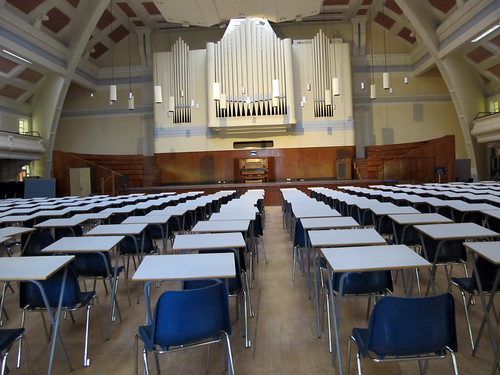
Traditions are so hard to break and one of the most entrenched is the proctored written examination. Writing for hours in a silent hall with only your memory to help you has been a rite of passage for generations of students all over the world; my own student years were dominated by these stressful events. The exam halls have been empty for over a year now but the problem of how to examine large groups of students online has lead to much stress and debate. Many have questioned the value of high-stakes summative examination; what valuable career skills are we actually testing in the exam hall? The problem is finding an alternative that will work with large student cohorts and can minimise the risk of cheating.

Interest is growing in more authentic assessment methods such as projects, case studies and portfolios, but these all involve major shifts in course design and teaching practice. Teachers who have always used proctored exams need training and time to reorganise their courses around alternative assessment methods and students will also need to be convinced of the benefits. In a recent article, a teacher here in Sweden described how he carries out one-to-one interviews with all students as an examination method, even with classes of over 200 (read article in Swedish). Each interview takes 15-20 minutes and if that seems like a lot he claimed that correcting written papers took roughly the same time per student. An interview is more personal and makes cheating extremely difficult and an experienced teacher gets a good picture of the student's ability in that time. 

This however is an exceptional option and most teachers have chosen solutions that try to emulate the exam hall. A common makeshift solution is where all students log into Zoom and are then monitored via their webcams and microphones. There are plenty of digital examination tools that will lock down the student's computer for the duration of the exam but the most controversial solution has been to use the remote proctoring solutions offered by companies like Proctorio, ProctorU and ExamSoft. These solutions involve remote monitoring of students, AI analysis of facial expressions, keystrokes, mouse clicks and registration of any suspicious activities in the student's room (someone entering the room). The integrity and privacy issues of this kind of surveillance and the question of what the companies do with all that data has been well covered in the past year.

However, it is tempting for a university to opt into remote proctoring since it fits in so well with traditional examination. Remote proctoring allows teachers to continue using their summative examinations and the alternatives all seem to demand extra work and retraining, something most already over-worked teachers will object to. A good example of an institution that was brave enough to avoid remote proctoring and help teachers make the transition to authentic examination is described in  an article by a group from the University of Michigan–DearbornWhat Happens When You Close the Door on Remote Proctoring? Moving Toward Authentic Assessments with a People-Centered Approach. Despite pressure to implement remote proctoring they decided to focus on changing their approach to assessment and examination by supporting teachers in their transition. The article explains their rationale for this move and describes the support process that included weekly practical workshops to work through new methods. To lessen the teachers' workload they hired a numbered of specially trained graders to help with the more time-consuming assessment of the new examination methods. The initiative is not complete and they have not completed a transition to authentic assessment but the new approach is gaining acceptance. In conclusion they offer the following advice.

In our experience, leaders such as educational developers, instructional designers, academic technologists, department chairs, and deans will need to be prepared to extensively support faculty during the transition. Many instructors have been using proctored exams for their entire careers and see them as essential to the teaching and learning process. Even as teaching and learning professionals may be eager to see instructors drop high-stakes exams all together, it is important to recognize that changing a long-held teaching practice can feel destabilizing and will likely bring some unforeseen challenges and resistance from instructors (Smith, 2020). Monetary resources saved from the refusal of remote proctoring services can be redirected to invest in ongoing faculty development on assessment and other teaching-related topics. We believe our investment in people, rather than remote proctoring services, will be more robust to the inevitable changes in learning formats and technology that are to come.

Sunday, April 11, 2021

Great expectations and how to manage them

Photo by Jp Valery on Unsplash

Isn't amazing that some people always misunderstand your most carefully planned and explained activities? What seems crystal clear in your head seems unclear and messy to others. Often it boils down to assumptions and expectations that are not clearly defined. Each student and teacher enters a course with their own preconceptions and assumptions of what they can expect and what is expected of them. It is so easy to think of students as a collective instead of a diverse group of individuals thrown together by chance in your particular course. Their expectations have been formed by previous courses and teachers and it is natural that they expect your course to be similar to the course they took last term. Much has been written about the difficulties of getting students to turn on their cameras in meetings or of students dropping out when group work starts but often it is because they don't see the activity as meaningful. Why is the group work important and why do they need to turn on their cameras? Too often we simply assume that this is obvious. The start of each course is therefore a renegotiation of how we approach the challenges ahead of us. The more explicit this negotiation the greater the likelihood of success. 

This is one of the themes in an article in E-learn magazine by Tom LangstonEngaging Students: An Approach to Solving the Zoom Conundrum. He describes the importance of each class negotiating a code of conduct that isn't simply a case of the students agreeing to the teachers expectations but reaching a mutually acceptable framework. It's also about addressing students' expectations of each other.

When you start teaching a class, it can be easy to highlight who you are and what you might intend to cover over the course of the module. It might also be less often that you explicitly tell the students what you are expecting from them. Even if you do, do they explicitly agree to your “demands” on them? This is where a conversation can help shape what is to come throughout the entire teaching block. If you are explicit about your standards and why you approach things the way you do, there can be no recourse from the students about why they have not held up their part of the agreement. Or you to yours.

Managing expectations is just as relevant on campus as online, though the mismatches are more pronounced in online courses. Another dimension that adds to the expectation mismatch is the increasing diversity of students from traditional young campus students to older lifelong learners with work and families to deal with. Mix in cultural diversity and you have a myriad of expectations and potential for misunderstanding. In today's multi-layered university it is unwise to assume. There is no one magic formula but a constant dialogue and negotiation, offering students a variety of spaces for interaction and collaboration.

Sunday, March 28, 2021

Drowning in content but what we need is community

CC0 Image created by Catherine Cordasco by @unitednations on Unsplash

Over the past year teachers all over the world have recorded and stored millions of videos, from short instructions to long lectures. Most of them can only be used once but are seldom deleted and as a result many institutions' servers are bursting with terabytes of video content. Storage is not as cheap as many think and as servers fill up we need to think of ways to free up space for more valuable content. Many institutions including my own compress and save seldom used content in archives but as production levels continue to mushroom we need to start asking why we need to produce all this. Why do teachers put so much time and effort into content production? 

One obvious solution is sharing such material as OER (open educational resources) and allowing others to reuse and adapt the material. Why record a lecture when there are hundreds of similar lectures already freely available? I'm sure you can be a good teacher without ever recording a lecture of your own and spending time focusing on facilitation, tutorials and feedback. But sadly OER has still not become mainstream despite greater awareness, according to a American recent survey reported by Campus technologyFaculty Awareness of OER Has Increased for 5 Years Straight, Yet Adoption Is Flat.

While OER awareness went up, for the first time in the past decade, adoption of OER as required course materials did not increase. Why? The researchers hypothesized that with last year's pandemic-induced shift from face-to-face to online instruction, faculty time was monopolized by pedagogical concerns. "[Flat OER adoption rates] may have been the result of the considerable amounts of time faculty had to put into converting their courses, leaving them no time to invest in the exploration and evaluation of new materials,"

Teachers feel bound by tradition to deliver content and the students expect the teacher to deliver content and it's very hard to escape from this mindset. Even if we know there is open content available we feel that we are not doing our job if we use other's material. If it's fine to recommend other people's books and articles it should be okay to recommend their recorded lectures.

This is reinforced in a recent article by David Kellermann in Times Higher EducationAcademics aren’t content creators, and it’s regressive to make them so. The pandemic has forced everyone to become video editors and generally not very good ones.

Suddenly academics became video editors – mostly bad ones – and our students turned to YouTube, because on YouTube you can get a better explanation of the same thing (for free I might add). Universities turned from communities of learning and collaboration into B-grade content providers. This is the death march of higher education. Universities are not content providers. Somewhere along this unplanned journey we lost our way.

The main point of this article is that instead of producing vast volumes of content that already exist the university should focus on creating communities, providing context rather than content. The campus itself creates a sense of belonging with spaces that facilitate meetings, discussions and networking as well as having a strong identity in its architecture and setting. The article quotes Eli Noam: the strength of the future physical university lies less in pure information and more in college as a community. 

Today's online spaces lack these advantages and tend to be a collection of closed silos. The lessons of the pandemic must include the need to develop more social, interactive and engaging digital spaces that can complement the campus spaces. The endless production of video content is a distraction from this crucial challenge.

Thursday, January 14, 2021

Radio as an educational lifeline for those without internet access

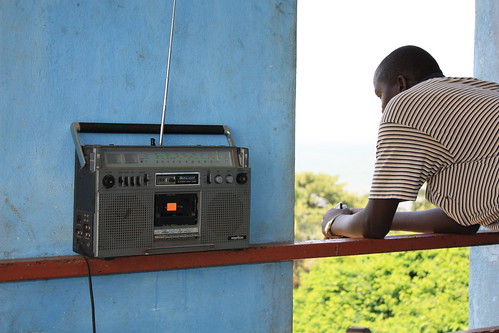
Living in a developed country like Sweden it is so easy to take internet access and ownership of digital devices for granted, but in many parts of the world the majority of the population has neither. In times of crisis when schools and colleges are forced to close there must be other channels for education that are accessible to as many pupils and students as possible. Broadcast media are an often forgotten channel for education in edtech discussions but are still thriving all over the world. For example, in the UK the BBC has recently increased its educational broadcasting to support schools during the lockdown (Guardian: BBC to expand educational shows in response to UK Covid lockdown). Many open universities around the world broadcast educational programmes on state or private television and radio channels, both as part of their regular courses but also as a service to lifelong learning since the programmes are freely accessible to everyone with a radio or television.

The value of radio for education is shown in an article on Rest of world, Why radio stations may be the real “e-learning” revolution. It describes how radio is used to provide teaching when schools are closed due to the pandemic. In sub-Saharan Africa over 85% of households lack internet access and many have no reliable electricity supply so even if there are many initiatives offering online education it is simply inaccessible for the majority. On the other hand most people have some kind of battery radio and can therefore benefit from school broadcasting.

In both urban and rural areas, battery-operated radios broadcast information to entire households. As cheap as $5, a radio is less energy-intensive than a television and can be shared more easily than a smartphone. The infrastructure was already there. All that educators needed was to adapt content.

Teachers have been busy broadcasting on existing channels or creating new radio channels and some are also offering educational content to mobile phones via sms. The response has been impressive and in Sierra Leone 58% of pupils listened five days a week.

Mary Phiri, a 36-year-old farmer in Joel Village in eastern Zambia, has five children in grades two to 12. Her work keeps her so busy that making sure her kids continued their schooling during the pandemic had to be a family-wide effort. Her older children would also tune in to assist their younger sibling with her schoolwork. With radio lessons, her children, normally shy at school, could ask their parents or siblings the difficult questions that might have gone unasked in the classroom.
Even in developed countries we should not underestimate the power of broadcast media in both formal education and lifelong learning. The future of education will involve a blend of both digital and traditional methods and we need to ensure that noone is excluded. Radio still has a lot to contribute!

Sunday, January 10, 2021

Learning together - the importance of ice-breakers in online learning

Photo by Adam Jang on Unsplash

Developing social connections and a sense of community in education has never been more important as most of us head into yet another term of online teaching. I've written before about the importance of the spaces in between the lectures, workshops and discussions; the spaces for developing relationships and a sense of common purpose that is normally achieved in the corridors, cafes and parks of the physical campus. This can be done online but it requires effort and attention.

I was inspired this week by a blog post by Michelle Pacansky-Brock, Self-affirming Icebreakers, where she examines the value of simple ice-breaking activities to help students connect with each other and build that community feeling. It is not enough just to ask students to introduce themselves with the usual CV details, we need to reveal something personal and meaningful. The teacher's role here is crucial and she recommends sharing something personal to create a sense of shared vulnerability and inviting students to do likewise. This could take the form of sharing a photo of an object that has meaning for you and explaining why. Or recording a short introduction video taken at a location that you love (favourite cafe/park/view). She views this as a kind of collective effervescence, where a common thought or emotion forms a common bond. But it is essential that the teacher takes the first step in this to show that revealing a certain degree of vulnerability is acceptable.

I see a correlation with collective effervescence and successful ice breakers in online courses. Designing an ice breaker that elicits shared vulnerability amongst a class is a powerful way to highlight the interconnectedness between all humans.

By sharing something personal we can begin to relate to each other as people rather than as students and teachers in an educational setting. This helps build a group solidarity that is essential for collaborative learning and shifts the focus towards helping each other to achieve the learning objectives rather than competing to get the best grades. But such ice-breaking activities are not only useful at the start of the course, they need to be a regular feature. to compensate for the isolation of lockdown learning we need to offer more opportunities, both synchronous and asynchronous, to interact and build the community outside the confines of the curriculum.

Human connection is essential for community to develop – in a seated course or in an online course. But connection does not come through enabling a webcam, assigning a discussion, or rolling out a group project. Connection is established through relational trust and empathy. And when you take the first step to share and be vulnerable with your students, they are more likely to be willing to lean in and do the same. And, for the record, yes, community can be fostered asynchronously.

Saturday, December 19, 2020

2020 - the year education went online

Photo by Yasmina H on Unsplash

Everyone seems to be writing reviews of this crazy year so here's my attempt. At the end I include some really good articles for deeper insights.

The Covid-19 pandemic of 2020 caused a sudden and unplanned shift to online education in almost every country in the world. Universities, colleges and schools were forced to close and all activities switched to online mode almost overnight, with very little time for planning or redesigning courses that were designed for traditional classroom delivery. The fact that this sudden transition was managed surprisingly well in most countries was a tribute to teachers’ adaptability, creativity and dedication. However, it would be wise to differentiate between what is now termed as emergency remote teaching and well-designed online education and when the crisis is over we need to spend time redesigning our courses to the required standards of quality online education.

Institutions that managed the digital transformation well have a number of common factors. Firstly they had experience in online course delivery and a strategic approach to digitalisation with a good digital infrastructure including a learning management system, media platform and anti-plagiarism tool. Teachers were already trained in designing and running online and blended courses, often with the support of educational technologists, media specialists and course designers. Furthermore, they used a mix of synchronous and asynchronous interaction forms to ensure student engagement.

At the same time the crisis revealed many problem areas, though some were societal rather than educational issues. Many students were marginalised due to poor internet access or not being able to afford a digital device, whilst others did not have a suitable study environment in their homes. Since they had enrolled on a campus-based programme, many students lacked the necessary study skills to learn effectively online and became isolated from colleagues. Even when students have been satisfied with the online teaching they received, they found the lack of social interaction extremely demotivating. Teaching online is not just about delivering course material and tests, it is vital to create a community of trust and opportunities for social interaction and informal discussion. Building relationships is an essential part of learning. Future course design teams must take these factors into consideration and build in more support structures.

However, there have been many positive effects of the crisis. Firstly, it has placed an unprecedented focus on online education and forced all institutions to rethink their operations. This involves offering teachers training programmes and workshops to share good practice and develop a coherent approach to online education. Institutions have discovered the need to employ educational technologists who combine technical and pedagogical skills and can help teachers manage the transition in a structured manner. Teachers have also begun to create a culture of sharing by forming, for example, social media communities where they can ask questions, discuss, share good ideas and resources with teachers from other institutions around the country. There has also been a wave of guidelines, resources, online courses, webinars and digital conferences offering support to teachers and students on how to teach and study effectively online.

What lessons can we learn from this experience and what conclusions can we make?
  • Online and distance learning requires careful planning and new skills. Institutions need to implement strategies for digital development and provide necessary competence development for teachers.
  • Courses must be reviewed and redesigned to fully integrate digital elements. This demands teamwork between different competences: teachers, educational technologists, media production, librarians. Digital platforms and tools are integrated into campus teaching.
  • New forms of assessment and examination are needed in the digital space. There will be increased focus on formative assessment, oral examination, project and problem-based learning.
  • Greater flexibility of how students access their courses with greater integration between online and on-site as well as more blended learning solutions. The digital campus will become an established concept with a variety of platforms to facilitate networking, socialisation and collaboration as well as teaching and learning.
  • Online conferences will continue to thrive, largely replacing expensive and unsustainable international on-site conferences.
  • Virtual mobility programmes will become the most widespread internationalisation strategy as physical mobility becomes more restricted due to sustainability concerns and travel restrictions in the wake of covid-19.
Further reading
A global outlook to the interruption of education due to COVID-19 Pandemic: Navigating in a time of uncertainty and crisis. Asian Journal of distance education, Vol 15 Issue 1, 2020.

Bates, T. (2020) A review of online learning in 2020. Blog post.

Downes, S. (2020) Lessons from the pandemic. Blog post.

Hodges, C., Moore, S., Lockee, B., Trust, T., & Bond, A. (2020) The Difference Between Emergency Remote Teaching and Online Learning, Educause Review.

Martin, F., Polly, D., Ritzhaupt, A. (2020) Bichronous Online Learning: Blending Asynchronous and Synchronous Online Learning, Educause Review.

UNESCO, UNICEF and the World Bank (2020). What have we learnt? Overview of findings from a survey of ministries of education on national responses to COVID-19.Paris, New York, Washington D.C.