Showing posts with label radio. Show all posts

Thursday, March 3, 2022

Digital vulnerability

In the midst of a brutal war in Europe it is very hard to write about educational technology. However, one slightly relevant theme that is emerging is how vulnerable we are today due to our embrace of everything digital. Society has simply taken digital accessibility for granted and become totally dependent on it. Here in Sweden it is virtually impossible to lead a normal life without a smartphone and internet access. Cash has become almost useless and many shops and even banks refuse to accept it. You need to download apps for just about everything - shopping, parking your car, using public transport, booking accommodation, financial transactions etc. 

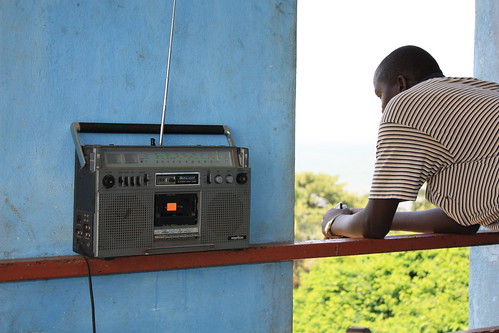
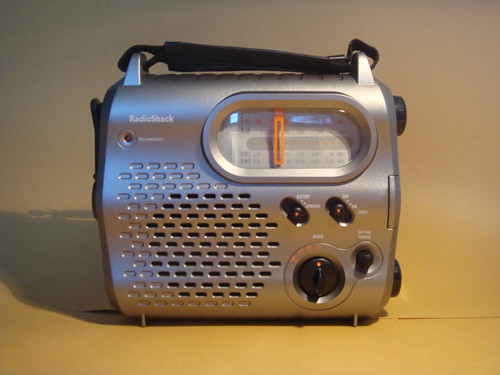
I read in the paper (yes I still read printed newspapers every day) that sales of survival equipment (water canisters, dried and tinned food, camping stoves) have suddenly soared due to the war and the realisation that it could happen here. There's also a marked increase in the use of cash machines (previously deemed obsolete) with the realisation that a cyber attack would render all our apps and plastic cards useless. Another curious detail is a sharp rise in the sales of basic FM/AM radios, especially those that can run without batteries by winding a handle. I also noted that the BBC is setting up shortwave frequencies to broadcast news to Ukraine if internet access is cut. Luckily video did not quite kill the radio star.

Future trends in education? How about survival skills? I don't mean survival courses in the wilderness (though it might be a good idea too) but being able to use both the digital tools and devices as well as their non-digital counterparts. Can you find your way without GPS and Google? Can you make calculations or write notes on paper? I've seen reports of interesting projects about offering digital educational resources to remote areas without internet or even electricity using solar powered servers with stored resources that can then be shared with devices in a basic wifi network (see earlier post). Many countries have used radio to broadcast school lessons to remote and vulnerable communities during the pandemic (as reported earlier on this blog). In an increasingly volatile and unpredictable world we all need to develop plans B, C and D. 

Digitalisation has benefitted us all but we must be very careful about digitalising everything just because we can. We need to maintain alternatives even it may be costly because one day the digital infrastructure could go down.

Thursday, January 14, 2021

Radio as an educational lifeline for those without internet access

Living in a developed country like Sweden it is so easy to take internet access and ownership of digital devices for granted, but in many parts of the world the majority of the population has neither. In times of crisis when schools and colleges are forced to close there must be other channels for education that are accessible to as many pupils and students as possible. Broadcast media are an often forgotten channel for education in edtech discussions but are still thriving all over the world. For example, in the UK the BBC has recently increased its educational broadcasting to support schools during the lockdown (Guardian: BBC to expand educational shows in response to UK Covid lockdown). Many open universities around the world broadcast educational programmes on state or private television and radio channels, both as part of their regular courses but also as a service to lifelong learning since the programmes are freely accessible to everyone with a radio or television.

The value of radio for education is shown in an article on Rest of world, Why radio stations may be the real “e-learning” revolution. It describes how radio is used to provide teaching when schools are closed due to the pandemic. In sub-Saharan Africa over 85% of households lack internet access and many have no reliable electricity supply so even if there are many initiatives offering online education it is simply inaccessible for the majority. On the other hand most people have some kind of battery radio and can therefore benefit from school broadcasting.

In both urban and rural areas, battery-operated radios broadcast information to entire households. As cheap as $5, a radio is less energy-intensive than a television and can be shared more easily than a smartphone. The infrastructure was already there. All that educators needed was to adapt content.

Teachers have been busy broadcasting on existing channels or creating new radio channels and some are also offering educational content to mobile phones via sms. The response has been impressive and in Sierra Leone 58% of pupils listened five days a week.

Mary Phiri, a 36-year-old farmer in Joel Village in eastern Zambia, has five children in grades two to 12. Her work keeps her so busy that making sure her kids continued their schooling during the pandemic had to be a family-wide effort. Her older children would also tune in to assist their younger sibling with her schoolwork. With radio lessons, her children, normally shy at school, could ask their parents or siblings the difficult questions that might have gone unasked in the classroom.
Even in developed countries we should not underestimate the power of broadcast media in both formal education and lifelong learning. The future of education will involve a blend of both digital and traditional methods and we need to ensure that noone is excluded. Radio still has a lot to contribute!

Monday, March 14, 2011

Light my fire

Flames by wwarby, on Flickr
Creative Commons Attribution 2.0 Generic License  by  wwarby 

There are two radio programs that make Sunday mornings so pleasant - one features baroque and earlier music and the other features world music. I'm not an authority on either form but I listen every week, either live or later on the net. The reason I listen so regularly is largely due to the presenters. They both have a burning interest in the music they present and communicate that enthusiasm in an infectious manner. The same program with a lesser presenter would probably not have grabbed my attention.

It's much the same with education. At school I was good at maths and physics but the subject that I went on to study at university was English. That choice was not because I sat and objectively weighed up my future career options and made a rational choice. It was simply because English was fun and my teacher had encouraged my efforts at creative writing. I suspect many career choices have been inspired by one good teacher who has succeeded in lighting a fire.

There's a lot of debate about school today, mostly focusing on standards, quality criteria, learning outcomes and examination. It all seems so scientific and objective but I feel we're missing the most important quality criterion of all - enthusiasm. If a teacher can communicate enthusiasm and curiosity for the subject and inspire the students then that quality is often worth as much if not more than carefully planned lessons and well-formulated learning outcomes. Sheer infectious enthusiasm can compensate for less than perfect planning and slightly chaotic organisation and the positive effect of human energy on students' success rates should not be underestimated.

Sunday, October 31, 2010

Farewell AM radio

The news that Swedish Radio (SR) are closing down their medium and short wave transmitters today gave me a good excuse to be a bit nostalgic (see article in Ny Teknik - in Swedish). We haven't really noticed it but hardly anyone transmits on those wavelengths any more and so a central part of my childhood and teenage media landscape is put to rest. The radio was a magic window allowing me to hear radio from other countries and although I understood nothing it was still exciting to listen a while to German, Dutch or even Russian stations. The short wave was a gold mine full of radio stations from all over Europe. In a way the closest we had to today's web.

ASA radio by Andrei!, on Flickr
Creative Commons Attribution-Share Alike 2.0 Generic License  by  Andrei! 

Growing up in Scotland in the sixties there was plenty exciting new music but the BBC didn't play it more than a few hours a week. As a result we had to listen to Radio Luxemburg and the so-called pirate radio stations broadcasting from ships out in international water in the North Sea (familiar scenario isn't it?). Radio Luxembourg was great but the reception was unreliable. Just when your favourite song came on the interference increased and for a few minutes it was virtually impossible to listen to. The pirate stations were also great but sometimes were closed down for a while if they got raided. The best reception was from the Dutch Radio Nordsee and it was thanks to them that I first heard all sorts of great music. In the end the BBC realised that pop music was here to stay and created Radio 1 in 1967 and as a result the pirates gradually disappeared.

Disruptive technology that brings about a major change in the way mainstream media operate. Sounds familiar doesn't it?