Showing posts with label privacy. Show all posts

Wednesday, March 18, 2026

Escaping the clutches of big tech - initiative from Norway

Photo by Nicolai Berntsen on Unsplash

At last there seems to be some serious resistance to the monopolistic dominance of big tech, the empires of the tech billionaires. The term enshittification, coined by Cory Doctorow a few years ago has now gained mainstream acceptance: read more about this in a post I wrote a couple of years ago, The "enshittification" of the internet - we know it's bad for us but we're hooked. Digital platforms and services that initially offered genuinely useful and attractive services for users have been slowly and deliberately degraded (for the users) by increasingly promoting adverts and paid content at the expense of the useful functions the user originally signed up for. Once users and advertisers are locked in then the companies add subscriptions for previously free functions, increase fees for advertisers and sell user data to the highest bidders. They hold users and advertisers hostage since the platforms are so big and powerful that you simply can't afford not to be there. If competition comes along big tech just buys them creating de facto monopolies. The unprecedented global power wielded by the Big Five (Google, Amazon, Meta, Microsoft and Apple) mean that users, companies and governments are all helplessly trapped in their walled gardens. You and all your content can be instantly removed from the platform without explanation or right to appeal. Indeed it's hard to appeal when you don't know what you have done wrong as I found out a few weeks ago. We are no longer customers and the concept of customer service beyond an exasperating chatbot is becoming extremely rare.

But maybe a backlash is coming. The Norwegian Consumer Council, together with other similar bodies in Europe, has released a report on the dangers of enshittification with concrete policy recommendations for the EU and European govenments, BREAKING FREE – Pathways to a fair technological future. They define the issue thus:
Enshittification is the result of a dysfunctional market, where companies have been able to get away with mistreating and exploiting consumers. Consumers are trapped in digital services, potential competitors are shut out, and policymakers and regulators are unable or reluctant to clamp down on anticompetitive, illegal and otherwise abusive behavior. In practice, a handful of tech companies have become so powerful that they do not have reason to fear any consequences. 
To make people realise how far this phenomenon has gone they have produced a satirical video showing how companies make their products increasingly "shitty".


We are becoming trapped in the walled gardens of big tech and it's very hard to escape. In recent years I have tried to at least reduce my dependence by using a European browser (Vivaldi), a non-tracking search engine (Duckduckgo), an alternative music streaming service (Tidal), a European storage, calender and mail service (Proton) and an open source office suite (LibreOffice). But here I am blogging on Google's Blogger platform, I still use Google Maps, YouTube, Instagram, Whatsapp etc. My banishment from Facebook should have been a relief but I really miss my communities and network there. As in the old Eagles song: You can check out any time you want but you can never leave

An alternative suite of social media services, the Fediverse, has existed for several years with built-in portability and interoperability. These include Mastodon as an alternative to X, PeerTube for YouTube, Pixelfed for sharing images and many more. They work but the problem is how to move all your own contacts into those services.

AI is of course a key element in this process. Big tech owns the tools and are integrating AI into almost everything, in many cases as a feature that you cannot remove and certainly can't ignore.

Generative AI is to a large degree driven either by the incumbent big tech companies or by companies with strong financial connections to these companies. It is also evident that big tech companies want to lock users into their generative AI services, to capture an emergent market and further entrench their dominance. 

Our search requests are now reliant on AI, often leading to misleading or biased results. Our "smart" devices from TVs and fridges to cars and homes are AI-enabled allowing big tech to harvest vast amounts of personal data on users' lives. All devices require frequent updates and standard functions can suddenly become premium features at an extra expense as shown amusingly in the final part of the video. Whether you like it or not you are forced to become reliant on AI and even more helpless to work things out for yourself. The days of fixing your car in the garage at weekends or mending electrical appliances in the home are well and truly dead. Everyday life without an app-ridden smartphone is virtually impossible.

The report is well researched and provides many examples and references. The final chapter proposes a number of recommendations that offer the hope of an alternative internet with interoperability between platforms and services and freedom for users to change platforms without losing their contacts or content. 

  1. Rebalance power between service providers and consumers.
  2. End dependence on big tech. To lay the groundwork for innovative products and services and pave the way for alternatives to big tech, competition in digital markets must be restored.
  3. Double down on the enforcement of existing laws.

Innovation and competition have been effectively stifled as it is impossible to challenge big tech's dominance. The report recommends that governments invest in new solutions that are based on openness, interoperability and portability. There are indeed regulations and guidelines in place to combat monopolistic practice but they are poorly implemented and the tech giants can easily avoid taking any responsibility - they are too big to care basically. The report urges European authorities to seriously challenge big tech and implement regulations vigorously.

This is very admirable and I hope the report has some effect but in today's toxic political climate I am not confident that much will change. The EU is far from united on any issue and many governments are either governed by neoliberal right-wing parties and their allies or are too afraid to challenge those parties and their followers. Big tech funds and embraces the march of Trump-inspired authoritarianism and will fight to prevent anyone from threatening their dominance. The report urges the public sector to lead the change by moving away from dependence on big tech. Indeed, there are already examples of municipalities that have switched from Microsoft to open source software.  

For example, Denmark, Germany and Austria are trying to swap out their proprietary (Microsoft) software for the open-source alternative LibreOffice. The German state administration of Schleswig-Holstein estimate they will save 15 million euros by not purchasing Microsoft licenses annually, whereas the open-source alternative is a one-time investment of nine million euros.

Vast savings could indeed be made but logic is sadly lacking in modern politics. We seem unable to imagine an alternative to the existing order, even if we see how harmful it is for us. This applies not only to technology but also on a global scale to our lifestyles that are accelerating us towards catastrophic climate change. But all signs of resistance must be applauded and encouraged and I would love to see this report stimulating serious discussions in the media and in politics. I am not confident but try to hope for better times.


Monday, February 9, 2026

Digital unravelling - losing Facebook and the transience of social media

Photo by Kelli McClintock on Unsplash

When I signed off here in 2024 (see previous post) I didn't think I would return. But today I suddenly feel like writing again. Not about education but on the transience of social media in an age where AI controls what we do and who can participate.

Last week I was suddenly and without explanation thrown out of Facebook and Messenger. I was scolling through posts, as we all do, when a message appeared telling me that my account was suspended because activity on it didn't follow their Community standards on account integrity. They included a link to appeal against the decision and that lead me to a video selfie facility. I don't like the idea of recording a video of myself, especially for a company like Facebook, but I had no alternative in this case. So I did that and it was accepted. Then came a captcha to prove I'm not a robot and finally a confirmation of my e-mail. An hour later came the final bombshell as you see below.


I have been a user for almost 20 years and have always been a responsible user, never making offensive comments or promoting disinformation or hatred. I had absolutely no idea why I had been targetted like this except that the algorithms had made a mistake. Since Facebook, like most social media, is basically a machine there is no contact information or customer service and my attempts to find out more about my banishment simply hit a brick wall of FAQs.

I was deeply hurt by this. Despite the enshittification of the platform, ie all the ads and "suggested links", I still got a lot of joy from it all. I posted photos from my hikes and travels and was active in several enthusiast hobby groups mostly on topics like football, cricket, railways and nature. Nothing very controversial there!  I also had a lot of contacts: relatives, friends and work colleagues from around the world. They were now all gone and I had no back-up contact channels for most of them. Suddenly my digital world shrunk even further. I started searching for as many as possible on other platforms - after several years of neglect I finally found Linkedin very useful! 

Then came the next blow. My computer crashed and I began to think that the digital gods were really out to get me. I took the ailing machine into an IT repair company in town and awaited the verdict on whether they could salvage at least some of the contents on my hard drive. It turned out that Windows was corrupted and the hard drive was virtually finished. But the main discovery was that the computer was full of virus including trojans. The repair guy said that that could have triggered alarms in Meta's algorithms leading to my sudden expulsion. I hadn't noticed my account being hacked but the trojans and their friends were certainly doing some strange things with my accounts. At the same time I have been well aware of the dangers of viruses and have run anti-virus scans every couple of weeks and always got the all clear sign. I also used VPNs and anti-tracking software so I thought I was well protected. However they told me that my protection, Macafee, was very unreliable and I have now bought another solution. But how are ordinary mortals like me supposed to know all the details of which solution is best? Some people really enjoy comparing products and reading reviews but I don't and I suspect I am far from alone. I just chose a well-known brand and trusted that. The computer was cleaned out and I have now started from scratch with all the bright and shiny updated apps and programs and am now checking my virus scans daily! I had backed up my data on two external hard drives so I didn't lose my photos and documents but it's still a dull chore getting everything working again.

So what have I learned from all this? Don't trust anything digital and always have multiple backups. Platforms can delete you whenever they feel like it or if the company goes bust. If it is free you are not a customer and we have usually forfeited our rights by accepting the terms and conditions. I have found a lot of my contacts on other platforms and am beginning to adapt to having fewer things to scroll through (probably a good thing even if I get withdrawal symptoms now and then). There is really no alternative to Facebook - the nearest I've seen is MeWe. I created an account there but can't find anyone I know. If you have lots of digital contacts I strongly advise you to copy them in multiple places including on paper. I went out and bought an old-fashioned paper address book and am writing down all the contacts with e-mail addresses, phone numbers and any other information I have on them. If you are one of my old contacts please conatct me through this blog or search on other social media.

Be careful out there! 

Monday, February 26, 2024

The "enshittification" of the internet - we know it's bad for us but we're hooked

Photo by ROBIN WORRALL on Unsplash

I frequently consider leaving social media completely but can't quite bring myself to do it. As I have no doubt written before I have so many contacts in there that I would lose and I still get pleasure from the groups I belong to. But you will certainly have noticed over the years how what was once a place to see photos and comments from friends has turned into a stream of adverts and posts (often political or provocative) from organisations you don't follow. At first, the ads on Facebook were often hilariously irrelevant, based merely on stereotypes. As an older male living in a village I saw ads for chainsaws, tractors, hair restorer, Viagra (of course), crypto nonsense and the fact that hundreds of fascinating women are waiting to meet me. They're getting better at finding things I am at least vaguely interested in but the problem is that the platform has become just a random stream of stuff that I never asked for. Basically it has become enshittified.

Enshittification is a concept launched by Cory Doctorow last year in a post about TikTokTiktok's enshittification. In it he argues that all platforms inevitably fill up with garbage due to the greed of the owners. Even if he writes mostly about TikTok the principle seems to apply across the board. A new post, My McLuhan lecture on enshittification, is the script of a recent lecture where he goes into more depth on the phenomenon. In short, the enshittification process goes like this:

It's a three stage process: First, platforms are good to their users; then they abuse their users to make things better for their business customers; finally, they abuse those business customers to claw back all the value for themselves. Then, they die.
This rings true for most if not all the tech platforms: Google, Amazon, Facebook, X (Twitter), TikTok,  etc. Facebook, Instagram and Twitter were very succesful in getting us all onboard to share our everyday events and interests and we quickly got hooked. But once we were all in there and the platform changed into an ad-based channel we were trapped. If you leave the platform you leave behind all your friends. It's virtually impossible to get all your Facebook contacts to leave all at once and meet up in a new platform. So we stay there even if we begin to hate the place and despite all the scandals and blatant societal damage. Then came the trolls and disinformation channels, destroying even light-hearted discussion threads with the result that more and more became passive users or simply gave up. But still it is so hard to leave and many of us stay in there. I gave up Twitter when it became X but amazingly it is still the default channel for serious media and organisations.

Doctorow offers four factors that could combat enshittification:
There are four constraints that prevent enshittification: competition, regulation, self-help and labor.
The problem is that all of these have disappeared. We could have regulated the tech industry and broken up the monopolistic monsters like the big five. We could have created more genuine competition. We could have legislated against monopolistic takeovers, exploitative labour practices and so on but we didn't. We believed the big tech mythology of the "new economy", cool laid-back leaders, flashy offices and mottos like "Don't be evil". We are no longer customers to these companies, have you noticed how none of them offer any customer service, not even a contact number. We are simply data to exploit. Doctorow sees some glimmers of hope in a renewed interest for privacy legislation, especially in the EU, current labour action against companies like Tesla and Amazon, attempts to curb monopolistic take-overs and suchlike. But we have allowed the industry go run wild for so long it's extremely hard to constrain them now.
The capitalism of today has produced a global, digital ghost mall, filled with botshit, crapgadgets from companies with consonant-heavy brand-names, and cryptocurrency scams.
The internet isn't more important than the climate emergency, nor gender justice, racial justice, genocide, or inequality.
But the internet is the terrain we'll fight those fights on. Without a free, fair and open internet, the fight is lost before it's joined.
We can reverse the enshittification of the internet. We can halt the creeping enshittification of every digital device.
I wish we could mobilise to fight this as Doctorow suggests but first we have to get people to look up from their screens and realise that something is seriously wrong. That is the biggest challenge. 

For more on this theme please watch this interesting discussion between Camille Francois (Columbia University) and Meredith Whittaker (President, Signal) on Al Jazeera, AI and Surveillance Capitalism. They discuss the surveillance economy, the effects of AI and how we can combat it.

Thursday, July 13, 2023

Wave goodbye to the edtech cruisers and focus on real community building

Photo by Peter Hansen on Unsplash

One year after retirement and it's a strange feeling standing on the quay watching the edtech ship sail away from me and onwards towards the horizon. I've tried to maintain contact with the issues I used to find so important but if you're not onboard and involved it all feels more remote every day until the ship disappears over the horizon. There are new technologies and platforms on board now and my personal learning environment has become almost obsolete.I thrived on the social media boom of blogs, Twitter, Facebook, LinkedIn, Diigo and so on and the opportunities these fascinating channels offered for networking, collaboration, sharing and creativity. It was a great ride for about 12 years but it has all turned sour as the platforms have become polluted with algorithm-driven ads, propaganda and toxicity. Having spent so long urging teachers to use social media to widen their horizons, increase their impact and foster collaboration I realised that I might now be leading them into a trap. So now the edtech cruiser is sailing away loaded with new technologies and platforms that I simply can't relate to anymore. But maybe we have to reset our ambitions about networking and settle for less flashy but more sustainable solutions.

A post by Inger Mewburn in her excellent blog The thesis whispererThe enshittification of academic social media, really rang a lot of bells for me. She has also been a strong advocate of academics using social media to promote their work and build networks. But now she advises caution with using social media on the grounds that no matter how good the content you share may be you will not get exposure thanks to algorithms that prioritise content that will generate income. It's also hard to make contact with others when the algorithms continually push other stuff in front of you.

Maybe Threads is the next big platform and indeed the initial uptake is spectacular, though here in the EU it is blocked since it is full of major privacy issues that violate the GDPR regulations (well played EU!). But even if you can use Threads it's probably not a good idea. It looks good but it feeds off your privacy and is fully integrated with the rest of Meta's platforms.

Inger proposes a revised set of recommendations to academics wanting to use social media in their work. Think very carefully before you use mainstream social media in your teaching. Think especially about the privacy issues to which you may be exposing students and colleagues. Use these channels for social contacts if you want but don't share content there; own your content by having your own space for it. For building a network she suggests the good old-fashioned mailing lists. I certainly found e-mail newsletters a good way to reach out though there are issues with that, especially the problem that many organisations ' firewalls automatically block newsletters as suspected spam. But certainly you can reach out to known subscribers and build your community through that.

Email is still the best distribution medium of them all: cost free and free from algorithms. I just started a mailing list for people interested in my neurodiversity in the PhD research – I already have 160 or so people signed up, which is so incredible (thank you!). I plan to use this list to test out research ideas and get feedback on research in progress. Much more effective than shouting into the wind on Threads or something.

She also mentions a possible revival of blogging, something I would of course welcome. Use your blog as a space to share your ideas and offer advice. The best way to blog is to host the blog yourself and be in complete control. I made the mistake of opting for the convenience of Google's Blogger platform back in the days when I believed they were working for the common good and so all my writing is in their domain. 

Of course Mastodon and its family of open source social media in the Fediverse is the sustainable and uncommercial option to create communities, though it's always a good idea to check each platform first to see if it's right for you (don't assume that all are automatically trustworthy). If I was still active that's where I'd go. The Fediverse will not go mainstream and will remain a refuge for those who see through the glitter and flashy facade of the Big Five, but maybe we have to accept that meaningful collaboration is limited in scale. Leave the big platforms and connect with people rather than bots and trolls. It may not be as flashy and may not have all the bells and whistles but it works.

Wednesday, November 9, 2022

Do we really need to record this session?

Image by Mohamed Hassan from Pixabay

There is a tendency to record webinars and online classes as a matter of course. A recording can increase the impact of a webinar and a recorded class session allows absent students to catch up and gives those who attended the chance to revise what was discussed. At the same time vast amounts of storage space are taken up with recordings that are seldom, if ever, viewed and the mountain just keeps growing. Often the red recording light discourages people from participating, cameras and microphones are switched off and the chat contributions are minimal. It's time to regularly ask ourselves whether we really need to record this session, who we might exclude if we record and what more inclusive practices we can replace it with.

A timely article by Per Axbom looks at the sensitive issue of permission to record, Consent for recording meetings. Too often we simply ask at the beginning of a meeting if it's ok to record and if no one objects within a few seconds then we press the button.

Asking if it is okay to record when everyone is already in the meeting does not provide basis for a well-founded consent. Requiring someone to raise their voice in a situation with a clear risk of peer pressure is not a context that gives power to those who need to opt out.

Always strive to request recording consent before a meeting takes place. This ensures that people who want to object do not risk ending up vulnerable in a situation where their position is judged or questioned by others.

There are many people who do not want their names, faces or voices recorded for public viewing and few are brave enough to say so. Of course they can simply turn off their microphones and cameras and not contribute to the chat but then you are excluding them from the communication that is or should be the focus of  online meetings. The default should probably be not to record. If we do record there must be a clear reason for doing so and this must be communicated before the session. Axbom also suggests making it clear where the recording will be posted and how long it will be available.

One option is to only record the input from speakers (with permission of course) and edit out any comments from participants. If recording is in progress, the speaker and moderator should avoid referring to the names of people who have asked a question in the chat or the Q&A. Just say that we have an interesting question here in the chat and keep the name out of the discussion. It's maybe impersonal and I admit to using names in such situations but not revealing names may encourage more participants to speak or chat if that red button is on.

In online classes many teachers use collaborative note-taking as an alternative to recording. Nominate a couple of students to take notes for each session and let them do so on a shared document that the whole class has access to. At the end of the lesson the class can check the notes and add comments or links that may have been missed. In this way everyone is involved in the recording process and the skills of note-taking and summarising will be essential in their future careers.

Axbom concludes with the reason for not pressing the record button so often in future:

Consider and think through needs, power structures, vulnerability and inclusion before you risk normalizing something that can lead to people feeling uncomfortable, unwilling to participate or unwilling to contribute.

Sunday, May 29, 2022

Platform literacy needed to avoid increasing inequalities in education

James Elder Christie: The Pied Piper of Hamelin Public domain (CC0) on Wikimedia Commons

A major argument in the educational technology debate over the years has been to facilitate widened access to education through digital platforms and applications. This has indeed been achieved to a large extent with the widespread adoption of open access to scientific articles, open educational resources published by many institutions around the world, global collaboration projects such as Wikipedia as well as the use of learning management systems, video conferencing platforms and networking tools. The options for studying from home, even in sparsely-populated regions have increased dramatically and it would be easy to claim that the mission of widened access to education has been achieved.

However, as the power and sophistication of educational technology has increased so we see new inequalities and biases appearing and this is the topic of an excellent article by Laura CzerniewiczMulti-layered digital inequalities in HEIs: the paradox of the post-digital society. Although millions of students and teachers were able to adapt successfully to online education during the pandemic there were many who suffered. Many students had poor internet access or could not afford to pay for access. Many had to study with only a mobile or sharing one device with the rest of the family and in many countries reliable electricity is still a dream. The rollout of modern edtech assumes that everyone has the right devices, internet access and reliable electricity and thus the digital divide is further accentuated.

The digital divide is alive and well; indeed the digital paradox is that even as the basics of the divide are addressed through access, more complex layers of exclusion are added; digital inequalities thus morph into new complicated forms. Nevertheless, fair and equitable technological infrastructure is the foundation of inclusion in HE: electricity, devices, ubiquitous connectivity and cheap data. These are essential but insufficient.

The pandemic has also forced educational institutions to invest in new technology and the urgency has meant that many have overlooked the serious implications for user privacy associated with much of today's IT industry. The growth of surveillance capitalism, as defined by Shoshana Zuboff, is particularly worrying with the big five tech giants (Amazon, Google, Microsoft, Apple, Facebook) controlling and storing so much of our daily lives.

The intensive digitalisation catalysed by the pandemic and concomitant “online pivot” means that HE is in danger of fast becoming a site of surveillance capitalism, with the concomitant dangers for equity, little transparency and unequal terms of engagement.

With such an upsurge in educational technology many institutions have signed major contracts with companies without questioning what those companies will do with all the student data they gather. We all happily accept the terms and conditions, cookie settings and other privacy settings without really understanding the implications and no matter how digitally literate we may be those settings are not designed to be understood. The hidden biases of algorithms can add to further exclusion of some students groups especially when combined with the rise of artificial intelligence in tracking student progress, identifying weaknesses and detecting cheating.

The amalgamation of the digital into higher education, through the dominant extractive economy, introduces complex and often invisible power dynamics into public higher education. The terms of engagement are imbalanced, hidden behind dense language and easy promises. There are especially profound implications for those with barriers to participation at individual and institutional levels. This has introduced several new inequities into the student experience and the sector.

Czerniewicz presents some strategies to prevent this rather dystopic development. Firstly, institutions need to develop better platform literacy and be more able to demand safeguards from technology providers. We need to decide whether the risks of buying a platform outweigh the advantages - no matter how cool it may be. Many technology decisions are governed by FOMO (fear of missing out) and this tendency must be changed. She advocates iterating towards equality, developing strategies to identify inequalities and minimising risks as far as possible, i.e. Developing equitable ethical data policies and frameworks.

These themes are further discussed in another recent article, Ableism And Disability Discrimination In New Surveillance Technologies: How new surveillance technologies in education, policing, health care, and the workplace disproportionately harm disabled people. This looks at how technology is used in education, health care, workplace and criminal law to further disadvantage disabled and minority groups in society. Here too we see examples of societal biases being magnified by algorithms. 
In recent years, schools have adopted technologically-augmented surveillance tools, some of which rely on predictive analysis and automated responses to flag suspicious behavior, trigger investigative or disciplinary action, or prioritize crisis response resources. The surveillance tools can have a disproportionate impact on disabled students and students of color - and likely on disabled students of color in particular.
Although the European General Data Protection Regulation (GDPR) has increased our awareness of some of these dangers there is still a need for a deeper understanding of the consequences of the IT systems we use. If we are not careful we risk following the pied piper into the cave, dancing merrily to his tune. Sometimes we must dare to say no to the lure of technology.

Update
Further coverage on how some tech companies exploit student data, in this case children, can be read in a new post by Tony Bates, The perversion of the Internet: scraping and selling children’s data from ed tech tools.

Saturday, May 7, 2022

Non-commercial social networking - a safe haven in a world of insecurity and surveillance?

With so many of our social media tools controlled by multi-billionaires and thriving on our personal data, it's no surprise to find that more and more people are opting out. In the wake of Elon Musk's takeover of Twitter there has been a significant rise in subscriptions to Mastodon, the non-profit open source alternative. This week, the European Union's European Data Protection Supervisor announced the pilot testing of two new platforms, EU Voice and EU Video, that are open source and meet the data privacy conditions set down by GDPR (General Data Protection Regulation) and the Schrems II ruling (EDPS launches pilot phase of two social media platforms). They are based on existing non-commercial social platforms, PeerTube and Mastodon, and are now being pilot tested by a number of EU agencies. Wojciech Wiewiórowski, EDPS, makes the case for this initiative:

With the pilot launch of EU Voice and EU Video, we aim to offer alternative social media platforms that prioritise individuals and their rights to privacy and data protection. In concrete terms this means, for example, that EU Voice and EU Video do not rely on transfers of personal data to countries outside the European Union and the European Economic Area; there are no advertisements on the platforms; and there is no profiling of individuals that may use the platforms. These measures, amongst others, give individuals the choice on and control over how their personal data is used.

I hope this initiative succeeds. I love social media but find the present set-up increasingly distasteful and long for the opportunity to enjoy the benefits of networking without commercial exploitation. 

In addition there is now a growing number of open source social platforms that are interconnected under the banner of Fediverse. This means that if you belong to one platform you can interact with members of other platforms seamlessly even if you are not a member of the other platforms. Similar to using e-mail or good old telephony; you can contact anyone thanks to common standards. The video below explains the concept quite nicely.


Here's a film about PeerTube, offering a safe alternative to YouTube and Vimeo for posting video material.


Of course these communities are dwarfed by the commercial giants but maybe, just maybe, the tide could be turning as more people realise that you can be social without accepting tracking, profiling and exploitation. The idea of interconnected communities is so obvious that I wonder how we have been duped into accepting the commercial walled gardens as normal. I wish I could say that I have moved my digital activities over to Fediverse, but the fact is that I have so many valuable contacts, groups and communities that are only on Facebook, Twitter etc and don't want to lose them. My contacts on Mastodon number only a handful compared to Twitter. I also wonder if people really want security and protection and that the attraction of the commercial platforms is that absolutely everything and everyone is there, from the sublime to the ridiculous and beyond. Don't underestimate the thrill and fascination generated by all the insane  photos and film clips available on YouTube, Facebook, Instagram and TikTok, even the vitriolic comments that follow. Maybe it's the crazy stuff that keeps us scrolling. Will we be equally fascinated by a nicely organised and clean version, no matter how secure and respectful it may be?

 Of course I welcome an alternative to the insanity and surveillance but although it may only become a niche phenomenon, it's a vital safe haven for those of us who need to find a safer and more respectful part of the internet to live in. I don't see the giants being felled any time soon by the power of open source, but's what's important is showing that there are other ways of organising how we communicate on the internet and that big tech is not the only solution. 

Wednesday, March 23, 2022

The year of the dumbphone?

Photo by Isaac Smith on Unsplash

Remember when a mobile phone was only used for voice calls and text messaging? No apps, no social media, no alerts, no mobile payments, no cameras, no music and no games unless you count primitive ones like Snake (remember that?). A few weeks ago I wrote about a renewed interest in low-tech solutions like hand-crank radios (Digital vulnerability) and now I've just read a news post from BBC about a surge in sales of basic unsmart mobile phones, Not smart but clever? The return of 'dumbphones'. It seems that an increasing number of people, many of whom are in the 25-35 year old bracket, are buying basic mobiles. The article claims that sales of so-called dumbphones reached one billion worldwide last year so it's certainly not just a niche market. 

The reasons for dumbing down vary but in general people want less clutter and distraction in their lives. They realise that they are addicted to their mobiles, checking them every few minutes in case they miss something. Mobiles steal enormous amounts of our daily lives. Our mobiles are also the ultimate surveillance device, sending data about our location, purchases, conversations, searches, contacts, health and more and selling that data to just about anyone willing to pay for it. So many are opting for a less connected life and the freedom it offers. According to Professor Sandra Wachter, a senior research fellow in artificial intelligence at Oxford University:

It makes sense that some of us are now looking for simpler technologies and think that dumbphones might offer a return to simpler times. It might leave more time to fully concentrate on a single task and engage with it more purposefully. It might even calm people down. Studies have shown that too much choice can create unhappiness and agitation.

I can certainly relate to the fears of smartphone surveillance and the addiction to checking social media all day. The problem is that we have already entered the age of the obligatory smartphone. Here in Sweden it is becoming almost impossible to function in society without one. Most public transport requires a mobile app to buy tickets and check timetables. Travelling without the app is just about possible but you still need a bank card (no cash allowed) and you pay extra for being old fashioned. Most smaller transactions are done by a mobile app (even at a local market). The national bank identity system for verifying all types of payment runs on a mobile app. Offline banking is actively discouraged. Your covid vaccination pass is of course stored in your mobile and so the list goes on. Basically without a smartphone you are seriously limited in what you can do. It's nice to see that many people want to reduce their smartphone addiction but I suspect that they have become too embedded in today's society. The smartphone is no longer an option, it's compulsory. That in itself is a cause for concern.


Thursday, October 29, 2020

Hiding behind our mobiles

Photo by Ant Rozetsky on Unsplash

I read a short thoughtful post by Anne-Marie Körling (in Swedish, I skydd av mobilen – nÃ¥got om de ensamma i skolanProtected by the mobile - about the lonely pupils in school) about how some school pupils use their mobile devices as a refuge when they feel threatened or excluded. There's a touching quote from a pupil who pretends to be checking important messages when classmates ignore her or to avoid getting into a confrontation. This also adds a seldom discussed element to the eternal discussion of whether or not to ban mobiles in schools. The option of hiding behind your mobile was only possible before the start of the school day. After that the pupils had to hand in their devices until the end of the school day and this meant that vulnerable and lonely pupils had no hiding place during break time.

This applies to all of us. We hide behind our mobiles to avoid contact, to protect our space and above all to look busy. I have been in many situations where I feel alone and awkward (conference mingle parties for example) and, as camouflage for my insecurity, I take out my mobile and pretend to be busy since it's much more acceptable than standing there looking lonely and bored. We live in a society where being busy gives you status and doing nothing is seen as weakness or laziness. So we fill our empty spaces with pretend activity, like checking our mobiles. In the past we hid behind newspapers or books, again giving the impression of doing something valuable. I remember commuting by train in a sea of newspapers every morning just as today's commuters are all immersed in their mobiles. It doesn't matter what you do there, a game, cat photos, scrolling down your Twitter feed, but the point is that you could be doing something important. I'm not bored or lonely, I'm answering important mails or reading brushing up my project management skills. 

We search our mobiles for some kind of contact, recognition or reassurance that we can't find in the physical space. Of course we can see them as distractions and substitutes for real life interaction but they also have a therapeutic value and offer us shelter from an often harsh reality. Simply banning them is schools can have unexpected side effects.

Saturday, August 22, 2020

Visibility in online meetings

Photo by cottonbro from Pexels

What do you look at during all those video meetings? Many of us spend a lot of time watching ourselves and becoming very aware of what we look like on the screen. That's a major difference between physical and digital meetings; we become much more self-aware and concerned with our appearance and gestures. We are also unaware of who is watching us Since we can all choose gallery view or speaker view you never know who is watching you, even if you are not actively involved. Many people forget that they are visible and will behave in a less than focused manner. Some check out physically but are still digitally present: an empty chair, camera pointing at the ceiling etc. I imagine most of us have done this at least once. The point is that if your camera is on you should probably assume that someone is looking at you.

Then there are the participants who choose not to switch on their cameras. There are many reasons for this, such as poor connectivity and privacy concerns, but unless you can create a very strong sense of community and trust in a group you cannot expect everyone to want to be visible at all times. However, even if we accept this and understand why some people are wary of being constantly on show, this affects who we interact with in the session and how we value the participants. This is a fascinating topic that is described in a post by Autumn Caines, The Zoom gaze

She writes about the power dynamics of being visible and not being visible in video meetings. Visible participants can attract attention more easily (waving, physical hand up) and are more obviously engaged; even if they may be doing something else they are looking at their screen and camera. Invisible participants have difficulty attracting attention and have to rely on the chat to make a contribution. This is a problem for those with low bandwidth.

It is wonderful to give students the option of turning their cameras on or not but are there underlying power dynamics (unconscious, implicit, and unintended) of being seen that still create inequities in these environments? Are teachers unconsciously tuned in to faces, expressions, body language in such a way that privileges students who are privileged to have fast bandwidth, nice cameras, and good microphones? My gut tells me yes.

I have written before about the inequalities of hybrid webinars where the teacher has a studio audience as well as online participants. Here the on-site participants have direct contact with the teacher whilst the online group has to make significant efforts to be heard or seen at all. It seems that the division between visible and invisible participants in a completely online setting has a similar imbalance.

It is not just the lack of visibility that can lead to inequalities. Names are also important. A participant with camera on but a cryptic name will be accepted more than the combination of no camera and an anonymous name. After all the fuss about Zoombombing earlier this year people are naturally suspicious of participants with generic or nonsensical names and no video. Anonymity may be vital for vulnerable people but the risk of being taken as a potential spammer and being ejected from the meeting are high.

How can we try to address these inequalities? There is no clear answer to this but one aspect of online meetings that we need to develop is using different media and spaces so that everyone can find a channel for their voice. This means having parallel spaces for collaborative writing (collaborative documents, whiteboard, forum, chat etc) and including group work. It also means extending the discussion asynchronously so that there is a space for those who like to reflect first before they contribute. Maybe we should use the synchronous meeting time for input and inspiration and then allow participants to discuss and collaborate on their own terms, in their own online group discussion or as asynchronous discussions. Then gather everyone together again to examine the results. Focus on a task rather than visible online presence.

Monday, January 6, 2020

A decade of broken dreams and big business


I strongly urge you to read Audrey Watters' review of the past decade in educational technology, The 100 Worst Ed-Tech Debacles of the Decade. It's a catalogue of the buzzwords, hypes, deceptions and snake-oil solutions that have made the educational technology headlines in recent years. Even if the focus is on the US edtech industry, most of the solutions will be familiar to educators everywhere. I have long admired Watters' courage over the years, daring to criticise the hypocrisy and cynicism of the tech industry when most of us were singing its praises and falling for the alluring tales of disruption and free education for all. The past decade has been a journey of broken dreams.

Number one in Watters' list of debacles is anti-school shooter software, the result of the USA's insane attitude to guns and mass shootings. School shootings are now so commonplace that an entire industry has developed to "protect" schools, identify shooters and alert the police. This involves increasingly sophisticated surveillance technology with enormous amounts of student data being gathered by corporations. This industry is hardly visible anywhere else in the world but is a desperately sad indictment of modern society.

Many of the phenomena described in the article fall under the following loose categories (though they are all of course interrelated):

Surveillance
Data is indeed the new oil and corporations are now able to refine the raw data of clicks, location tracking, preferences and interaction into business opportunities. Edtech software including learning management systems gather enormous amounts of student data and this can now be monetised. The prospect of using, for example, Amazon's voice assistant Alexa at school should set off alarm bells. Learning analytics seems to be largely focused on tracking and surveillance and all that data has a high commercial value. Instructure's proposed sale to equity firm Thoma Bravo for $2 billion would seem to confirm the potential value of student data. Plagiarism detection tool Turnitin has amassed a vast pool of student assignments that they can sell. The list goes on. Despite attempts, at least in Europe, to tighten laws on the exploitation of personal data we still happily accept those pesky terms and conditions when the pop up on our screens.

Educational mythology 
The Silicon Valley narrative that the traditional education system is inadequate to educate students for the 21st century has been very persuasive. As a result, we hear that the students (so-called digital natives) are driving the change and are already using technology to "hack" the system and learn on their own terms (some may be doing this but claims are highly exaggerated). This disruption narrative claims that edtech is the way forward to meeting the demands of this new generation of students who will be working in jobs that do not exist today (this has always been true - parents in the early 20th century could never have guessed that their children would become car designers, pilots or astronauts). The industry has capitalised on the FOMA (fear of missing out) factor among educational leaders with claims that MOOCs are the future of higher education and that companies like Udacity will become the Uber of education. Many institutions have been easily persuaded to make enormous investments to ensure they are seen as embracing the opportunities of the digital revolution. Sadly there have been unscrupulous actors running a whole industry of fake online universites and fake degrees. Watters' list is full of examples of this narrative and the reckless claims to disrupt education that didn't quite deliver.

Many of the leading names in the tech industry have of course invested in philanthropic initiatives that Watters calls venture philanthropy. There are surely benefits in this but inevitably there is a business case even for philanthropy:

These philanthropists’ visions for the future of education and education technology mirror their own businesses: the child will be the customer. The child’s data will be mined. The child’s education will be personalized.

Free
If it's free there's a catch, though even if you pay for it there's still generally a catch. Your data is the price you pay.

...if you’re using a piece of technology that’s free, it’s likely that your personal data is being sold to advertisers or at the very least hoarded as a potential asset (and used, for example, to develop some sort of feature or algorithm).

Free tools are used very successfully by millions of teachers to enhance their teaching, but there is always the danger that the company goes bust or gets bought by a larger company who then try to monetise it. One example of this was the social network platform Ning that was extremely popular among educators in the first half of the decade but was then bought and put behind a paywall.

Miracle cures
There have been so many headlines about how a particular device or method will disrupt/revolutionise education. From MOOCs to clickers to smartboards to virtual reality. They all have merits when applied well but the inflated expectations and sensational headlines have lead to many extremely expensive investments (and nice profits for some) and many shattered dreams.

In addition there are examples of more bizarre methods to monitor students in the form of skin response bracelets, brainwave headbands and the compulsory use of  fitness trackers for campus students (providing of course lots of useful personal data!). These are often based on quasi-scientific theories and rolled out with convincing optimism.

Flops
The list is full of ambitious and hyped solutions that belly-flopped: for example One laptop per child, Google Glass (and many other Google services that have died during the decade) and Amazon Inspire. Flops will always happen in an innovative market so there is now real surprise here but maybe the point is how the hype takes over the narrative and we all get swept along with it.

So where are we heading as we move into the twenties? I can't see the commercialisation of education going away any time soon, rather an intensification of the process from both industry and politics. Free and open education is still possible but the educators must own the platforms and the users must give informed consent to their data being stored and know that they can always demand their data back (a cornerstone of the European GDPR legislation). Maybe it's time to move to open source solutions and revive the idea behind platforms like Wikiuniversity and Wikieducator - they may have been clunky but they were open and non-commercial. Above all we need to be much more aware of media hype and attractive but misleading generalisations. Question everything and learn how and when to switch off.


Sunday, March 10, 2019

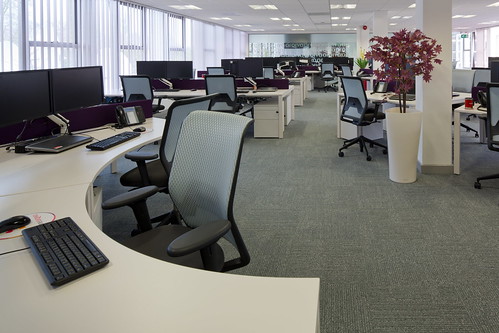
Myths that refuse to die - open-plan offices


For some reason we keep building open-plan offices despite frequent studies that show them to be counter productive. I seldom meet people who actually enjoy working in this type of environment though many put a brave face on it and echo the organisation's belief that it promotes openness and synergy. The latest evidence against open office spaces comes in new research from Harvard University summarised in the British Psychological Society's Research Digest, Open-plan offices drive down face-to-face interactions and increase use of email.

The study monitored the behaviour of employees who had recently moved to an open-plan office and shows that they became significantly less collaborative than they had been before the move. Instead of engaging in all the spontaneous lively discussions and collaboration envisaged in the popular mythology they became silent, preferring to discuss with each other by e-mail or chats. The most striking result of the research is the magnitude of the reduction in face-to-face interaction in the open-plan office.

We began with a specific research question: does removing spatial boundaries at work to create open, unbounded offices increase interaction? Our two empirical field studies were consistent in their answer: open, unbounded offices reduce F2F interaction with a magnitude, in these contexts, of about 70%. Electronic interaction takes up at least some of the slack, increasing by roughly 20% to 50% ...

A common complaint about the open-plan office is the lack of privacy and the difficulty of speaking to a colleague without everyone else overhearing you. The constant movement of people in and out of the room also disturbs thought processes and keep you wondering where a colleague is going now or where they have been. Transparency becomes a distraction rather than a stimulus to increased activity. The BPS article states:

If you’ve ever sought refuge from the gold-fish bowl of an open-plan office environment by cocooning yourself with headphones, or if you’ve decided you’d rather not have that challenging conversation with a colleague in front of a large group of your peers, and opted to email them instead, then these findings will come as little surprise.

Many such offices fall silent since every conversation risks disturbing someone and as a result many people wear headphones all day and communicate by text. The next question then is why bother to travel so far to the office to sit all day doing work that could be done just as well from home? The incentive to come to work is even lower when you have no assigned space and have to take whatever desk is free when you arrive. This lack of personal space where you have your family photos, mascots, a plant or other comforts reinforces a feeling of anonymity and the feeling that if you left no-one would notice. Of course there are exceptions where an open-plan environment really works but the evidence against the concept is stacking up and I wonder how much longer it will continue to be ignored. As one article points out  (Inc. It's Official: Open-Plan Offices Are Now the Dumbest Management Fad of All Time) even if the real reason for open-plan is simply to save money on office space the amount of money lost to the resulting inefficiency should make organisations think again.

Conclusions? We need a variety of spaces, both physical and digital, for different types of work. People need private space to feel secure and work well but they also need spaces for discussions, meetings and interaction. Working from home offers greater flexibility but to make it work well we also need digital meeting spaces for spontaneous discussions and collaboration. We can move between these spaces during our daily work but a fundamental requirement would seem to be a quiet space to call your own.

ReferenceEthan S. Bernstein, Stephen Turban. The impact of the ‘open’ workspace on human collaboration. Philosophical Transactions of the Royal Society B, Biological Sciences. 2018. http://doi.org/10.1098/rstb.2017.0239

Saturday, December 29, 2018

Covering your digital footprints

CC0 public domain on Pixabay
I learned a new term today that encapsulates what I have been worrying about for the past year or so when working with educational technology: surveillance capitalism. Our tools, platforms and channels are watching and storing our every move and happily profiting from our data. Our most treasured possessions are bugging devices that we happily spend enormous sums of money and time keeping up-to-date and always connected. Forgive me if I write yet another post on this topic but the topic is simply too big to be ignored. This past year I have made a few adjustments to my digital life in an attempt to become a little less dependent on the commercial tech giants. I have dumped Google Chrome as my browser, I search with Duckduckgo, thoroughly reviewed my security settings on Facebook (but can't bring myself to leave), tried Mastodon, the non-commercial alternative to Twitter and a few other changes, but I realise I'm still in too deep for my own good.

So how can we help our students to navigate this minefield and what tools and platforms should we use to maintain a decent level of integrity? An article by Erin Glass on Hastac, Ten weird tricks for resisting surveillance capitalism in and through the classroom . . . next term!, contains some excellent advice for educators who would like to move to a more responsible use of edtech without risking data leaking to unknown companies. The article kicks off with a snappy challenge:

Are you watching in sheer terror as BigTech's four horsemen Surveillance, Exploitation, Manipulation, and Cataclysmic Hubris gallop wildly down the information superhighway, downloading their user-friendly death and destruction as far as the eye can see?

The article is not, however, simply doom and gloom. It offers a list of concrete measures for raising awareness among students and colleagues through classroom activities and the application of critical thinking to the platforms and tools we use every day. Just as we need to combat fake news with an increased focus on source criticism we also need to investigate the infamous terms and conditions we so happily have agreed to over the years. What exactly have we agreed to? How can I reclaim my data, if at all possible? What sort of data is stored? How can I delete my account and if I do is the data really deleted? It may seem like a daunting task but the important thing is to realise that we can do something and these issues must be discussed.

Transform your personal paranoia about surveillance capitalism into fodder for cross campus dialogue, research, policy development, and community building. Reach out to your librarians, digital scholarship/humanities specialists, IT workers, humanities centers, and other campus organizations about exploring options to raise awareness about these issues, such as reading groups, talks, and workshops.

The commercial solutions are of course extremely attractive, addictive and easy to use and it's hard to see how to replace many of them but we can make a start by testing out some of the tools mentioned in this article. I am currently trying out the Tor browser that not only does not track you but makes your identity impossible to detect for the sites that feed on that information. Another interesting tool is the chat and messaging service Rocket.Chat that offers an alternative to Slack and other similar commercial tools. I'm also considering moving my blogs onto safer platforms using the service Reclaim hosting. This would be a major undertaking for a non-techie like me and my blogs have 10 years of posts to safely move but it sounds like a good New Year resolution for 2019.

Thursday, July 26, 2018

Learning analytics - is there an off switch?

CC0 Public domain on pxhere
Returning to the theme of learning analytics, I wonder if there will be any way of opting out from being tracked and coached. The potential of learning analytics is in tracking a student's progress, suggesting resources, offering extra practice and constant feedback on assignments as well as monitoring performance. The vision is to have a personal tutor by your side round the clock and provide your human tutor with alerts if your are struggling in some way. The trouble with this is that sometimes you need to be able to switch off the surveillance and just practice in peace. You seldom perform to the best of your ability if you know someone (or something) is watching you.

I recommend you read an article by John Warner in Inside Higher EdThe Problems of Real-Time Feedback in Teaching Writing. He objects to real-time AI feedback on students' writing on the grounds that it does more harm than good. Too much feedback too often can destroy the creative process and simply leading the students to write in order to satisfy the system. There is a time for providing feedback and there must also be time for trial and error and experimentation without the feeling that you are being observed and assessed.

For example, when learning to play the guitar, it’s useful to have some periods of real-time feedback where a teacher may be able to correct a flaw like a bad hand position, but you also need to go lock yourself in your room and practice, likely making a bunch of unpleasant noises in the process. Imagine trying to do this while being constantly reminded that your noises really are unpleasant.

We all need our own quiet spaces to concentrate, experiment, test, reflect and discuss: a play room, sandbox, hideaway, tree house. You don't want anyone to see or hear your embarrassing mistakes and it's best that many early attempts are discarded and lost without trace. This is one reason why students seldom post in the forums of our learning management systems. They only post when required and soon learn that everything they write there is in the university's system and may be used in evidence against them. As a result they create their own closed communities to discuss coursework, away from all risk of assessment. 

We need to use AI/learning analytics wisely and make sure we allow students the right to escape when they need to. The risk is that we destroy creativity by offering too much support and personalisation.

Writing is thinking, writing is thinking, writing is thinking, and sometimes when we’re working on our thinking, we have to be left alone.

Saturday, February 4, 2017

Layers of openness


I have been talking and writing about openness in education for the past ten years or so and still believe that openness in terms of access to educational resources, the right to reuse and recycle existing material and the open publication of research and academic discussion, is vital to a democratic and tolerant society. However my belief in openness has been shaken by the rise of "alternative truth", intolerance and demagogy that so dominate the public space today. I cannot unreservedly support openness as I would have done a year ago. Belief in the benefits of openness, crowd-sourcing or the wisdom of the crowd are based on an assumption that the crowd is benevolent, supportive and behaves in a civilized manner. Sadly we see so often that the wisdom of the crowd can easily turn into the rage of the mob.

How much openness in education can we advocate? Can we recommend students and colleagues to publish their reflections and findings in an open arena where there is a risk of being attacked, humiliated and threatened? Advocating openness is easy for those of us who have never been the subject of bullying, hatred and ridicule but we need to be more aware of the risks and make sure that we don't risk pushing vulnerable students into danger. An article in Campus Technology, Top Fears Shutting the Door on Open Education, looks at ways of helping teachers understand the benefits of using open educational resources and practices but also warns educators about an uncritical approach to openness. Words of caution come from Rolin Moe, formerly Seattle Pacific University:

Moe wants to see more administrators think critically about open pedagogy, using open pedagogy where it's most appropriate, rather than using it for its own sake. Scientific work, for example, might be more appropriate when taught openly. But something like creative writing, which is tied to the identity of a student, should perhaps be taught in a more protective environment.

Maybe we shouldn't aim for openness as default. The level of openness can depend on context and in some cases there are compelling arguments for using more closed environments. Of course there are many places where open discussion does take place without toxic comments but that fear will naturally make many people think twice about participating. I admit that I am much more cautious about joining certain discussions now and try to think at least twice about what I publish and where. If learning is hindered by openness and we learn better in restricted spaces then maybe that's where we need to focus our attention. Moe continues:

"My fear is that we're so beholden to this idea of open as a good, that we hold that above what the true purpose of learning is supposed to be in some cases," said Moe. "I want to encourage people to learn in grand and wide networks, but there are times when that's not going to be the best way to do it."

I wonder if we have to redefine openness into a layered approach; levels of openness depending on context. Simply insisting that everything must be open is sadly not realistic in today's society and when we do step out into the open we need to be prepared both for the opportunities and the threats. Preparing for openness means first working in more sheltered environments where mistakes can be made and analysed. Students who are worried about going open should be respected and an alternative safer arena chosen for sharing their work. More time must be spent on discussing what can and cannot be published openly, how to handle discussion threads, how to deal with trolls and how to use the safeguards, filters and settings available on most publishing tools. The open ocean is probably not the best place to learn to swim.

I still believe in openness but I see many benefits in closed or restricted environments. They allow us to create a learning community based on mutual trust and respect, where mistakes can be made and learnt from. Full openness demands maturity, confidence and skill to negotiate.

Saturday, December 3, 2016

Double-edged sword


The pen is indeed mightier than the sword but in today’s media landscape that pen has become a sword - a double-edged one serving both good and evil. The proliferation of extremist propaganda and fake news are making me reconsider my views on the social media I work with and have promoted so enthusiastically. The ability to build a global professional network, share ideas and learn from others has transformed my life and I spend a lot of my time helping others to use social media to create new opportunities. The net offers us platforms and tools for collaboration, creation, sharing and learning that were simply not possible 15 years ago. However we have rather naively assumed that these opportunities would be used to spread knowledge, learn from each other, build greater understanding, overcome barriers and foster a new spirit of enlightenment. We assume that human civilization has a positive linear development but right now we seem to have encountered some very worrying turbulence.

The tools that enable us to publish our ideas in a polished and professional format and make them accessible to a global audience can also be used to spread extremist ideologies, prejudiced propaganda, hatred and subversion. Lies can be presented as convincingly as the truth and fake news is as slick as the traditional news media. In your Facebook feed it’s hard to tell what’s real and what’s fantasy and even checking sources can be difficult since many propaganda sites are disguised under banners like “independent” or “alternative” that can mean just about anything. Quite simply if an article confirms our own world view we will tend to believe it. Some people are good at creating fake stories that will provoke a certain volatile target group and they then sit back to enjoy seeing the chain reaction of anger that their fake article causes while at the same time earning considerable income from their on-site advertising as the click rate goes viral. There have always been extremists and conspiracy theorists but in the past they only reached a very limited audience, often using extremely poor quality pamphlets sent to like-minded people. Today a lone eccentric has a global voice and there are plenty free tools to help him/her create highly professional websites, podcasts, video channels, publications and social media presence. If you’re willing to put in the time and effort you can seem like a whole organisation rather than an individual.

Our basic trust in the development of democracy and increasing transparency has so far lead us to reap the benefits of the internet. We happily embrace the net giants like Google, Facebook, Apple and Microsoft because although we are concerned about security we trust that these companies are basically benevolent and our governments will make sure that our data is not misused. But what happens as more countries turn to authoritarian populism with less transparency, less accountability and mass surveillance? The media that have helped us foster greater openness and global collaboration are also being used in the opposite direction. Repressive regimes all over the world are becoming very creative at manipulating social media to target dissidents.

How does education meet this harsh new reality where fiction and fact are so hard to tell apart and where monologue is replacing dialoge? Is it wise to continue advocating openness and instead teach how to cover our digital tracks? Are privacy and security the new key digital literacies? If there is a risk that the data will fall into the wrong hands we need to get smart and quickly. Learning analytics offers enormous benefits for education but in the wrong hands the prospects can be frightening. Schools and universities need to put source criticism at the forefront of the curriculum but even that is a double-edged sword. If you are convinced that there is an establishment conspiracy then your source criticism will treat all traditional news sources as suspect.

I have no answers to all this. It's rather complicated at the moment. Where is Gandalf when you need him?

Wednesday, May 21, 2014

The mirage of freedom

Mirage in the Desert by Michael Gwyther-Jones, on Flickr
Creative Commons Attribution 2.0 Generic License by Michael Gwyther-Jones on Flickr

Freedom, like openness is a very subjective concept. One person's freedom is another's prison and this is especially true in the digital world. I have a colleague who refuses to create accounts with companies like Google, Facebook, Apple, Amazon etc on the grounds that he wants to keep as much control of his digital identity as possible and does not want to sell his digital soul to corporate interests. With all the debate around net surveillance this attitude is very understandable and he considers himself free. This attitude is not unusual but it does create difficulties when collaborating with people like me who enjoy the freedom of cloud services and social media and rely on them to work efficiently. My freedom is the convenience of storing resources in the cloud and being able to work from any device anywhere. I value that freedom so highly that I'm willing to overlook the fact that all my work is stored by giant corporations who sell some of it to advertisers and will use my data for future service development as they discover ways of refining the crude oil of raw data. Freedom is clearly in the eye of the beholder.

Similarly I wonder about the freedom of open educational resources and personal learning networks. How open and free are they when they are often dependent on commercial services? Traditional learning management systems are often criticised for being walled gardens and therefore offering less freedom than using social media but we fail to see the lack of freedom involved in letting for-profit companies store our data. How free are you when the company decides to start charging for the service or pulls the plug completely? Even if your resources have open Creative Commons license and are thereby open and free to use they are often stored on commercial services like Flickr, Google, Dropbox etc.

So is freedom just a mirage? Do we have to choose between the two interpretations of freedom described here or is there a way to collaborate, store, create and share online without getting tied into commercial services. Thank goodness for spaces like WikiEducator, Wikiversity and Wikimedia Commons which are non-commercial, self-regulating communities with a culture of sharing. If you are looking for freedom maybe that's the direction to head.