Showing posts with label accessibility. Show all posts

Monday, October 10, 2022

Offline learning in focus as energy crisis looms

Photo by Jonathan Kemper on Unsplash

The prospect of power cuts and major energy saving measures this winter highlights the need for digital resilience and offering alternative access to educational resources. Up till now we have simply assumed that electricity and internet access were ubiquitous and unlimited, at least in privileged economies. One lesson of the pandemic was that many students did not have unlimited connectivity. Some were learning on pay-as-you-go mobile subscriptions and couldn't afford to watch heavy video files or attend long Zoom sessions. As a result many educators have learnt to offer alternative low-bandwidth formats such as text versions of videos, podcasts and downloadable files and these will be vital if the threats of power cuts come true this winter.

James Clay covers this in a post called When everything goes dark. Low-bandwidth formats are not simply emergency solutions but also smart solutions that offer greater accessibility even when all the lights are on. 
When the power goes out, this means no lights, no power, potentially no heating and no broadband. Of course a blackout also means as well no mobile signal, so no 4G. So though you may have a mobile device with enough battery power to use it, it you won’t be able to use the internet.
Universities should already be planning to provide digital resources that are available offline. He suggests contingency training for teachers on how to offer alternative formats and provide support for students. Even if the crisis is avoided these measures will be not be wasted. A lot of video content can and should be replaced by audio, especially when it is simply 30 minutes of talking head video, and a text version is essential for those who have difficulty hearing the speaker.
If you’re not using video, you don’t have to be constrained by text, downloaded audio recordings and podcasts are possible options. Audio also means that the screen can be turned off (or turn the brightness down) again increasing battery life.
Of course this situation is a typical first world problem. In many parts of the world power cuts and poor connectivity are simply part of everyday life and so work and study need to be adapted round the blackouts. We can learn a lot about resilience from all the educators and students in countries afflicted by crises and war. Many Ukrainian universities have managed to continue their courses in spite of horrific destruction. I don't mean that we have to prepare for such extremes but we certainly need to have alternative strategies ready for implementation when needed. Maybe it's time to reach out and learn from them about how to provide education in times of shortage and crisis.


Thursday, March 3, 2022

Digital vulnerability

In the midst of a brutal war in Europe it is very hard to write about educational technology. However, one slightly relevant theme that is emerging is how vulnerable we are today due to our embrace of everything digital. Society has simply taken digital accessibility for granted and become totally dependent on it. Here in Sweden it is virtually impossible to lead a normal life without a smartphone and internet access. Cash has become almost useless and many shops and even banks refuse to accept it. You need to download apps for just about everything - shopping, parking your car, using public transport, booking accommodation, financial transactions etc. 

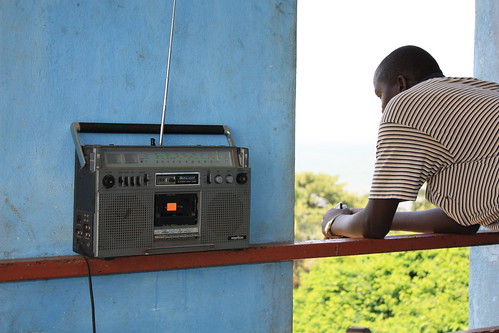
I read in the paper (yes I still read printed newspapers every day) that sales of survival equipment (water canisters, dried and tinned food, camping stoves) have suddenly soared due to the war and the realisation that it could happen here. There's also a marked increase in the use of cash machines (previously deemed obsolete) with the realisation that a cyber attack would render all our apps and plastic cards useless. Another curious detail is a sharp rise in the sales of basic FM/AM radios, especially those that can run without batteries by winding a handle. I also noted that the BBC is setting up shortwave frequencies to broadcast news to Ukraine if internet access is cut. Luckily video did not quite kill the radio star.

Future trends in education? How about survival skills? I don't mean survival courses in the wilderness (though it might be a good idea too) but being able to use both the digital tools and devices as well as their non-digital counterparts. Can you find your way without GPS and Google? Can you make calculations or write notes on paper? I've seen reports of interesting projects about offering digital educational resources to remote areas without internet or even electricity using solar powered servers with stored resources that can then be shared with devices in a basic wifi network (see earlier post). Many countries have used radio to broadcast school lessons to remote and vulnerable communities during the pandemic (as reported earlier on this blog). In an increasingly volatile and unpredictable world we all need to develop plans B, C and D. 

Digitalisation has benefitted us all but we must be very careful about digitalising everything just because we can. We need to maintain alternatives even it may be costly because one day the digital infrastructure could go down.

Sunday, January 9, 2022

MOOCs - so much more than course completion

I started this blog way back in 2008 and that happened to be the year when the term MOOC (Massive Open Online Course) was coined after the ground-breaking course at the University of Manitoba, Connectivism and Connective Knowledge, lead by George Siemens and Stephen Downes. Not surprisingly I have written a lot of posts on this topic and have tried to follow and reflect on the complexities of designing online courses at scale. The term MOOC is used today to cover a very diverse range of course models from very traditional content transfer to collaborative and flexible learning spaces that can be better defined as communities rather than courses. The old adage that every letter in the acronym MOOC is negotiable is more true than ever today, especially O for open. However, despite claims that the MOOC boom of the last decade is over, the form continues to thrive with a massive upswing in interest during the pandemic (see article in EdSurge). 

I have just read an interesting review of recent MOOC research in an article by Aras Bozkurt in Open PraxisSurfing on Three Waves of MOOCs: An Examination and Snapshot of Research in Massive Open Online Courses. It is described as a systematic review of the empirical MOOC publications from 2016 to 2018, a total of 633 articles. The article examines four themes and how these themes have been described in the research.: (I) MOOCs as a mainstreaming learning model in HE, (II) motivation and engagement issues in MOOCs, (III) assessment issues in MOOCs, and (IV) MOOCs for social learning

The author describes three waves of MOOC development: the first wave of connectivist MOOCs (cMOOCs) in the spirit of the pioneers (Siemens, Downes, Cormier, Alexander, Belshaw etc), the highly commercialised second wave based on global consortia and elite universities and the present third wave that is a kind of mix of the previous waves. These waves are given time spans that feel a bit too tidy for me. All three are still present. The so-called first wave did not simply stop in 2011 with the advent of  Coursera, EdX and Udacity. Connectivist inspired open courses (not necessarily massive) have continued to thrive but under the media (and research) radar, recruiting through networks and communities rather than through global consortia. Many have stopped labelling themselves as MOOCs and thus evade radar detection.

One overarching trend in the article is the focus shift from the early qualitative emphasis on openness and community-building to a quantitative focus on massiveness and course completion statistics. The author points out how the focus on completion rates and student numbers has missed one of the main objectives of the whole concept, as a contribution to lifelong learning.

Studies have therefore suggested that the success of MOOCs cannot be measured based on drop-out or completion rates, but rather, on the learning behaviors of the participants (Kahan et al., 2017). The advantage of MOOCs, in terms of social learning, is their ability to form social learning communities (Gallagher & Savage, 2016) that “would arise around the course, would remain over time, and involve participants contributing to with new proposals” (de Lima & Zorrilla, 2017).
Somehow, when MOOCs became mainstream in 2011, they were conveniently mapped into the known models of higher education with measurable learning outcomes and assessment criteria. The potential of the original connectivist model to promote collaborative inquiry and community-building became restricted in the confines of the traditional notion of a course where the course structure and objectives are decided by the course organisers and participants are assumed to embrace these and follow the course to its conclusion.
While the first wave MOOCs was a fertile territory for leisure learners, and learning was associated with perceived learning, the second and third wave MOOCs strived to keep the learners in the MOOC, and thus, motivation and engagement have become a trending hot topic.
MOOCs are constantly compared to regular for-credit university courses and have been marketed as alternative paths to higher education with MOOC-based degrees as well as new credential forms like nano-degrees, specialisations and micro-masters. However the motivation of many MOOC participants is not to gain credentials but to widen perspectives, learn something new or sheer curiosity. Each participant has their own motivation to learn and that will often not coincide with the course organiser's narrow view of a course. Research has so far not investigated learner motivation sufficiently.
One area of concern, however, is that the perceived learning in MOOCs has been neglected as a focus of research. This is important to note because learning goes beyond quantified learning objectives.
Then there is the learning that can occur after the MOOC is officially over. Many people study MOOCs asynchronously outside the timescale of the course and some MOOCs have developed into self-directed communities. I have taken several courses over the last couple of years and all of them were long after the dates of the actual course. Does my course activity count when studying the success or failure of the course? Many people learn a lot without making much of a footprint (if any) and their learning is extremely hard to detect even if it may be significant for them as individuals. 
However, it is noted that not all learners learn by visible interaction (e.g., lurkers or legitimate peripheral participants) or wish be a part of the entire MOOC (e.g., drop ins). Interestingly, some MOOCs help learners to form a learning community, and these communities provide more learning opportunities, even outside of the defined MOOC concept. The problematic view according to the studies in the research corpus is when social learning is framed around predefined MOOC dates alone, ignoring their contribution to lifelong learning. This perhaps stems from the influence of HE, which tends to resist change, and from interpreting MOOCs from a strictly structured HE view.
Finally the author recommends a renewed focus on the potential of open courses (can't we finally lose the acronym?) to promote lifelong learning, widened access to education and community-building rather than trapping a good concept into the narrow domain of traditional higher education.
Based on the research findings and the impressions gained from the examined publications, this study argues that the real potential of MOOCs cannot be quantitatively measured, but rather, this potential should be considered in terms of the qualitative contributions provided by MOOCs. To this end, it is suggested that MOOC providers focus more on the 
social justice and widening participation aspects of MOOCs.

When an institution offers a regular for-credit course the structure, outcomes and pedagogical model are decided and students sign up to follow those with credible credentials as a reward. When you offer an open course without preconditions the participants are under no obligation to accept the institution's success criteria. They participate in line with their own ambitions and learning objectives that may coincide with the institution's but generally don't. The "success" of the course lies in the eyes of the beholders. 

Reference

Bozkurt, A. (2021). Surfing on Three Waves of MOOCs: An Examination and Snapshot of Research in Massive Open Online Courses. Open Praxis, 13(3), 296–311. 

Sunday, October 31, 2021

On-site, online or hybrid? It depends on what you want to achieve.

Photo by Alexandre Pellaes on Unsplash

As more and more conferences return to on-site mode, many feel the need to offer a hybrid mode where most of the event is also available to online participants. Is this just a symbolic gesture to show that we have learned something from the pandemic? How involved are the online participants and how do organisers charge for the online experience? How do we facilitate true interaction between the two groups of participants? Most importantly I think is the question of whether hybrid is the way forward of just an awkward and technically demanding add-on. 

Attending an online conference is very different from actually being there for many reasons. I have found that I sign up for more online conferences than I would ever attend physically but when I'm online I only attend the interesting parts and skip the rest. In some sessions I listen with one ear and continue with other work. I attend but I don't really engage. I am still at work and the conference becomes like background music with a few highlights when I fully concentrate on it. Maybe similar things happen with hybrid teaching. It would be interesting to study the distraction levels of campus and online students.

But maybe the answer is not to try and cater for everyone but focus on your target group. If the whole point of the event is for people to meet and discuss on-site then make that clear and restrict it to on-site delivery. However if an on-site event would automatically exclude important members of the target group then make the event fully online or even asynchronous. By trying to include everyone you risk excluding everyone and the event becomes a messy compromise.

I started thinking about these questions after reading an article by Mark Carrigan on the LSE blog, Is hybrid a desirable ‘new normal’ for academic events? The problems with hybrid are well known in terms of technical complexity and the risk of online participants being flies on the wall, passive observers. If you want an online audience then focus on that and don't try to do two things at the same time. Conferences can instead become processes with asynchronous online interaction over a whole week or several weeks. 

The equipment and expertise which are currently necessary to run a hybrid event mean it probably isn’t the right (or sustainable) choice for a relatively niche event that is unlikely to attract much of an online audience. In which case it might make more sense to have a physical event, with a collective output which can be distributed asynchronously. Digital artefacts like blogposts and podcasts have a tendency to circulate far beyond their original creators. The raw fact of access can be valuable, but the careful packaging of ideas and discussions can be a much more effective way of facilitating remote participation. It might be that only a small number of people would tune in synchronously to engage with an event, but a digital output from that event over time might assemble a significantly larger audience.

It's similar with hybrid teaching. Some sessions must be on campus and therefore we need to make that clear well in advance. Other sessions can be online only and even campus students will join the session from their own laptops. Maybe some sessions can be hybrid but we need to work hard to make them truly inclusive and collaborative. Hybrid sounds like the best of both worlds but can so easily be messy and a disappointment for all. The solution is to decide on the best format for the group you want to be involved. There is no default in the future - decide the optimal format each time.  

This isn’t an argument against physical meetings, but rather a plea that we avoid drifting back to them. The familiar rhythms of seminars and conferences feel intensely alluring after the isolation and suffering which have characterised the last eighteen months. However, do we really want to return to a situation where they are the default? Or could we imagine an approach to academic events which recognises how these options (face-to-face, hybrid, digital) are equally worthwhile depending on what we’re trying to achieve?

Saturday, October 23, 2021

Inclusive online collaboration - from disability to extrability

Blind man sitting at desk with computer and paper on desk.
Photo by Mikhail Nilov from Pexels

Over the last couple of years I have been learning about how we can make webinars and online meetings more accessible for blind and deaf people. This has come through collaboration with a remarkable guy called Oleg Kolpashchikov, who is president of the Russian White Cane organisation. He is totally blind and when we first met at a conference in Kazan in Russia three years ago I was so impressed with how easily he was able to use his iPad, mobile and laptop with the help of all the accessibility tools available today. Since then I have learned how blind people in particular can participate in webinars and online conferences and how we can facilitate their involvement. I admit I have only scratched the surface of this issue but I can share a few insights here.

A central theme of Oleg's work is the concept of extrability. What we so often describe as disability is in fact an extra ability, an extrability. For instance the loss of one sense demands greater use of other senses. Blind people need to develop extremely good memories or their ability to listen effectively. They have a keen awareness of the soundscape around them and this gives them an awareness of space that abled people lack. His organisation works a lot with activities where the abilities of abled and disabled people complement each other and where the development of trust is crucial. In a physical setting this can mean blindfolded seeing people being guided around a town by a blind person or even making food together in a blacked out kitchen. Or even working as a team to sail a yacht where the extrabilities can become very useful (sensitivity to wind direction, sounds etc).

How does this link into online collaboration. It can work very well as long as we make necessary adjustments. Firstly we have to learn to describe ourselves. We usually introduce ourselves by saying our name, what we do and where we live but for blind people you just add a few phrases to describe what you look like - I'm a man in my 60s with short greying hair, glasses, clean shaven and wearing a blue open-necked shirt. For deaf people we need automatic captioning or a sign language interpreter. Blind people can learn from videos as long as they have an audio commentary that describes the visual features of the film as well as the commentary. Here's an example of this that describes the work of Oleg's organisation.


We can also help blind people by making simple adjustments to our PowerPoint presentations in webinars and meetings. These are summarised in an article by Holly TukeHow to make your PowerPoint presentations more accessible. In short it means using the accessibility templates in PowerPoint and being consistent with the use of headings, sub-headings and normal text. Each headline should be unique and describe the contents clearly. Bullet points should end with a full stop so that text-to-speech apps don't just read out all the points as one sentence. Indeed punctuation is extremely important to avoid misunderstanding. Links should not be written as URL but as the title of the web page and a hyperlink, otherwise the text reader will read the whole URL character by character. It's also important to remember to add alt-text to images in the slideshow - just a short description of what the image shows. If you can post your slides before the session they can listen to them in advance and follow you even better. For those with hearing disabilities the presence of sign language interpreters or automatic captioning make the session accessible. Manual captioning is also an option but requires a skilled typist who can listen and type simultaneously. 

We can't realistically make online events 100% accessible for everyone but a few adjustments in our practice can lower the barriers that exist today. Working in mixed breakout groups of sighted and blind people is an excellent lesson that makes us realise the limitations of our "normal" interaction. It can be very confusing at first but with curiosity and a willingness to learn and adapt, the collaboration can work surprisingly well. 

The key is shifting our perception from disability to extrability.

Sunday, May 23, 2021

Conferences - from exclusive to inclusive events

Photo by Belinda Fewings on Unsplash

Technology is often used simply to enable us to continue doing what we have always done but in a digital space. The same seems to be true for online conferences. New platforms and tools are being launched almost weekly and there is a bewildering diversity for organisers to choose between. The corporate market for online conferences is booming and will no doubt replace many of the on-site conferences after the pandemic has faded (though that could be further in the future than most would like to imagine). Digital media have the potential to help us rethink the conference into inclusive and accessible spaces for networking and sharing and there have indeed been many innovative examples in recent months, offering more spaces for discussion and networking as well as offering both synchronous and asynchronous activities. However, it is extremely hard to break from tradition and academic conferences are vital rites of passage for young researchers by having a conference paper accepted. 

This week I enjoyed reading a couple of articles by Catherine Oliver of the London School of Economics. Her article in The Post-pandemic UniversityPost-Pandemic Conferences: Academic networks and changing conference spaces, describes how online conferences have the potential to become more inclusive but that there is a risk that we will return to the the old hierarchies and privileges. Changing traditions involves so much more than simply creating the potential for change, there has to be an awareness that things need to change. The academic conference model is tried, tested and comfortable. After the pandemic most people will want to return to their comfort zones.

The doors of the academic conference create a boundary that not only produces insiders and outsiders, but also the outsiders within. The doors of the academic conference have opened during Covid-19, but a return to in-person conferences threatens to slam them shut.
There are new opportunities to open up conferences but technology does not automatically bring change. It enables change but the will to change has to be there.  
Conferences are an important space for the making (and breaking) of academic communities. The doors to the academic conference are, in theory, more open than ever. But, with the UK government’s intention to get life “back to normal” by the 21st June 2021, the doors might be about to slam on accessible conferences. Conference hierarchies have not been flattened by the pandemic, but new spaces and opportunities are beginning to emerge. While conferences produce insiders and outsiders, they also allow for radical connections to be made; encounters that are more difficult to replicate at virtual conferences. Online networking comes with a host of new relations and rules. But, as we move to post-pandemic hybrid conferences, we must maintain the momentum to radically reimagine not only our academic spaces, but our academic communities.
Another article by Catherine Oliver, on the LSE's site, Online conferences: opening opportunities or reproducing inequality?, looks at those who are often marginalised in traditional conferences, precarious academics such as doctoral students looking for their first foothold on the academic ladder and researchers without the resources to travel. Many have benefited from this year's online conferences, being able to participate and contribute at very low cost and without the need for travel and lengthy visa applications. Many conferences have seen significant increases in attendance by going online and reducing or even waiving attendance fees. It is important not to forget them in our rush "back to normal".
The same care and attention owed to ‘in-person’ events needs to be paid to the organisation of online academic conferences if they are to be fertile spaces for doing academia differently. As we face uncertain futures, now is not the time to abandon precarious academics but to radically reimagine our knowledge production and communication spaces with accessibility, transparency, and openness at the centre.

There will certainly be a sigh of relief when on-site conferences return and many will flock back to the sense of community and shared experience that they offer. But we must remember that such events are always exclusive and many voices are never heard there. We need to learn from the past year and create more innovative and inclusive online conferences with a much lower threshold for involvement. The traditional conferences may hopefully also widen their scope and allow a variety of forms of participation.

Thursday, January 14, 2021

Radio as an educational lifeline for those without internet access

Living in a developed country like Sweden it is so easy to take internet access and ownership of digital devices for granted, but in many parts of the world the majority of the population has neither. In times of crisis when schools and colleges are forced to close there must be other channels for education that are accessible to as many pupils and students as possible. Broadcast media are an often forgotten channel for education in edtech discussions but are still thriving all over the world. For example, in the UK the BBC has recently increased its educational broadcasting to support schools during the lockdown (Guardian: BBC to expand educational shows in response to UK Covid lockdown). Many open universities around the world broadcast educational programmes on state or private television and radio channels, both as part of their regular courses but also as a service to lifelong learning since the programmes are freely accessible to everyone with a radio or television.

The value of radio for education is shown in an article on Rest of world, Why radio stations may be the real “e-learning” revolution. It describes how radio is used to provide teaching when schools are closed due to the pandemic. In sub-Saharan Africa over 85% of households lack internet access and many have no reliable electricity supply so even if there are many initiatives offering online education it is simply inaccessible for the majority. On the other hand most people have some kind of battery radio and can therefore benefit from school broadcasting.

In both urban and rural areas, battery-operated radios broadcast information to entire households. As cheap as $5, a radio is less energy-intensive than a television and can be shared more easily than a smartphone. The infrastructure was already there. All that educators needed was to adapt content.

Teachers have been busy broadcasting on existing channels or creating new radio channels and some are also offering educational content to mobile phones via sms. The response has been impressive and in Sierra Leone 58% of pupils listened five days a week.

Mary Phiri, a 36-year-old farmer in Joel Village in eastern Zambia, has five children in grades two to 12. Her work keeps her so busy that making sure her kids continued their schooling during the pandemic had to be a family-wide effort. Her older children would also tune in to assist their younger sibling with her schoolwork. With radio lessons, her children, normally shy at school, could ask their parents or siblings the difficult questions that might have gone unasked in the classroom.
Even in developed countries we should not underestimate the power of broadcast media in both formal education and lifelong learning. The future of education will involve a blend of both digital and traditional methods and we need to ensure that noone is excluded. Radio still has a lot to contribute!

Monday, October 19, 2020

Accessible online meetings - work in progress

Photo by Daniel Ali on Unsplash

In almost all synchronous meetings, either on-site or online, there are people who are in some way excluded. Whatever time you choose it will not suit everyone and even if the meeting is recorded the absentees can only be spectators with little or no opportunity to affect the outcome. Often there is no time to let everyone speak or the discussion is dominated by a vocal minority. In online meetings there are always participants with poor internet connections or older devices that don't support the latest versions of the software being used. A further dimension to the exclusivity of synchronous meetings is how well they offer support to participants with special needs. How well can people with hearing or sight impairments follow your webinars or conference sessions and how can we improve the experience?

An article from Drake MusicAccessibility in Video Conferencing and Remote Meetings, gives some good suggestions for making online meetings more accessible. For those with hearing difficulties, automatic subtitling is obviously the best option, but at the moment this is not available in all platforms. Zoom for example, offer the option of adding a third-party app for automatic subtitling or enabling a manual service if you have a colleague who can type very quickly. I suspect this feature will soon become default but the accuracy of speech to text apps will vary greatly depending on language. As ever they work best in English and other major languages. An interesting idea when showing slides is to share the slide preview page instead of the full screen slide. The reason for this is that your slide notes will be very useful for those who have trouble following your speech. 

Another option is employing a sign language interpreter. New features in Zoom include the option to spotlight several people in the video view and so you can spotlight both the speaker and the interpreter. Taking this concept a little further how about being able to offer simultaneous interpretation into other languages? This would mean having separate voice channels and allowing participants to listen to an interpreter rather than the speaker. I don't think any platform offers this facility but it would really increase the accessibility and reach of international webinars if they could be available in different languages, as well as in sign language.

For those with sight impairment good audio is essential and that means strictly muting everyone other than the speaker to eliminate background noise. Speakers should also make sure they use a good headset or desktop microphone for best audio quality. Speaking clearly and slightly more slowly gives everyone time to follow you and any visual material must be described. In addition it is a good idea to identify yourself when you want to speak. In this context the webinar becomes more like a traditional telephone conference where the role of the chair is vital. Small breakout groups can be more spontaneous and group notes can be uploaded as audio files to a common work space.

Another approach to greater accessibility is to reduce the importance of the synchronous meeting and learning to meet and collaborate asynchronously. Here the input can be recorded in advance with good subtitling and text manuscript and discussion can be curated in a community that allows text, audio or video comments and a format that is in line with relevant accessibility requirements. Bandwidth requirements are much lower for asynchronous platforms and participants can even submit text responses from a mobile. We may be surprised at the greater response levels compared to a traditional video conference. Maybe we need to ask ourselves when we really need a synchronous meeting and how much we can achieve in other ways.  

I will admit that I have not been very aware of these issues until recently and I have a lot to learn. I am keen to learn more.

Wednesday, April 15, 2020

Transition to online teaching - so far so good but who are we leaving behind?

Photo by Tim Gouw from Pexels
With the vast majority of schools and universities in the world teaching online there is plenty scope for research into how well or not the transition has been managed and what conclusions can be drawn from the experience. Already there are survey results indicating that most students are satisfied with the online solutions being offered, given the exceptional circumstances prevailing. However that should not lead to complacency for behind the positive indications there are also students who are being excluded.

One new survey, of law students at the University of Oslo, is described in an article in Mirage News, Digital teaching provides good learning outcomes, lightning-fast research shows. A week after moving to online teaching 175 students were asked about their experience of the transition and although this is an extremely limited survey it does reveal some interesting tendencies (the published article is available in Norwegian, Første uken med digital undervisning i koronatiden: Jusstudenters erfaring). 60% of the students stated that the online teaching was as good as or even better than the campus teaching and the teachers express surprise at how well the transition was received. One teacher explains:
My main thought is that the findings indicate that the students across the faculty have positive experiences from the first week of digital teaching. Although there is of course some criticism here and there, I had really expected far greater dissatisfaction, especially considering that this evaluation applies only to the first week. At the same time, we need to be a little cautious about the use of these findings, as they are only based on the first week of digital teaching.
At the same time there was a significant number of students who were less satisfied and this was mostly due to other technical and social factors.
A substantial minority of students are struggling with childcare, illness, poor internet connection, lack of workspace at home and lack of contact with teachers and fellow students. There is a strong correlation between the number of challenges and how the student evaluates their learning experience and study situation.
Most of these factors are beyond the control of the university but are critical to students' academic success, not just in exceptional times such as these. One uncomfortable truth is that university education is still largely geared to the traditional student model who are able to live and study on campus, do not need to combine study with work and do not have families to care for. University study whether on campus or online is designed for the traditional notion of a student, as described in an article on The ConversationUniversity study is designed for the privileged – students from disadvantaged backgrounds suffer. This becomes even more true in the exceptional circumstances today. Those who cope best with online learning are those who are already have good study skills, have access to fast internet connections, own the right devices and have a social environment that allows them to study in peace. For others simply finding a place to study in peace is a challenge, especially when even places like public libraries are closed. 
Additionally, flexibility may make it harder to carve out time for studies. Scheduled on-campus blocs of time allow students to focus, which they may not be able to do when faced with the immediacy of children or younger siblings not attending school. Many students are working in retail, meaning they may be their family’s only source of income as parents are unable to work. The risk is that the pandemic exacerbates existing inequities and makes it even harder for these students to engage with their studies.
These themes are further developed in a blog post by Tharindu Liyanagunawardena (UCEM, London) Online learning in challenging times. In the rush to switch to online mode it is all too easy to forget accessibility issues and not take the students' home situation into consideration. We cannot, of course, remedy their social situation but should at least try to ensure that our platforms and tools are as accessible as possible. For example we can ensure there are transcripts of the video lectures for those without access to broadband or who prefer to read than to listen. Maybe an asynchronous activity is easier to access and participate in than a synchronous video meeting? Tharindu gives further examples:
For example, if a student with a hearing disability was supported by a note-taker in class how could we support this student now that we have moved to online lectures? Or now that most overseas students have gone home to their countries, can we conduct online classes at the same time and expect them to be present despite the time differences? What if the technology we adopt is barred in some countries where our students reside?
It is only natural that in the scramble to move online some issues are forgotten or omitted due to lack of time and resources but as we move on these issues need to be addressed. In all situations we need to take time to consider who we are excluding or limiting and try to find the right balance.

Wednesday, May 15, 2019

Offline digital resources - connecting the unconnected


In many parts of the world the idea of online education is still only a dream. Rural communities lack internet connectivity and even if mobiles are used, the networks can only offer basic services like voice and text. Refugee camps around the world are full of children who need to learn but lack books and educational resources. There are plenty of initiatives that offer education based on low bandwidth text and voice services but how can people learn basic internet skills that may be so vital for the future?

One inspiring solution to this is a non-profit initiative called KIWIX that allows you to download Wikipedia, Wiktionary, Wikimed, WikiVoyage, Project Gutenberg, and Stack Exchange as compressed content packages and then be able to browse and read them offline on virtually any device. The teacher first needs to be able to download the packages but once that is done the material can be distributed to, say, pupils in a school, using a specially designed wifi hotspot. All the software and content are all free to download and use.

KIWIX provides free software to bring free knowledge even to remote places. This may be a school on the countryside in a developing country. This may be you on a plane or in the wilderness. Wherever you go: KIWIX gives you access to Wikipedia, WikiVoyage, Project Gutenberg, and a lot more free content from the Internet – even if you don’t have an Internet connection.

Since Wikipedia is available in so many languages this solution offers schools in rural areas or refugee camps access to valuable educational resources when printed school books are either unavailable or too costly. Access to this type of online material can be vital for speakers of "smaller" languages and there are many cases of educators collaborating on developing their language's Wikipedia content. School books may be impossible to afford or even non-existent but by developing Wikipedia and using solutions like KIWIX teachers can give children access to educational resources and help them gain basic internet skills without even internet access.

The website describes successful applications of KIWIX in places like Ghana and Cuba where internet access is limited. Another option suggested is to provide access to sites that are blocked and censored in some countries, such as North Korea, though the risks of doing that may outweigh the benefits.

Sunday, March 11, 2018

Accessibility as default


Over the last couple of years I have become increasingly aware of accessibility issues in online education. I admit to previously not giving much thought to how people whose hearing, sight, physical mobility or cognitive abilities are different to my own, interact with digital media. However by meeting and discussing with people involved in this area, I have gained a few insights into accessibility questions and a whole new world has opened itself to me.

An article on the Webinar blog, Webinar Slides And Text-To-Speech, highlights the issue of writing to facilitate text-to-speech applications. If we follow some simple guidelines we can make sure that all our digital resources are more accessible. Instead of making alternative accessible versions, why not make accessibility default?

In a perfect world, we would make a version of presentation materials that are optimally designed for a sighted audience listening to a narrator, along with a second set of hardcopy materials that can be referenced by a larger and more physically diverse audience. But there are practical considerations for how much time and effort presenters can dedicate to their materials. If you can only make one version, why not make it accessible to everyone?

The article refers to an excellent guide to writing for accessibility: the British Dyslexia Association's Writing for text to speech. For example, when writing presentation slides, extra attention to punctuation can make an enormous difference for those who need to listen to the text. If you write bullet points without a full stop or semi-colon at the end of each point, then the text-to-speech app will simply read all points as one long sentence. With punctuation, however, it will be read as a list with pauses between points. Some other simple tips:

  • Write numbers manually in bullet lists since the automatic numbering is not picked up by the text-to-speech apps.
  • Dates should be written using the name of the month rather than combinations of digits (11 March 2018).
  • Times should use a colon instead of a stop to separate hours and minutes (10.30). 
  • Put stops in acronyms, otherwise the app may say it as a word (U.S.A. or e.g. would be best). 
  • Use styles to show headings or sub-headings rather than bold normal text. 
The list goes on. The point is that by following some simple rules, you can easily make your texts more accessible. Furthermore we also make our resources clearer and more consistent for all. Text-to-speech is used by many with perfect sight, for example listening to text in a mobile. Shouldn't we make sure we teach accessibility as default and not as an optional extra?

We all have so much to learn!

Tuesday, March 7, 2017

Open means accessible

CC0 Public domain on Pexels
One important aspect of openness is accessibility but how many open educational resources meet accessibility guidelines?  How many films offer subtitles and a text manuscript, can all texts offer text to speech, are there transcripts of audio podcasts and are there options for slower playback of video and audio material? The Web Content Accessibility Guidelines (WCAG) provide all the necessary guidelines for web-based content but I suspect a large amount of educational content falls short (maybe even this blog!).

This has been a largely overlooked aspect of openness but an article in Inside Higher Ed, Berkeley Will Delete Online Content, reveals that Berkeley's whole open courseware program has been called out for not complying to accessibility legislation.

The Justice Department, following an investigation, in August determined that the university was violating the Americans With Disabilities Act of 1990. The department reached that conclusion after receiving complaints from two employees of Gallaudet University, saying Berkeley’s free online educational content was inaccessible to blind and deaf people because of a lack of captions, screen reader compatibility and other issues.

Complying with these demands would be a time-consuming and costly process for the university; 20,000 audio and video files would have to be upgraded. So Berkeley have chosen to remove the offending resources from the public space and put everything back where it came from, closed behind the university log-in. This process alone is calculated to take between three to five months.

“In many cases the requirements proposed by the department would require the university to implement extremely expensive measures to continue to make these resources available to the public for free,” Koshland wrote in a Sept. 20 statement. “We believe that in a time of substantial budget deficits and shrinking state financial support, our first obligation is to use our limited resources to support our enrolled students. Therefore, we must strongly consider the unenviable option of whether to remove content from public access.”

This would seem to be a major blow to open education and I can imagine that many other institutions will be checking their own open courseware to see how well it meets accessibility requirements. But most importantly it shows that accessibility should be built in to all educational resources, whether they are publicly available or restricted access. Moving resources from public view doesn't solve the problem because you need to ensure that all students can access and use the resources as part of their education. It would be very sad if this endangers the further development of openness in education but if it means that awareness of accessibility will be raised than maybe it's a step that must be taken.