Showing posts with label plagiarism. Show all posts

Thursday, July 20, 2023

Into the vortex of the post-truth era

Photo by Manuel M. Almeida on Unsplash

I can't help it but here's another post about my concerns with artificial intelligence. AI is already being used to churn out fake news stories, entire sites of it, as well as fake reviews of hotels, restaurants, movies and much much more. It can be used to write plausible project plans, essays and academic articles (often without substance or any originality complete with references both genuine and invented), fake videos of people saying and doing things they never did in reality (whatever that is!), scripts for TV shows, novels - the list goes on and on. Since AI can produce an infinite amount of content in a few blinks of an eye, I wonder what happens when most of the content on the web is AI-generated. And since AI trawls the web for content it will be trawling other AI content and producing new content based on its own content. This sounds like a wormhole into a Wonderland where nothing is real and fact and fiction have become completely blurred into each other. 

Reviews have been a problem for a long time with people being paid to write fake reviews to make or break a hotel, restaurant, destination, book or film. But why pay people to write nonsense when AI does it instantly and for free. This is highlighted in a n article in the GuardianFake reviews: can we trust what we read online as use of AI explodes? The review sites like Trip Advisor, Amazon etc are aware of the problem and try to filter out the obvious fakes but very soon we will not be able to tell the difference, making the whole process meaningless. In the end you stop reading the reviews. The companies behind the AI tools simply ignore the issue - they lit the fuse and then watch the fireworks.

Guardian Money asked OpenAI, the company behind ChatGPT, why it does not prevent its AI tool from producing fake reviews of hotels, restaurants and products that the “reviewer” has never visited or used. We made multiple attempts to contact the company and submitted a number of questions but it did not respond by the time this article was published.
AI music is also thriving with streaming services offering playlists of AI-generated formula music in various genres. Since this music is generated by scanning thousands of human compositions the music industry is concerned about copyright and royalties as described in an article on CNN, Universal Music Group calls AI music a ‘fraud,’ wants it banned from streaming platforms. Experts say it’s not that easy. We could theoretically stop it but it's hard to prove breach of copyright when the AI tool has sampled thousands of pieces. 
“You can flag your site not to be searched. But that’s a request — you can’t prevent it. You can just request that someone not do it,” said Shelly Palmer, Professor of Advanced Media at Syracuse University.
Pandora's box is wide open and it looks very unlikely that we will be able to impose regulations. Once again the companies benefitting from the AI-generated content are predictably silent:
Music streamers Spotify, Apple Music and Pandora did not return request for comment.
I have read many articles about how we can harness AI to open up new opportunities in education, health care and other fields and there will be some excellent examples of good practice. But in terms of the wider impact I simply can't imagine human beings acting so rationally. We are truly entering the post-truth era.

Saturday, March 4, 2017

In your own words ...


The cat and mouse game of plagiarism detection is becoming increasingly difficult for schools and universities as the technology that assists cheating becomes increasingly sophisticated and hard to detect. Simple straight plagiarism generally gets caught by the widely used detection tools like Turnitin but these tools are relatively powerless against more advanced forms of cheating. The most effective method is a human solution like essay mills where students can earn money writing other students' essays and guaranteeing "originality". This is almost impossible to detect unless there are genuine examples of the students' writing to compare with. However a new grey area of plagiarism has come to light with the rise of automatic paraphrasing tools that can rephrase a text so that it will not be flagged as plagiarism in automatic checks.

Paraphrasing is one of the most important skills that students must learn. Summarising a text to capture the essence in your own words and of course providing a reference to the source is a skill that takes years to perfect. However many people are unsure of where the line is drawn between paraphrasing and copying; simply changing a few words to synonyms is not enough and in all cases the original text must be cited. A new study by Ann M. Rogerson and Grace McCarthyUsing Internet based paraphrasing tools: Original work, patchwriting or facilitated plagiarism?, examines how these paraphrasing tools, also known as essay spinning, can be used to evade plagiarism detection and the implications for both students and teachers.

There are many free paraphrasing/essay spinning tools, for example Paraphrasing Tool and GoParaphrase are both tested in the study, and all you do is paste in the text you want summarised and then click for the new text. The results are not impressive, often with many unusual synonyms and awkward turns of phrase but in many cases the text is sufficiently far from the original to avoid being detected in a plagiarism check. If you are willing to pay there are more sophisticated tools that no doubt produce more polished paraphrasing. The study showed that the resultant texts were not detected as plagiarism by standard anti-plagiarism tools. So how can we detect this practice and more importantly how can we prevent people from being tempted to use such tools in the first place?

One aspect that interests me is when paraphrasing is used by non-native English speakers who may be weak at paraphrasing on their own due to limited vocabulary and lack of linguistic fluency. The unusual vocabulary that the paraphrasing tools dig up could be seen by the teacher grading the essay as simply linguistic inexperience rather than signs of automatic paraphrasing. For native speakers this would hopefully start alarm bells ringing but it's not so easy for non-native speakers, most of whom will make similar errors when genuinely paraphrasing themselves.

Where a student is considered to lack the necessary linguistic skills, the errors or inaccuracies may be interpreted by assessors as a student having a poor understanding of academic writing conventions rather than recognising that a student may not have written the work themselves. Where an academic is working in an additional language, they may find the detection of the errors or inaccuracies more difficult to identify.

Another aspect is when the paraphrased text includes references. One amusing side effect of these tools is that even the references get paraphrased and the titles of cited articles get changed beyond recognition, as well as finding synonyms for the authors' surnames. However if you paraphrase a text and use the citations without acknowledging that you did not find these references yourself then that is also dishonest. Finding your own references to support your arguments is an integral part of academic writing.

Furthermore, students using an online paraphrasing system fail to demonstrate their understanding of the assessment task and hence fail to provide evidence of achieving learning outcomes. If they do not acknowledge the source of the text which they have put through the paraphrasing tool, they are also guilty of academic misconduct. On both counts, they would not merit a pass in the subject for which they submit such material.

What can educators do to prevent students from using these tools? The most obvious strategy is to discuss the issue regularly in class, showing that you are aware of these tools and pointing out the dangers. I suspect that many students are simply unaware that automatic paraphrasing is wrong. More support should be offered developing paraphrasing skills and why it they are so vital. Furthermore, the wider use of oral testing is recommended in the article since it is much harder for a student to take short cuts and the teacher can quickly gauge the student's understanding of the subject. Finally educators need to learn how to spot signs of machine translation and automatic paraphrasing and realise that their own professional judgement is still the most important element in assessing student work, even when anti-plagiarism tools are in place.

Of course this post is itself an example of paraphrasing to a certain extent. I hope I pass the test!

Reference
Rogerson AM, McCarthy G.(2017) Using Internet based paraphrasing tools: Original work, patchwriting or facilitated plagiarism? International Journal for Educational Integrity

Sunday, May 22, 2016

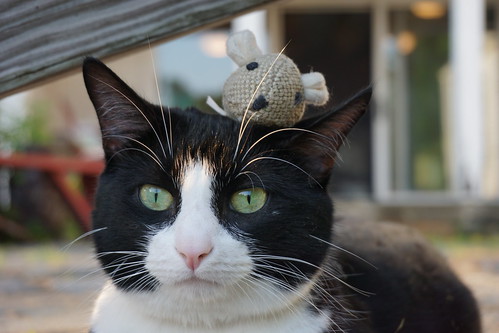
Cat and mouse - cheating in education

Cat and Mouse by katie_mccolgan, on Flickr
"Cat and Mouse" (CC BY 2.0) by katie_mccolgan

Every week there are reports of cheating in school and university exams and assignments and it's easy for some to inperpret this as a purely modern phenomenon enabled primarily by digital technology. Is cheating really on the rise or has technology enabled us to detect it more easily? What makes people go to such lengths and expenses to cheat the system? A recent revelation here in Sweden showed that some people were paying well over €10,000 to cheat on their university entrance exams. If you have the cash you can get someone else to write your essay for you and they will also guarantee that it will pass any plagiarism detection system. University entrance and qualifications are hard currency and whenever there are clear rewards on the table the temptation to cheat will always be there. It's certainly prevalent in business, politics and sport so it's naive to think that education should be exempt.

Cheating and counter-cheating is becoming a frantic arms race as each side tries to out-trick the other. Online examination proctoring services are flourishing such as Proctor U and Software Secure. These solutions offer secure online examination by locking down the students' computer and using multi-factor identification, screen, webcam and microphone surveillance and keystroke analysis. In the traditional campus exam hall students can now use their laptops but in most cases they are offline, locked into the exam administration system and monitored. However for every new solution to increase exam security there are counter moves from the cheaters. A classic case of cat and mouse.

This cat and mouse game is discussed in a new post by Donald ClarkLecture, essay, cheat, repeat… plagiarism, why it's endemic and 10 ways to avoid. He sees the traditional reliance on summative assessment as the main problem. Predictable exam questions can easily be memorized and it's easy to get ready-made answers to many common titles, especially if you're willing to pay for it. He suggests several alternatives to summative assessment methods.

Essays are sometimes appropriate assignments if one wants long-form critical thought. But in many subjects shorter, more targeted assignments and testing are far better. There’s a lot of formative assessment techniques out there and essays are just one of them. Short answer questions, open-response, formative testing, adaptive testing. I’d argue that student blogs are often better than essays as one can see progress and it’s not something that’s easy to plagiarise. Truth be told, HE wants it easy, and essays are easy to set. They also have to accept that they are also easy to cheat.
One simple trick Clark suggests is googling your essay question and see if the answers are already out there. We simply have to set assignments that aren't so easy to cheat. If you do set an essay then provide formative assessment by reviewing the drafts to see how the work is progressing. Interviews, face-to-face or video, can give an excellent idea of the student's ability and are very difficult to cheat in. The investment from the teacher's part is often less than that of marking written papers. despite this very few dare to move away from the examination methods that are so clearly easy to cheat. Clark blames institutional inertia and tradition for the situation:

This has reached crisis point. Everyone knows it but there’s a conspiracy of silence. Universities are scared to admit the scale of the problem, as they trade on reputation. We’ve created this monster but institutional inertia is incapable of solving the problem, as they refuses to change.

Clearly no-one benefits from playing cat and mouse and although we'll never eliminate cheating from education there must be better ways of assessing students' ability. The essay or scientific article has for so long been the prime medium of academic communication but maybe we should widen our scope and include other forms of expression for assessment, moving the focus to a richer assessment mix of formative and summative methods as well as using peer assessment and assessment of practical work experience. By widening the focus like this we can at least make cheating extremely difficult.

Saturday, March 1, 2014

Science on auto-pilot

robot army by peyri, on Flickr
Creative Commons Attribution-No Derivative Works 2.0 Generic License  by peyri

Fifty years ago each academic field would have a limited number of journals and an even more limited number of conferences and it was quite possible to keep abreast of what was happening. That is simply not possible today with an ever-increasing deluge of publications and conferences in even the most narrow and specialised of fields. With such volume it is inevitable that some events and publications will have serious quality issues. Many less serious journals seem to publish just about anything without any peer review and the same is true for some conferences where accepting all papers can mean that authors will pay to attend.

An amazing news post in Nature, Publishers withdraw more than 120 gibberish papers, reveals that publishers Springer and IEEE are removing more than 120 published papers after discovering that they were automatically generated by computer and were, in fact, complete nonsense. These papers are generated by software called SCIgen that was developed by students at MIT about 12 years ago to see if random generated articles could get accepted for academic conferences. The articles produced by SCIgen certainly look plausible at first glance and if that is all the conference or journal reviewers have done it's possible to accept them. However anyone who actually tries to read them will see the bluff pretty quickly - have a look at one and see for yourself. If you can't spot them yourself then there is even a program that will detect computer generated papers, SCIgen detection. Read more on this in an article in the Guardian,
How computer-generated fake papers are flooding academia.

What's really interesting here is that although SCIgen was developed so long ago, nonsense articles are still finding their way into journals and conferences, to the amusement no doubt of those who submitted the articles and developed the software. In a way you could claim that they are doing an important job by revealing publications and conferences whose peer review of submissions either doesn't work or doesn't exist. These revelations will no doubt inspire some to take a serious look at their routines and some may hopefully be forced out of business.

Academics are under intense pressure to publish, conferences and journals want to turn their papers into profits, and universities want them published. "This ought to be a shock to people," Krohn said. "There's this whole academic underground where everyone seems to benefit, but they are wasting time and money and adding nothing to science. The institutions are being ripped off, because they pay publishers huge subscriptions for this stuff."
Guardian 27 Feb 2014, How computer-generated fake papers are flooding academia

Sunday, December 2, 2012

Online cheating - the discussion rolls on

Cheating Cheaters and the Cheaters Who L by Mr_Stein, on Flickr
Creative Commons Attribution-Noncommercial-Share Alike 2.0 Generic License  by  Mr_Stein

The debate about cheating in online courses seems never-ending and, honestly, as long as we set assignments where the answers can easily be found on the net it's not going to go away. Tony Bates writes about the problem in a post called Tools to prevent online cheating. He refers to a recent post by Ki Mae Heussner on Gigaom, Five ways online education can keep its students honest, which lists methods to counter student cheating. These methods involve setting up web cameras to watch students as they take the test, keystroke pattern recognition, browser lockdown and anti-plagiarism software.

If you want to test a student's ability to remember facts then traditional invigilated examinations are still probably the most effective method, though far from foolproof. An alternative often used around the world is local learning centres that can offer students in the region the chance to take tests in an invigilated environment in cooperation with the university. In these situations you can easily have ID checks and ensure that the right person is sitting the exam.

Online tests, however, are always going to be problematic unless we simply stop using this type of examination. A web meeting using for example Skype where the teacher can question the student face-to-face is ideal and reliable but too time consuming for classes with more than a small number of participants. However continuous assessment through a variety of assignments and using different media can give a reliable picture of the students' ability since the teacher can learn to recognize the student's style of expression. The key however is to base assessment on tasks that demand relating practical experience with personal learning; thus making the answers so personal and specific that it is virtually impossible to cheat.

Bates' conclusion however puts the cheating issue into perspective. Cheating means you have missed the point of education and the main person you're cheating is yourself.

"Cheating is often the result of a poor educational process or experience. Once again, this comes down to the distinction between learning as transferring information vs learning as a developmental process. If, as I do, you believe education is a developmental process, it is the student in the end who loses from cheating, because they have missed the point of the exercise, which is self development and growth."

Tuesday, September 25, 2012

Remote control

There have always been people who offer to write your essays or assignments for you at a price. It's inevitable that such services will now thrive on line and it's no surprise to read in Inside Higher Ed this week an article called Paying for an A. It highlights web services like We take your classes that offer to do your online courses for you while you concentrate on more interesting activities.

In the past such services offered to write a single assignment for you whereas now they can take the whole course. It's not cheap and is probably not an option for the vast majority of students but with so many online courses available today there must be plenty where identity checks are less stringent than they should be. Instead of being outraged and deciding that online education is wide open for cheats we should maybe look a little deeper at this type of scam and what it really says about education.

If you can let someone else do the course for you then the provider has definitely got serious quality issues to deal with. The article in Inside Higher Ed gives examples of colleges who have quite rigorous security checks on online students to ensure that the right person is answering the questions. Random questions, video sessions, bank-style personal security log-ins and biometrics may all feature in online learning before long. However we also have to look at the way many online courses are designed. Courses that are based on the transfer of information and are heavily content-based tend to have examination forms that lend themselves to cheating. The greater the interaction between teacher and student and between students the harder it gets to cheat like this. According to Kyle Johnson, an independent higher ed consultant:

“What kind of experience are we providing for students if someone is able to take an entire class for a student and we never figure it out from the interaction? At a pedagogical level, that’s my concern. Are we really just dumping information at them so someone can come in and take a couple of quizzes and they’re done?”

Two conclusions from this case then. We need to move from linear, content-based courses to collaborative, task-based courses where assessment comes from successful completion of projects and where networking and dialogue make cheating extremely difficult. We also need to find better ways of checking identity online and maybe more complex log-ins as described in the article may be part of the solution.

Thursday, September 20, 2012

Don't shoot the piano-player

Copy Find Paste by shakakahnevan, on Flickr
Creative Commons Attribution-Noncommercial-No Derivative Works 2.0 Generic License  by  shakakahnevan

There's a steady stream of headlines about cheating in education. It's mostly cases of plagiarism and an underlying tone in many of the reports is that this is rising due to the use of computers in schools and universities. We bemoan today's cut-and-paste culture and many are increasingly sceptical of online examination. It's easy to blame technology for the increase in plagiarism but you seldom read about the technology that detects the cheaters. Is plagiarism really on the rise or are we getting better at discovering it?

Back in the good old days when I went to university I suspect that cheating was just as frequent, if not more so. Today a teacher can use anti-plagiarism software to check a student essay but in the past the teacher had to be very sharp to detect any signs of cheating. A clever student could certainly cut and paste from old essays and more obscure journal articles and run very little risk of being detected.

We regularly read about politicians, business people, celebrities and sports stars who cheat and cut corners to win the big deals and honours. Therefore the idea that education would be any different is absurd. If there are material rewards at stake then some people will be tempted to cheat. The greater the rewards the greater the temptation. It's not the net that causes people to cheat, we've been good at that for centuries.

Thursday, August 23, 2012

Cut and paste

copy culture by Will Lion, on Flickr
Creative Commons Attribution-Noncommercial-No Derivative Works 2.0 Generic License  by  Will Lion

The Chronicle of Higher Education reports that many cases of plagiarism have been discovered on free, open courses run by Coursera: Dozens of Plagiarism Incidents Are Reported in Coursera's Free Online Courses. This is no real surprise since the nature of massive open online courses is freedom and flexibility and of course the opportunities for cheating would seem to be enormous. The puzzling point here is that these courses do not lead to university credits so what's the point of cheating?

However some students are cheating and one professor has already made a plea to curb plagiarism and there is talk of using plagiarism-detection software in the future (as is standard at many universities already). The main point of the Chronicle article is that the these cases have been discovered by other students through peer assessment rather than being left to the teachers to detect. Students have raised suspicions of plagiarism and taken them to the professors but instead of dishing out punishments many teachers see this as a teachable moment:

In an interview this week with The Chronicle, Mr. Rabkin, who is also an English professor at the University of Michigan at Ann Arbor, said he sees the plagiarism incidents as a "teachable moment." He said one student wrote him soon after he posted his letter and confessed to submitting a plagiarized essay, but the student said he had not realized that copying and pasting from other sources was wrong. The student asked that his essay be withdrawn and that he be disqualified from receiving a certificate, but Mr. Rabkin said he wrote to Coursera officials saying the student should be given a second chance.

Although there are cases of deliberate plagiarism I think most cases are due to a lack of awareness of what constitutes plagiarism and many cases could be avoided with some hands-on training. An excellent example of how to increase awareness of plagiarism is described in an article in Faculty Focus: An Assignment that Prevents Plagiarism. Here students were given a sample essay written by the teacher and fully referenced but which contained 10 examples of different types of plagiarism. The students' task was to spot the plagiarism and rewrite the essay correctly and finally adding their own referenced conclusion. By doing this excercise the students became more aware of what plagiarism is and how to avoid it. According to the study this type of work reduces plagiarism radically.

There are of course stern warnings against plagiarism in every syllabus and college regulations but the whole concept is still abstract and poorly defined in the minds of the students. Only by raising the issues in a practical manner as described above can students grasp what is allowed and develop a sensitivity for what is not acceptable. The fact that plagiarism has been discovered in a MOOC says nothing really about the nature of the course itself, simply that this is an issue that few students today have a clear grasp of.