Showing posts with label ubiquitous learning. Show all posts
Showing posts with label ubiquitous learning. Show all posts
Sunday, June 12, 2016
Taking charge of your professional development
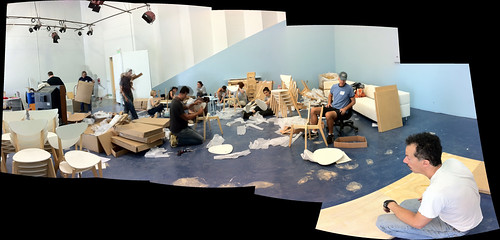
For many education professionals competence development is still mostly locked into attending internal training sessions either on campus or at a conference centre before the start of the new academic year. Sometimes these sessions are excellent and many can gain inspiration from them but often they miss the mark. The session can never be relevant for everyone; some already know what is being taught and others find it completely over their heads. Competence development is highly personal and so a classroom approach is always going to fall short. Maybe the most valuable group trining initiatives are workshops on how to take charge of your owbn professional development. Instead of waiting for a suitable on-site course to be arranged we can all benefit from learning how to find educational resources, join communities of practice, develop personal learning networks, find open courses to join amd develop skills in online collaboration. The range of opportunities is vast but sadly very few teachers are aware of them so awareness raising workshops are a good start.
Steven W Anderson writes about this in a recent post, Taking Control Of Your Professional Development. He recommends teachers to widen their horizons by reading educational blogs, attending free webinars, joining Twitter chat sessions and attending edcamps. The links he provides are all USA-oriented but similar resources and communities are available in most countries. The key skill in professional development is learning how to learn online. Professional development is available to all if you know where to find it.
The fact of the matter is educators, no matter their position, can no longer rely on their schools and districts to provide the targeted professional development every educator needs and deserves.
There are of course many more sources of inspiration and here are my additions to Steven's list.
Social networks.
Search for teacher groups on Facebook or Google+, both in your own country and internationally. There are thousands of professional groups that you can join but the trick is to find the ones that are relevant for you and are active. Check the group and see how active it is and whether the discussions are relevant for you before asking to join. Most professional groups are protected to some extent and you have to ask for membership but most let you view their activity without being a member. If the administrator sees that you are serious you will be admitted. Here it is important that you have a good profile description and photo that show you are real. Spammers normally have bizarre profile photos, no friends and no signs of interaction with others.
There are many benefits of participating in such professional groups. You widen your professional network, participate in a wider discussion and if you share your knowledge and help others new opportunities will emerge such as invitations to join a project, develop a course, write an article etc. Many people join communities as passive members but the fact is that the more you put in the more you get out. Get involved and see where it takes you. If the group gets too quiet just leave and find a more lively group. If you're wary of Facebook or Google+ then there are thousands of professional groups and networks on LinkedIn. Just search and join the ones that appeal.
Open courses
There are thousands of free open courses out there and not all are called MOOCs. There are lots of open courses for teacher development and the best place to start is to search on MOOC aggregators like Class Central, EMMA or Openuped where you can find courses from most of the major consortia. Some courses are mostly guided self-study but most offer discussion forums and other opportunities for interaction and once again getting involved means you can build your international contact network. The main thing to remember is not to take these courses lightly. Many demand at least 8 hours of study per week and if you want to learn you need to make an effort. Still too many people assume that an online course is for some strange reason a light option.
There are also many open online courses that don't mention that four-letter acronym, offering both self-study and collaborative models, such as Peer 2 Peer University, OERuniversity, Udemy and many more.
Open educational resources
There is of course a vast range of OER that can provide inspiration and professional development. The difficulty is that all this courseware is distributed over hundreds of repositories and it's hard to make fully aggregated searches. Furthermore OER tend to be single resources that don't link to related material so putting them together into a coherent self-study course structure may not be easy. If you looking for resources in English try searching for "teaching" or "pedagogy" in the Open Education Consortium search function. Another source of lectures and course material from thousands of institutions worldwide is iTunesU and you can download the material free to any device though you first need to download the iTunes app. Furthermore many universities share their lectures and course material on open courseware sites like MIT Open courseware, Open University's Open Learn etc. There are of course similar resource banks in most countries and in many languages.


Saturday, April 2, 2016
Open education for all - but so few know about it
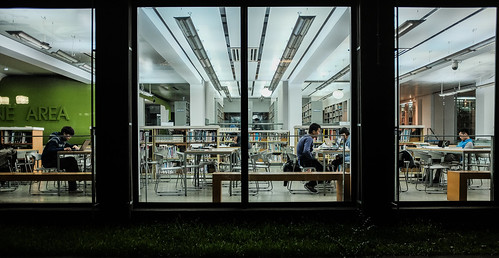
When I attend conferences and meetings it seems we're working with widely accepted concepts but as soon as I leave that intimate arena I get a reality check; most people have never even heard of MOOCs, open educational resources, open access and so on. Even students seem only to have limited experience of the vast range of online learning resources and open courses available.
The problem is that the people who use all these online resources are mostly those who are already well-educated and digitally literate. The often stated target group for open education, those who have so far been excluded from higher education due to financial, social or geographical barriers don't even know that it exists and even if they do they are often unable to take advantage of it. This is the theme of an article on Quartz, The Americans who’d benefit the most from online education have no idea it exists, that reports on a new Pew Research Center report (Lifelong learning and technology) on the use of the net in education.
This presents a paradox, the study’s author John Horrigan tells Quartz. The more rich and educated you are, the more technologically savvy you are, and the more you know how to use digital learning tools. While many low-income and low-education Americans would benefit from e-learning, they don’t have the income or education level to access it.
Despite the massive hype around MOOCs over the last 5-6 years only 5% of Americans are familiar with the concept. Even something as mainstream as distance learning is familiar to only 16%. Open education attempts to offer access to higher education to those previously excluded from it but they simply don't know these opportunities exist and even if they did they lack the skills to take advantage of it. Most Americans in the survey consider themselves as lifelong learners but learning is still strictly traditional in the form of adult education classes, reading books, joining clubs and training at work. Interest in learning is high but awareness of online learning is low, in stark contrast to a lot of Silicon Valley hype.
Of course it doesn't matter how learning occurs, the most important finding in the survey is that the majority of those questioned were involved in some form of learning. The question is why online learning has still not made the breakthrough in terms of mass uptake. Learning is available at a click wherever you are and whenever you want it but first you need to know how. The people surveyed go to local classes, read books, ask friends for advice and use trial and error to learn new skills and should of course continue to do so. However the vast opportunities for learning available through digital media would give them so many new opportunities that are totally impossible using traditional media. The breakthrough for online learning will come not through marketing and hyped news reporting but through local support and incentives through schools, libraries, community centres and other local institutions, helping people learn how to learn.
Saturday, March 15, 2014
Only connect ...


When do we learn? I suspect that despite the best efforts of our teachers and schools we don't usually learn when and where we should. Of course a well-designed course can lead you towards deeper insights, help you form your ideas and practice the concepts but that essential insight may not come as hoped. Learning comes when we least expect it. Suddenly you make that connection and it all makes sense; lying awake in bed, sitting on a train or out jogging. For many of us education can have a delayed reaction and it can take months or even years before you actually realise that you have learned something.
Today education is carefully planned with learning outcomes, assessment, tests and planned progression. We plan courses on the assumption that students learn together and develop at the same pace: after xx weeks you will be able to do X, Y and Z. Isn't that a rather optimistic notion given the widely differing aptitudes, levels of commitment, distraction levels and ambitions among the learners. Some will get it almost immediately whereas others will struggle for ages and may never really "get it". Some will pass their exams and graduate without fully learning. I must confess to falling into that category as a student. I studied hard and passed the exams but looking back I never really understood until years later. I saw my studies as work that had to be done so I concentrated on ticking the boxes as I'm sure millions still do today.
You can't learn according to plan and you can't plan that a diverse group of people learn the same things at the same time. No matter how well educators design courses the outcomes can vary widely. It may seem that all students have fulfilled the course objectives but each one will have done so in their own way and with a wide variety of interpretations. We can learn the facts and apply the theory as the course demands but the real understanding may not be there. Real learning happens when the conditions are right and we can't control this. Serendipitous learning.
Friday, September 27, 2013
Connected learners need connected teachers
Silvia Rosenthal Tolisano creates some excellent presentations and here's a new one dealing with the need for teachers to become globally connected. Read also her related blog post, Global learning - what do you mean?
It's a simple message but for some reason it is taking a long time to reach all parts of the education system. If students are going to succeed in a global knowledge society they need teachers who are able to guide them. Assuming that students are digital natives and don't need support with digital literacy is resigning responsibility. Using today's social media and net-based tools require very little, if any, technical expertise; often much simpler than using the average washing machine or TV set.
It's a simple message but for some reason it is taking a long time to reach all parts of the education system. If students are going to succeed in a global knowledge society they need teachers who are able to guide them. Assuming that students are digital natives and don't need support with digital literacy is resigning responsibility. Using today's social media and net-based tools require very little, if any, technical expertise; often much simpler than using the average washing machine or TV set.
We need to move away from seeing digital media as mysterious technology only for the initiated, to integrating them into education as natural communication tools. Maybe we need to stop calling it all technology because doing so gives many an escape clause: "I'm a teacher not a technician".
In the past when computers were deskbound and clumsy there were legitimate fears that students would be pacified in front of screens all day but today's "technology" is mobile and ubiquitous. Learning can take place anywhere rather than being confined to the classroom. But first we need to learn how to connect.
In the past when computers were deskbound and clumsy there were legitimate fears that students would be pacified in front of screens all day but today's "technology" is mobile and ubiquitous. Learning can take place anywhere rather than being confined to the classroom. But first we need to learn how to connect.
Saturday, July 27, 2013
Drowning in freedom

Today there is a vast range of free open courses and communities where you can learn just about anything; if you know how to take advantage of them. Although MOOCs and open learning offer new paths to learning for people who otherwise have no access to higher education there is still a high threshold for participation. You need a high level of digital literacy to find the courses, sign up and especially to participate. You need to be a proficient self-learner with high motivation and confidence in your ability to succeed. You need to be open to new methods and have a wide range of learning strategies. It's not surprising then that most MOOC participants already have a degree and are at home on the net. Even if we feel overwhelmed by the MOOC hype, out there in the "real" world few people have ever heard the term.
An excellent article by Keith Brennan in Hybrid Pedagogy examines how connectivism and MOOCs fail to support inexperienced learners and those with low self-esteem in education: In Connectivism, No One Can Hear You Scream: a Guide to Understanding the MOOC Novice. He identifies key factors for student success: self efficacy, cognitive load and prior knowledge. Self efficacy is the belief that you will succeed and this is essential in courses like MOOCs which lack the scaffolding and encouragement of more traditional courses. This belief is also essential for dealing successfully with the cognitive load, the volume of new information and assumed skills, the you are faced with in many online courses. Many MOOCs and connectivist courses assume a high level of prior knowledge, in particular when it comes to using social media and digital tools. If you lack these skills you will find such courses bewildering and there is a high probability that you will give up.
Inexperienced learners need lots of encouragement, feedback, guidance and quick support responses and these are generally missing in MOOCs (both c and x varieties). Of course there is plenty of peer support but I can imagine that even contributing to discussion forums can be daunting for inexperienced learners. Seeing peers succeed can be a motivating factor if you already have a positive attitude to your own ability but if not the sight of others succeeding where you feel confused can have a demotivating effect. Brennan gives a list of demotivating factors:
- Watching others succeed while you don't
- Too much information delivered in a chaotic environment (Twitter hashtags, blog feeds, RSS, discussion forums etc)
- Decentralisation of the learning process (too much choice, "drowning in freedom")
- Complex tasks with little or no guidance
All this can be stimulating for some but not everyone is comfortable with this level of freedom.
"Not everyone knows how to be a node. Not everyone is comfortable with the type of chaos Connectivism asserts. Not everyone is a part of the network. Not everyone is a self-directed learner with advanced metacognition. Not everyone is already sufficiently an expert to thrive in a free-form environment. Not everyone thinks well enough of their ability to thrive in an environment where you need to think well of your ability to thrive."
Courses need to have clear pre-course information of what skills you need to participate fully (maybe linking to pre-course training or courses that will teach you these skills) and a clear description of the kind of teaching and learning that the course will employ. The new learners that so many MOOCs claim to be aiming at need help to get on board and more help to keep them there. Self-service is great if you know what you want but confusing if you're used to being served.
"MOOCs are littered with the drowned, who want to participate, but see their sense of possibility get sucked under by an experience designed to, in part, ensure they sink."
Sunday, July 14, 2013
The MOOC debate reaches calmer waters

 by lanier67
“I don’t see the MOOC that I teach as a threat to traditional universities or to the discipline, rather just the opposite. It’s the sort of thing a public university should be doing: broadcasting its knowledge.”
This quote from Dr. Matt McGarrity of the University of Washington in an article on e-Learning Industry, University of Washington instructor dives into MOOC spotlight, sums up what I believe is the essence of the MOOC movement. Most universities are funded by public money, at least to some extent, and all have policies for outreach activities and involvement with the society they serve. Allowing the world access to the course material they use is part of this outreach and a way of showing the taxpayers what they're paying for. As I've written many times I don't think that MOOCs are so much a threat to education as an extremely welcome complement, offering new groups of students access to new paths for learning. These courses can have varying degrees of pedagogical innovation, some will work and others will flop, but they will make higher education more accessible than ever before, whether or not any credits are available from them.
Another quote in this interview with McGarrity that I liked was this one about the MOOC dropout rate:
We should be looking at how many students completed the course and focus on that rather than those who "dropped out". Many of the dropouts probably never even dropped in: they simple clicked on the enroll button and forgot about it. If 1,000 people complete the course that's pretty impressive and what happened to the other 4,000 is probably not so relevant. It certainly can't be compared with dropping out of a campus course that has cost you a lot of money and is a major life commitment - something has to be seriously wrong to drop out of a 4-year degree program.
It's good to read more and more realistic and thoughtful views on the whole MOOC movement. Maybe we're moving out of the initial hype phase.
Wednesday, June 26, 2013
Reclaim open learning


I've previously written about the need to refocus on real open learning again after being blinded by the glitter of the high profile xMOOCs for the past year or so. I don't mean we should dismiss them but instead see them as a development of the traditional educational model rather than something truly innovative and certainly not particularly open. Those of us who are interested in the development of open educational resources that are free to reuse and adapt and education that is truly open need to look beyond the mainstream MOOCs and find inspiration elsewhere.
Anya Kamenetz, author of DIY U and other works on open learning, wrote a good post in the Huffington post, Can We Move Beyond the MOOC to Reclaim Open Learning? about the need to let the MOOCs go their way and raise the profile of truly open and innovative learning. This learning is happening everywhere but receives little media coverage: in communities of practice, virtual worlds, forums, Twitter, social networks, wikis and so on. They also take place face-to-face wherever people can meet to discuss common interests. They are learner-initiated and create their own learning resources or make use of existing open educational resources and there are no formal credentials available.
Anya belongs to a group known as Reclaim open learning (#ReclaimOpen) which is a network of open learning supporters who wish to encourage more development and innovation in the field. Right now they're running an innovation contest to showcase best practice in open learning that has so far escaped the media spotlight but deserves support. The contest raises the following questions:
- What are independent learners and innovative teachers doing now that deserves support, recognition, and scaling up?
- How can colleges and universities engage with the social, participatory, and open learning ecology of the Internet in ways that go beyond making, using, or resisting xMOOCs?
- What kinds of infrastructures, policies, and business models can support more participatory and peer-based forms of post-secondary learning?
- What kind of programs and platforms could meld the grassroots capacity and peer-based learning of the net with the knowledge, expertise, and credibility of institutionalized research and education?
Saturday, December 15, 2012
A new layered model for education
 |
| CC BY-NC-SA Some rights reserved by Sanctu |
Once again the media is full of enthusiastic quotes from academic leaders and politicians praising this move as revolutionary and it certainly opens up new avenues in higher education particularly in light of the sharp rises in student fees in England and Wales over recent years. However, sometimes it feels as if online learning has only just been invented with the arrival of all the MOOCs of the past year and that there is now only one model in town. The diversity of online learning is seldom discussed and the fact that plenty excellent online education already takes place as part of established universities' regular portfolios. Does the advent of heavyweight MOOC consortia mean that participating universities will transfer existing online courses to the MOOC world and keep their core business of traditional campus teaching under their own roof?
Instead of seeing all this as some kind of conflict between the the old and the new I think we are seeing the establishment of universal access to education. There is an unprecedented global demand for education that schools and universities cannot ever hope to meet since the actual buildings of these institutions can only accommodate so many students. Even if we could build new institutions every week they could never hope to cope with the global demand for education. By making educational resources freely available on the net we can make education accessible to all even if there are major infrastructure problems in many countries. With the help of internet cafes, libraries, learning centres and smart mobiles educational resources can be accessed even by the millions without any hope of owning a computer or mobile.
What is now being established is a free basic layer offering universal access to learning resources and organised course models. This content is provided by institutions (such as the MOOC providers) as well as millions of teachers, students and experts who share their knowledge under Creative Commons licenses. On top of that foundation we can augment the free material with service layers such as teaching, tutoring, guidance, collaboration opportunities, quality assurance, assessment, feedback and examination. These services may be offered by one institution as in the traditional campus university or by various organisations and the student is able to pick and mix from many providers. These add-on layers will be organised in many ways: free, for-profit, high status, bundled, certified, professional, peer-driven etc.
The key is that the foundation layer is freely available for all. Some people will have the skills to learn in peer groups using this material with the simple goal for learning for the sheer sake of learning. Others will be willing to pay for extra tuition and many will be able to pay for examination and certification. There may be low-cost or free certification schemes such as open badges and there will be high status certification at a cost. Some will want the whole experience under one roof and will continue to attend campus universities since they provide all layers in one package and with credible credentials at the end. Others who cannot afford the campus university will need to find a package that suits their learning needs and their financial situation.
So maybe instead of seeing the present trends in open education as a disruptive we should see it all as the establishment of a new educational ecosystem with this layered model emerging. Where access to learning resources is a fundamental right but with many options for interacting and benefitting from them.
Tuesday, November 20, 2012
Teaching is about asking questions
Here's the latest in a long line of inspiration videos about how technology is changing education. It's called The future of learning, Networked society and has been created by Ericsson to show the benefits of a connected society but is completely free from any obvious commercial content. It features comments from well-known figures in the field such as Seth Godin and Sugata Mitra as well as focusing on platforms such as the adaptive learning platform Knewton and the MOOC consortium Coursera.
I would have liked them to mention more genuinely innovative educational initiatives such as the network-based MOOCs of Siemens, Downes and friends or the collaborative learning platform Peer 2 Peer University but films like this are very useful for raising awareness among coleagues and students. In particular I like Sugata Mitra's comments that teaching is about asking questions. Ask the right questions and let the students work out the answers by searching, collaborating and creating. Stimulate the students' curiosity and amazing things can happen.
I would have liked them to mention more genuinely innovative educational initiatives such as the network-based MOOCs of Siemens, Downes and friends or the collaborative learning platform Peer 2 Peer University but films like this are very useful for raising awareness among coleagues and students. In particular I like Sugata Mitra's comments that teaching is about asking questions. Ask the right questions and let the students work out the answers by searching, collaborating and creating. Stimulate the students' curiosity and amazing things can happen.
Saturday, April 21, 2012
Face-to-face meetings - think first
The classroom is still seen as a symbol for education; it's where teaching takes place and is the arena for input, discussion and practice. Classroom time is often viewed as the essential difference between a formal course and self-study and it is here that the teacher’s expertise is most clearly visible.

This model has become blurred by the use of the net in education. Input in the form of lectures or demonstrations can easily be recorded and made available whenever students want to view them. Discussions can take place in social networks, forums and learning management systems and students can collaborate on assignments using a variety of sharing tools. Despite these opportunities we still persist with a lot of classroom time that is essentially one-way traffic. Hundreds of years of tradition don’t just disappear overnight but an increasing amount of people in education are beginning to wonder what the real value of classroom time is.
This is the topic of a blog post by Clive Shepherd, Why face-to-face should be for special occasions. When we insist on students making the journey to campus (many of whom live miles away) we should do so for a very good reason. Of course events like lab sessions and other hands-on activities where students need to use special equipment and learn particular skills must be face to face (though they can be supplemented by online work such as virtual labs etc). For other activities Clive narrows the field down to two types that are best done face-to-face:
- Events that you would take the trouble to travel to because they may well turn out to be milestones in your life. An example would be a great speaker at a conference or a world-renowned teacher.
- Events for which the primary benefit is making and renewing contacts. Many conferences and classroom courses fit in this category.
Some lectures are so inspirational that they must be witnessed live but most are not and can be equally well delivered online with the added value that they can be reviewed at any time. Discussion seminars can also be stimulating and rewarding in class but can also be held online (synchronously or asynchronously) with the added value that quieter students get the chance to participate and the discussion can be deeper since everyone has more time to consider the issues.
As more and more students realize this they will question the need to attend classes that don’t provide added value. They can already access information, link up with experts around the world, form their own learning groups and collaborate so we’re going to need to sell the added value of classroom time in the near future. We need to start reviewing what the role of campus really is and make sure that class time is indeed unmissable.
Monday, January 30, 2012
2012 - the year of the MOOC?

The new venture for Udemy is called the Faculty Project. Here university teachers can make their own courses open to all, including video lectures, presentation material and texts. Students enroll for free and progress at their own rate through the material using a discussion forum for collaboration with other students and even with the teacher according to the information. The initial list of courses available covers a wide range of subject areas from Operations management to Ancient Greek Religion and this is planned to expand as rapidly as they can recruit new teachers. They promise to keep the courses freely available indefinitely.
Here's yet another example of people getting together to offer free education to a global audience. The course material itself can teach you a certain amount but by adding the input of a mentor/teacher and gathering students together into study groups using discussion forums or even better through all the other collaborative learning tools available today (eg VoiceThread, Skype, Google Docs, OpenStudy etc). Different students will learn different things; some will take the whole course, others will take selected parts. You learn what you need to learn.
There may not be any university credits on offer for all these open courses but tangible rewards may still be available. The open badges initiative that I have written about several times is gaining momentum and a new article in none other than the business establishment magazine Forbes highlights the potential of alternative credentials: Why Get a Pricey Diploma When Badges Tell Employers More? They see the potential of badges to harness the energy of informal learning but point rightly to concerns about validity and quality assurance. If these concerns are addressed a real power shift in education will take place:
"... once we find empirical ways to verify competency via accredited and ranked badge providers, not only might traditional education brands and their pals in the standardized test industry lose their monopoly on credentialing, but badges themselves might gain the widespread legitimacy they currently lack. If that happens, we will be a step closer to destroying the time-consuming, budget-busting, bubble-inducing myth that everyone must have a four-year college degree to succeed in America."
Tuesday, January 17, 2012
Next Generation University
New alternative paths towards higher education are opening up every month. The growth of open educational resources mean that the content for a course is freely available and does not need to be developed by the university or school. Collaborative learning means that students learn in groups and through their own personal learning networks. The missing ingredients in the mix are the teacher's role of facilitator/guide/mentor and role of examiner. Those elements do not necessarily have to be provided by the same institution and thus courses can be offered free of charge and based around a flexible and personalized infrastructure. Students of the future will be able to follow personalized learning paths following courses provided by a variety of providers, sometimes completely net-based, sometimes work-based and sometimes more traditional campus-based courses. In the end the student's e-portfolio can be presented to a university or accreditation institute for assessment and a degree can be awarded.

 by Kevin McShane
This model has been adopted by another player in the open education field called Next Generation University. NGU has dubbed itself "the world's first free university" though this seems a debatable issue since University of the People and Peer 2 Peer University have been active for the past two years. Information on the site is still rather sparse but the list of collaborators and funders is certainly impressive. They plan to start by offering a limited range of courses, mostly in health sciences.
"NextGenU's learning model builds on educational best practices, including using high-quality online learning materials (e.g., text, videos, images), interactive peer activities (e.g online chat rooms, and creating and assessing peer-generated case studies, images, and multiple choice questions), and hands-on mentored experiences (e.g., seeing and discussing patients). This model mirrors and expands on the traditional university experience through interacting with peers and experts in the field of study, while learning basic knowledge on one's own via online learning materials. It does not have active faculty involvement (that's part of how we can offer the trainings for free), though course creators, advisory committee members, and other experts will participate some in chat rooms."
Students work their way through the open course material and discuss and interact online. Every student is urged to recruit a mentor qualified in the subject being studied either in the student's geographic vicinity or online. These mentors receive mentoring guidelines from NGU and are then expected to offer guidance and be part of the assessment process. This process is a mix of self-assessment, peer assessment, mentor assessment and tests. At the end of a course the student should be able to offer a portfolio of work to a nearby university for assessment and hopefully credentials. In this way NGU does not need to provide any credentials but must make sure the students' work can be validated by a "regular" university.
I've already written several times about the OER university initiative which certainly seems more robust and sustainable than this one but whether or not NGU manages to take off it is clear that we're only at the start of an innovation wave in higher education and further initiatives in this direction are in the pipeline.
by Kevin McShaneThis model has been adopted by another player in the open education field called Next Generation University. NGU has dubbed itself "the world's first free university" though this seems a debatable issue since University of the People and Peer 2 Peer University have been active for the past two years. Information on the site is still rather sparse but the list of collaborators and funders is certainly impressive. They plan to start by offering a limited range of courses, mostly in health sciences.
"NextGenU's learning model builds on educational best practices, including using high-quality online learning materials (e.g., text, videos, images), interactive peer activities (e.g online chat rooms, and creating and assessing peer-generated case studies, images, and multiple choice questions), and hands-on mentored experiences (e.g., seeing and discussing patients). This model mirrors and expands on the traditional university experience through interacting with peers and experts in the field of study, while learning basic knowledge on one's own via online learning materials. It does not have active faculty involvement (that's part of how we can offer the trainings for free), though course creators, advisory committee members, and other experts will participate some in chat rooms."
Students work their way through the open course material and discuss and interact online. Every student is urged to recruit a mentor qualified in the subject being studied either in the student's geographic vicinity or online. These mentors receive mentoring guidelines from NGU and are then expected to offer guidance and be part of the assessment process. This process is a mix of self-assessment, peer assessment, mentor assessment and tests. At the end of a course the student should be able to offer a portfolio of work to a nearby university for assessment and hopefully credentials. In this way NGU does not need to provide any credentials but must make sure the students' work can be validated by a "regular" university.
I've already written several times about the OER university initiative which certainly seems more robust and sustainable than this one but whether or not NGU manages to take off it is clear that we're only at the start of an innovation wave in higher education and further initiatives in this direction are in the pipeline.
Wednesday, December 21, 2011
MIT up the stakes in open education
Open online courses at university level are gaining momentum. There are the MOOCs (Massive Open Online Courses) run by George Siemens, Stephen Downes, Dave Cormier and colleagues, a wide range of open courses facilitated by Peer 2 Peer University and now Stanford University's headline grabbing Artificial Intelligence course with over 50,000 students. They all offer exciting new arenas for collaborative learning and offer people a chance to participate in a stimulating and challenging learning environment. However none of them offer full university credentials - yet.
The free students on the Stanford course took the full course but were not eligible for university credits. Instead they received a certificate from the teachers but without the Stanford stamp of approval. P2PU are experimenting with badges as a means of acknowledging student achievement and this may well lead to new ways of giving credibility to informal learning. Several universities are experimenting with MOOCs but noone is putting their name on any grades.
Enter MIT. As pioneers of open educational resources MIT have been openly publishing their course material for several years now via the OpenCourseWare initiative and anyone can access it and work their way through the courses. However there has so far been no support from the university nor have there been any credentials on offer. This week came the announcement of the formation of a new online learning initiative called MITx (see article MIT launches online learning initiative). A range of courses are to be offered free via a new online interactive learning platform; the course material, virtual labs, assignments and study guides will all be available online and students study together as in many MOOCs. At the end those who pass will get an MITx certificate. It's not quite the real McCoy but the MIT name is there. They insist that assessment will be as rigorous as on the full campus version and the MITx certificates will not become short cuts to credentials. The full university experience is still number one for MIT but for many people MITx will be the next best thing. Plus you don't have to move to Boston to study.
It's part of a clear strategy to extend the global reach of MIT. According to MIT President Susan Hockfield:
“MIT has long believed that anyone in the world with the motivation and ability to engage MIT coursework should have the opportunity to attain the best MIT-based educational experience that Internet technology enables. OpenCourseWare’s great success signals high demand for MIT’s course content and propels us to advance beyond making content available. MIT now aspires to develop new approaches to online teaching.”
The learning software will be open and other educational institutions are free to develop their own versions. One aim of MITx may well be to use it as an experimentation area for new learning technologies and methods with students and other institutions contributing to development. One question that springs to mind is whether the MITx certificates will become more sought after than those from smaller universities. Is there a risk that the MITx label could in some places have more credibility than local certificates?
A two tier structure is emerging in higher education. The mainstream system with both campus and online courses and a parallell open system free to all but without the same level of tuition and support. The latter form is the university's contribution to global lifelong learning. This is the rationale behind another exciting initiative, the OER University, that is being launched by a partnership of 14 universities. The demand for higher education is growing so fast today that we simply can't build or staff enough universities to keep up. Offering these free open courses does not involve great costs to the university, does not compete with the core business but helps meet the global demand for higher education. Then of course there's a good helping of positive marketing for the university included in the deal.
Read more in an article in Inside Higher Ed, Advancing the open front.
The free students on the Stanford course took the full course but were not eligible for university credits. Instead they received a certificate from the teachers but without the Stanford stamp of approval. P2PU are experimenting with badges as a means of acknowledging student achievement and this may well lead to new ways of giving credibility to informal learning. Several universities are experimenting with MOOCs but noone is putting their name on any grades.


Enter MIT. As pioneers of open educational resources MIT have been openly publishing their course material for several years now via the OpenCourseWare initiative and anyone can access it and work their way through the courses. However there has so far been no support from the university nor have there been any credentials on offer. This week came the announcement of the formation of a new online learning initiative called MITx (see article MIT launches online learning initiative). A range of courses are to be offered free via a new online interactive learning platform; the course material, virtual labs, assignments and study guides will all be available online and students study together as in many MOOCs. At the end those who pass will get an MITx certificate. It's not quite the real McCoy but the MIT name is there. They insist that assessment will be as rigorous as on the full campus version and the MITx certificates will not become short cuts to credentials. The full university experience is still number one for MIT but for many people MITx will be the next best thing. Plus you don't have to move to Boston to study.
It's part of a clear strategy to extend the global reach of MIT. According to MIT President Susan Hockfield:
“MIT has long believed that anyone in the world with the motivation and ability to engage MIT coursework should have the opportunity to attain the best MIT-based educational experience that Internet technology enables. OpenCourseWare’s great success signals high demand for MIT’s course content and propels us to advance beyond making content available. MIT now aspires to develop new approaches to online teaching.”
The learning software will be open and other educational institutions are free to develop their own versions. One aim of MITx may well be to use it as an experimentation area for new learning technologies and methods with students and other institutions contributing to development. One question that springs to mind is whether the MITx certificates will become more sought after than those from smaller universities. Is there a risk that the MITx label could in some places have more credibility than local certificates?
A two tier structure is emerging in higher education. The mainstream system with both campus and online courses and a parallell open system free to all but without the same level of tuition and support. The latter form is the university's contribution to global lifelong learning. This is the rationale behind another exciting initiative, the OER University, that is being launched by a partnership of 14 universities. The demand for higher education is growing so fast today that we simply can't build or staff enough universities to keep up. Offering these free open courses does not involve great costs to the university, does not compete with the core business but helps meet the global demand for higher education. Then of course there's a good helping of positive marketing for the university included in the deal.
Read more in an article in Inside Higher Ed, Advancing the open front.
Wednesday, November 30, 2011
Changing campus
In a meeting this week I was presenting arguments for investing more in distance education. One objection was raised that if we have too many online courses we won't be able to fill our campus places and our classrooms won't be used so much. That's both right and wrong. On the one hand it's normally the case that online students study that way because they don't want to move to campus (because they are already established in their home town with family and career there) and therefore distance learning is not a threat to campus. On the other hand however it is a valid argument since as we move even campus courses online there may not be such a need for the classrooms and lecture halls.
The latter argument is well discussed by Tony Bates in an article Is online learning a waste of space? An increasing number of courses use blended learning (hybrid courses) where classroom teaching is combined with online discussion. Input (lectures) is recorded in advance and available on the net and much of the course's discussion and collaboration takes place in discussion groups and social networks. As more and more realize that there's little point in gathering students together simply for one-way communication there's more focus on using the classroom time as productively as possible. Not all campus students actually live on campus so when you demand that they gather there many have to travel across town or commute from the suburbs. You need to offer something really interactive to justify calling them all in. That means the classroom time will be more viewed more critically in the future and as a result there will be less need for classrooms, at least of the traditional design. There is also likely to be more focus on field work and project work in companies and organisations. The campus will not disappear but the infrastructure will certainly change over the next ten years.
As learning goes more online and as we realize that we can meet and discuss more flexibly, both physically and online, the use of campus floor space will radically change and some buildings may no longer be needed. This creates tension since the image of a university is so intimately tied to the campus buildings and environment. Venerable old buildings as well as shiny new ones are highly visible symbols of the university's academic status whereas a great virtual campus on the net does not attract such attention, even if it is likely to be more beneficial to students.
Bates wonders, therefore, if there are any studies on how online courses impact on campus infrastructure and whether any universities are planning accordingly.
"Also it means not looking at campus planning in isolation from plans for online learning. I don’t know of any institution that has tried to look at the costs and benefits of a move to online learning in this way (if so, please let me know!), but a more holistic approach to the planning of campuses and online learning could lead to improved efficiencies and even perhaps improvements in quality of the learning experience at the same time."
He concludes by asking the following questions and it will be interesting to see what answers come in:
1. Is the impact of online learning on physical space an issue that is appearing or has appeared on your campus? if so, how is it being handled?
2. Do you know of any study that has looked at the impact of online learning on campus facilities?
3. Is this a road worth travelling? Are the benefits likely to prove ephemeral or impossible to measure?

The latter argument is well discussed by Tony Bates in an article Is online learning a waste of space? An increasing number of courses use blended learning (hybrid courses) where classroom teaching is combined with online discussion. Input (lectures) is recorded in advance and available on the net and much of the course's discussion and collaboration takes place in discussion groups and social networks. As more and more realize that there's little point in gathering students together simply for one-way communication there's more focus on using the classroom time as productively as possible. Not all campus students actually live on campus so when you demand that they gather there many have to travel across town or commute from the suburbs. You need to offer something really interactive to justify calling them all in. That means the classroom time will be more viewed more critically in the future and as a result there will be less need for classrooms, at least of the traditional design. There is also likely to be more focus on field work and project work in companies and organisations. The campus will not disappear but the infrastructure will certainly change over the next ten years.
As learning goes more online and as we realize that we can meet and discuss more flexibly, both physically and online, the use of campus floor space will radically change and some buildings may no longer be needed. This creates tension since the image of a university is so intimately tied to the campus buildings and environment. Venerable old buildings as well as shiny new ones are highly visible symbols of the university's academic status whereas a great virtual campus on the net does not attract such attention, even if it is likely to be more beneficial to students.
Bates wonders, therefore, if there are any studies on how online courses impact on campus infrastructure and whether any universities are planning accordingly.
"Also it means not looking at campus planning in isolation from plans for online learning. I don’t know of any institution that has tried to look at the costs and benefits of a move to online learning in this way (if so, please let me know!), but a more holistic approach to the planning of campuses and online learning could lead to improved efficiencies and even perhaps improvements in quality of the learning experience at the same time."
He concludes by asking the following questions and it will be interesting to see what answers come in:
1. Is the impact of online learning on physical space an issue that is appearing or has appeared on your campus? if so, how is it being handled?
2. Do you know of any study that has looked at the impact of online learning on campus facilities?
3. Is this a road worth travelling? Are the benefits likely to prove ephemeral or impossible to measure?
Monday, October 10, 2011
Digital literacy for all
Most media focus is on the glitzy new devices rolling off the production lines at Apple, Samsung, Dell and company but we tend to forget that these are virtually impossible dreams for the vast majority of people in the world. Students and pupils in developing countries have no chance of affording an iPad, a Blackberry or a Kindle but they do need to lean the digital skills that will lead to qualified jobs in the future.
That's why it's good to know that there are companies producing affordable devices that may lack the bells and whistles of the market leaders but they provide people with a platform to learn. First there was the One laptop per child initiative that saw Uruguay become the first country in the world to provide laptops for all primary school children and several others have followed. Over 2 million pupils and teachers are now part of the global OLPC project. The low priced XO laptop has now spread to schoolchildren all over the world and is extremely simple, robust and energy-efficient. The laptops have been sent directly to countries' education ministries and have then been distributedto the schools just like textbooks. The result is that several developing countres have a far greater level of digitalisation in schools than many European countries (including Sweden).
There's more good news for affordable technology with the recent launch of an Indian tablet called Aakash (sky in Hindi) that has most of the features of the more famous touch-screen tablets but retailing at only $35-$50. Initial plans are to distribute 100,000 of these to selected university students over the next few months before rolling out fully. For most students this enables them to fully benefit from the educational resources available on the net in a country where standard devices are far beyond a student's allowance.
Watch a TV report on the Aakash tablet from Al-Jazeera.
Here's a report on the story from Newsy videos:
Watch India Unveils $35 Computer Tablet for Students in News | View More Free Videos Online at Veoh.com
That's why it's good to know that there are companies producing affordable devices that may lack the bells and whistles of the market leaders but they provide people with a platform to learn. First there was the One laptop per child initiative that saw Uruguay become the first country in the world to provide laptops for all primary school children and several others have followed. Over 2 million pupils and teachers are now part of the global OLPC project. The low priced XO laptop has now spread to schoolchildren all over the world and is extremely simple, robust and energy-efficient. The laptops have been sent directly to countries' education ministries and have then been distributedto the schools just like textbooks. The result is that several developing countres have a far greater level of digitalisation in schools than many European countries (including Sweden).

There's more good news for affordable technology with the recent launch of an Indian tablet called Aakash (sky in Hindi) that has most of the features of the more famous touch-screen tablets but retailing at only $35-$50. Initial plans are to distribute 100,000 of these to selected university students over the next few months before rolling out fully. For most students this enables them to fully benefit from the educational resources available on the net in a country where standard devices are far beyond a student's allowance.
Watch a TV report on the Aakash tablet from Al-Jazeera.
Here's a report on the story from Newsy videos:
Watch India Unveils $35 Computer Tablet for Students in News | View More Free Videos Online at Veoh.com
Wednesday, August 31, 2011
The Floating University
The concept of university is under review. Even if the term is strictly defined in most countries there are plenty of new educational arenas flying the university flag but not following the traditional definition. I've frequently discussed Peer 2 Peer University and University of the People in this blog and although they are not "real" universities, the name sets the tone and the level of the type of study they provide. Their courses are university level though they do not lead to recognized university credits (yet). Purists may protest and scoff but these are providing higher educational opportunities in interesting new ways to new groups of students and I would expect such alternative forms of higher education to increase in the near future.
A new variation on this theme is being tested this term. It's called simply The Floating University. The venture is described as:
"...a joint venture between The Jack Parker Corporation and Big Think, a knowledge forum where the world's top experts engage the thinking public to explore the big ideas and core skills defining the 21st century."
What they've done is to sign up a star-studded cast of academic elite and filmed a series of polished lectures where they give their overviews and thoughts on their various fields. The lectures are supplemented by notes, suggested reading, assignments and discussion forums and the result is a series of master class courses: a kind of academic All-star game. The first course is being launched right now and is called Great big ideas.
"Great Big Ideas delivers the key takeaways of an entire undergraduate education. It's a survey of twelve major fields delivered by their most important thinkers and practitioners. Each lecture explores the key questions in the field, lays out the methods for answering those inquiries and explains why the field matters. It is an effective introduction to thinking differently, and a primer in the diverse modes of problem solving essential for success in the 21st century."
Unlike the university alternatives mentioned earlier, the Floating University is not an example of open educational resources, nor is it free. Great big ideas costs $495 for the 12 lectures and study material. Individuals can enroll but the main idea is to provide ready-to-go courses for other universities to offer. I would imagine that those "real" universities can then provide their own teachers to guide students through the material but they would obviously not need to do any lecturing themselves.
The course is being offered as a regular campus option by three major universities: Harvard, Yale and Bard. One unique feature is having top harvard professors teaching a class at Yale and vice versa. I can imagine a future scenario where smaller universities around the world will offer Floating University courses where top academics provide the input but the local teachers provide the context and guide the students' discussions and reflection.
Is this a threat or opportunity or simply filling an innovative gap in the market? It's certainly a fascinating area to keep an eye on.
Have a look around the Floating University web site. There are plenty of films and sample lectures but since all are copyright I can't show them here.
A new variation on this theme is being tested this term. It's called simply The Floating University. The venture is described as:

"...a joint venture between The Jack Parker Corporation and Big Think, a knowledge forum where the world's top experts engage the thinking public to explore the big ideas and core skills defining the 21st century."
What they've done is to sign up a star-studded cast of academic elite and filmed a series of polished lectures where they give their overviews and thoughts on their various fields. The lectures are supplemented by notes, suggested reading, assignments and discussion forums and the result is a series of master class courses: a kind of academic All-star game. The first course is being launched right now and is called Great big ideas.
"Great Big Ideas delivers the key takeaways of an entire undergraduate education. It's a survey of twelve major fields delivered by their most important thinkers and practitioners. Each lecture explores the key questions in the field, lays out the methods for answering those inquiries and explains why the field matters. It is an effective introduction to thinking differently, and a primer in the diverse modes of problem solving essential for success in the 21st century."
Unlike the university alternatives mentioned earlier, the Floating University is not an example of open educational resources, nor is it free. Great big ideas costs $495 for the 12 lectures and study material. Individuals can enroll but the main idea is to provide ready-to-go courses for other universities to offer. I would imagine that those "real" universities can then provide their own teachers to guide students through the material but they would obviously not need to do any lecturing themselves.
The course is being offered as a regular campus option by three major universities: Harvard, Yale and Bard. One unique feature is having top harvard professors teaching a class at Yale and vice versa. I can imagine a future scenario where smaller universities around the world will offer Floating University courses where top academics provide the input but the local teachers provide the context and guide the students' discussions and reflection.
Is this a threat or opportunity or simply filling an innovative gap in the market? It's certainly a fascinating area to keep an eye on.
Have a look around the Floating University web site. There are plenty of films and sample lectures but since all are copyright I can't show them here.
Tuesday, August 30, 2011
Altered images
Augmented reality has still not broken through as an everyday technology but it's developing fast and I suspect that in the not too distant future it'll suddenly be everywhere. Here's the latest in a line of videos showing new applications for augmented reality and each time it seems to be moving closer to finding that soft spot for mass adoption.
I like the interaction between mobile and printed media giving newspapers, books, ads, billboards, signs and so on digital content and creating a bridge between the two media. Too often we see dramatic headlines that the digital world will make all printed media obsolete in the very near future. This causes understandable reactions of panic or denial ("over my dead body") and unnecessary conflict.
A lot of discussion about digitalisation is rather too radical; that new technology will sweep away all traces of the old methods. This often just leads to traditionalists digging in even deeper. Let's look at all these amazing new opportunities and see what we can do with them to make learning even more exciting. Some old ideas will fade away, some will be retained and others will be remodelled. Evolution is the name of the gamer.
Anyway have a look at this video from Junaio.
I like the interaction between mobile and printed media giving newspapers, books, ads, billboards, signs and so on digital content and creating a bridge between the two media. Too often we see dramatic headlines that the digital world will make all printed media obsolete in the very near future. This causes understandable reactions of panic or denial ("over my dead body") and unnecessary conflict.
A lot of discussion about digitalisation is rather too radical; that new technology will sweep away all traces of the old methods. This often just leads to traditionalists digging in even deeper. Let's look at all these amazing new opportunities and see what we can do with them to make learning even more exciting. Some old ideas will fade away, some will be retained and others will be remodelled. Evolution is the name of the gamer.
Anyway have a look at this video from Junaio.
Tuesday, August 9, 2011
Do it yourself university
Higher education is still a fairly exclusive commodity even if the number of students rises every year. In most countries it is still a major investment for a young student and many will take over 20 years to pay back the loan. In addition to that competition for places, especially at the top universities, is fierce. Millions of people are denied higher education because they can't afford it, can't move from home or are not able to meet the entry requirements.
With the wealth of open educational resources freely available today it is possible to put together your own education using the best resources and the methods that suit you. The material and information is all out there but it still requires a great deal of self-discipline, good study routines and a high level of digital literacy to fully benefit. There are plenty of courses available through innovative educational initiatives like Peer 2 Peer University, University of the People and the various MOOCs (Massive Open Online Courses) that a few universities are offering. However most of these courses assume that participants are already familiar with social media and comfortable using wikis, blogs, discussion forums and e-meeting tools.
Anya Kamenetz has written a guide book to DIY education, Edupunks, edupreneurs and the coming transformation of higher education that aims at providing inspiration and support to those who want to learn "off piste." She has also produced a shorter version, The Edupunk's guide to a DIY credential which is a step by step guide to taking control of your own learning and research using the tools and resources freely available on the net today.
EdupunksGuide Most of this DIY movement is completely off the radar of mainstream higher education and she sees the issue as the elephant in the room for universities today as she explains in this short video interview.
The Elephant on Campus | Anya Kamenetz clip #1 from Mind Twin Media on Vimeo.
There's a good summary of this issue on the excellent blog Innovative Educator, The Do It Yourself (DIY) Guide to Credentialing, with more links if you want to investigate more.
Guides like this are extremely valuable and the volume of informal learning taking place today is a growing but virtually invisible force in education today. However it still excludes many potential students who simply don't have the right level of digital literacy and will need lots of support and encouragement to get started. We need to link in libraries, learning centres and other adult education groups to support digital literacy projects and offer face-to-face guidance in the community to ensure that there is always an option available for everyone who needs education and training.
PS
I've just found Stephen Downes excellent practical guide to learning in the digital age, Access :: Future. Practical advice on how to learn and what to learn. (link to pdf)
With the wealth of open educational resources freely available today it is possible to put together your own education using the best resources and the methods that suit you. The material and information is all out there but it still requires a great deal of self-discipline, good study routines and a high level of digital literacy to fully benefit. There are plenty of courses available through innovative educational initiatives like Peer 2 Peer University, University of the People and the various MOOCs (Massive Open Online Courses) that a few universities are offering. However most of these courses assume that participants are already familiar with social media and comfortable using wikis, blogs, discussion forums and e-meeting tools.
Anya Kamenetz has written a guide book to DIY education, Edupunks, edupreneurs and the coming transformation of higher education that aims at providing inspiration and support to those who want to learn "off piste." She has also produced a shorter version, The Edupunk's guide to a DIY credential which is a step by step guide to taking control of your own learning and research using the tools and resources freely available on the net today.
EdupunksGuide Most of this DIY movement is completely off the radar of mainstream higher education and she sees the issue as the elephant in the room for universities today as she explains in this short video interview.
The Elephant on Campus | Anya Kamenetz clip #1 from Mind Twin Media on Vimeo.
There's a good summary of this issue on the excellent blog Innovative Educator, The Do It Yourself (DIY) Guide to Credentialing, with more links if you want to investigate more.
Guides like this are extremely valuable and the volume of informal learning taking place today is a growing but virtually invisible force in education today. However it still excludes many potential students who simply don't have the right level of digital literacy and will need lots of support and encouragement to get started. We need to link in libraries, learning centres and other adult education groups to support digital literacy projects and offer face-to-face guidance in the community to ensure that there is always an option available for everyone who needs education and training.
PS
I've just found Stephen Downes excellent practical guide to learning in the digital age, Access :: Future. Practical advice on how to learn and what to learn. (link to pdf)
Saturday, August 6, 2011
Brain drain
A favourite recurring theme of many tabloids and popular TV shows is the idea that digital technology is damaging our brains or making us stupid. Tales of obsessive gaming, gambling and social networking are seen as evidence of the perceived dangers of new technology rather than further examples of obsessive behaviour which has always been present in society. The real question is how to deal with obsessive behaviour in general (eating, drinking, drugs, gambling etc have always been around); the net just gives us new arenas for such tendencies.
We've always been wary of new technology that we see as being "unnatural" (simply because it's new). The well-known example of men with flags walking in front of the first railway locomotives to ensure that they could not go too fast is a clear parallell. After that there were several scientific papers that warned that our brains would not be able to cope with speeds of more than 30 mph and these fears continued as the speeds increased. I remember discussions in the sixties and seventies on the damage television was doing to children and scare stories of TV-addiction were not uncommon.
Many scare stories quote scientific reports and studies to back up their claims but is there any real scientific eveidence for these dangers? This is the subject of the following lecture by Dr Paul Howard-Jones, senior lecturer at the University of Bristol’s Graduate School of Education, who has written a report The impact of digital technologies on human well-being. He has sifted through 170 studies on the relationship between digital technology and its effect on how we think and learn and in this lecture he discusses some of the most common concerns about the net and sees if there is any scientific evidence to back up these fears.
The idea that the internet is "rewiring our brains" is actually true but not in a negaitive way. The brain is vey plastic and is constantly adapting to new stimuli.Children's brains are more plastic than adults' and exposure to the media-rich environment of the net stimulates new ways of thinking and can lead to new strategies for learning. One clear point in Dr Howard-Jones' lecture is that we need to provide better support for children, parents and teachers in how to use the net to stimulate learning and creativity.
One area of digital technology that is highlighted as having the greatest potential for learning and creativity is gaming. The lecture gives examples of research on how gaming stimulates more parts of the brain than other learning activities and there is good scientific evidence for the present trend of gamification in education. Discussion of gaming in the popular press today still focuses on some people's addictions to simple "shoot-em-up" games instead of the complex and immersive strategy games that are in fact mainstream and that are being increasingly used in corporate, military and even academic training.
The basic skills we use on the net are far from new; we read, write, communicate, watch films and listen to music. The net enables us to blend all these elements in new ways and allow new ways to collaborate and work. Instead of scare stories, bans and limitations we should be spending more time helping people to use our digital media in a responsible and mature manner.
Read more about this in an article by Tony Parkin, Fear of technology that can turn our brains to mush (Merlin John Online)
We've always been wary of new technology that we see as being "unnatural" (simply because it's new). The well-known example of men with flags walking in front of the first railway locomotives to ensure that they could not go too fast is a clear parallell. After that there were several scientific papers that warned that our brains would not be able to cope with speeds of more than 30 mph and these fears continued as the speeds increased. I remember discussions in the sixties and seventies on the damage television was doing to children and scare stories of TV-addiction were not uncommon.
Many scare stories quote scientific reports and studies to back up their claims but is there any real scientific eveidence for these dangers? This is the subject of the following lecture by Dr Paul Howard-Jones, senior lecturer at the University of Bristol’s Graduate School of Education, who has written a report The impact of digital technologies on human well-being. He has sifted through 170 studies on the relationship between digital technology and its effect on how we think and learn and in this lecture he discusses some of the most common concerns about the net and sees if there is any scientific evidence to back up these fears.
The idea that the internet is "rewiring our brains" is actually true but not in a negaitive way. The brain is vey plastic and is constantly adapting to new stimuli.Children's brains are more plastic than adults' and exposure to the media-rich environment of the net stimulates new ways of thinking and can lead to new strategies for learning. One clear point in Dr Howard-Jones' lecture is that we need to provide better support for children, parents and teachers in how to use the net to stimulate learning and creativity.
One area of digital technology that is highlighted as having the greatest potential for learning and creativity is gaming. The lecture gives examples of research on how gaming stimulates more parts of the brain than other learning activities and there is good scientific evidence for the present trend of gamification in education. Discussion of gaming in the popular press today still focuses on some people's addictions to simple "shoot-em-up" games instead of the complex and immersive strategy games that are in fact mainstream and that are being increasingly used in corporate, military and even academic training.
The basic skills we use on the net are far from new; we read, write, communicate, watch films and listen to music. The net enables us to blend all these elements in new ways and allow new ways to collaborate and work. Instead of scare stories, bans and limitations we should be spending more time helping people to use our digital media in a responsible and mature manner.
Read more about this in an article by Tony Parkin, Fear of technology that can turn our brains to mush (Merlin John Online)
Tuesday, June 28, 2011
Pandora's box
The announcement last week that the Brazilian government intends to make all learning resources created by state-employed teachers freely available under Creative Commons licences (see earlier post) was welcome and will hopefully be an inspiration to others. However it did tie in very well with the presentation I made at last week's EDEN conference in Dublin. Together with my colleague, Ebba Ossiannilsson from Lund University, we presented Opening Pandora's box - conclusions from a Swedish OER project (see presentation below). The full paper will hopefully be published in a special issue of EURODL (European Journal of Open, Distance and E-learning) in the near future.
The act of making learning resources freely available on the net and fostering a culture of sharing between institutions and teachers is a necessary step towards opening up education but it is only the beginning of a tough process. I see OER as Pandor's box and by opening the lid you let out a host of "demons" that all need to be addressed.
Using OER means you have to review the role of the teacher; from the traditional sage on the stage to a new and more challenging role of mentor/facilitator/guide/critical sounding board. That alone is a controversial and uncomfortable issue for many and once you accept it you then have to review the student's role and even that of the university/school. The university/school is no longer a silo of knowledge and resources - those are everywhere and ubiquitous. Why should we come to such institutions? Students must take much more responsibility for their own learning and adapt to collaborative learning. How do we assess such learning? How do we integrate informal and formal learning and find ways of assessing the value of all that is larnt outside the formal system?
Maybe one reason so many decision makers seem reluctant to embrace OER is that they realize the dangers of opening the lid. However isn't it better to take control of the process despite all the challenges than to hide behind tradition and risk the box exploding in your face in a few years time?
The act of making learning resources freely available on the net and fostering a culture of sharing between institutions and teachers is a necessary step towards opening up education but it is only the beginning of a tough process. I see OER as Pandor's box and by opening the lid you let out a host of "demons" that all need to be addressed.
Using OER means you have to review the role of the teacher; from the traditional sage on the stage to a new and more challenging role of mentor/facilitator/guide/critical sounding board. That alone is a controversial and uncomfortable issue for many and once you accept it you then have to review the student's role and even that of the university/school. The university/school is no longer a silo of knowledge and resources - those are everywhere and ubiquitous. Why should we come to such institutions? Students must take much more responsibility for their own learning and adapt to collaborative learning. How do we assess such learning? How do we integrate informal and formal learning and find ways of assessing the value of all that is larnt outside the formal system?
Maybe one reason so many decision makers seem reluctant to embrace OER is that they realize the dangers of opening the lid. However isn't it better to take control of the process despite all the challenges than to hide behind tradition and risk the box exploding in your face in a few years time?
Subscribe to:
Posts (Atom)