Showing posts with label PLE. Show all posts

Tuesday, August 5, 2014

Open and closed - students need to learn to handle both


Is there an inverse relation between the use of learning management systems (LMS) and social media in education? There does seem to be a certain conflict since they represent two very different types of learning environment for students. The LMS offers a secure all-inclusive enclosed arena with all services under one roof whereas social media offer a diverse, uncontrolled and highly personalised arena that the school/university has little influence over. The two would seem to be incompatible.

This question is discussed in an article by Michelle Pacansky-Brock, A Threat of Higher Ed's Love Affair with Closed-LMSs. She notes the paradox that the LMS culture is strongest in higher education, where you might expect more freedom and trust, whereas schools, who you would expect to strongly favour controlled environments, are in general more willing to experiment with social media. Schools are working much more with blogs, wikis, Facebook, Twitter, YouTube and many other social tools and there are numerous very active discussion groups for teachers on both Facebook and Google+. There are of course similar activities in higher education but I haven't found anything like as many. One concern is that by focusing on the protected LMS environment universities are not really preparing students for their future workplaces many of which are already driven by social media and where it is essential to know how to manage your digital identity and how to use social media responsibly.

One's digital footprint is an opportunity to do be one step ahead in life at graduation. And the continuous reliance on the closed-LMS environment continously constructs a mental model for faculty, instructional designers, administrators, all members of higher education that using social media is, in essence, the wrong thing to do. Moving forward, the mainstream use of closed LMS environments is creating yet another digital divide.

However I feel this simplifies the issue somewhat. While many companies use social media as an integral part of their operations they also have closed environments as well, such as project management tools and internal discussion boards. Students must learn to live in a digital working environment that mixes open and closed depending on the context. Most LMS today provide social media integration and students can move almost seamlessly between LMS functions and public tools and networks. The LMS is no longer the walled garden it is so often accused of being. As usual we shouldn't see this as an either/or issue but we have to learn to work in different environments using the best tools for each job. In an earlier post (LMS - from red giant to white dwarf?) I suggested that the LMS will evolve into a strong core service offering secure storage of student data, assessment and examination whilst discussion, reflection and collaboration take place outside the core in a variety of social media. Both in school and higher education students need to learn to handle both open and closed environments.

Monday, July 28, 2014

The trouble with acronyms

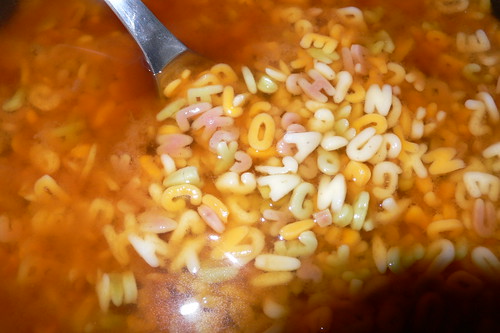
Alphabet miso. by revbean, on Flickr
Creative Commons Creative Commons Attribution-Noncommercial 2.0 Generic License  by revbean

Martin Weller has written a timely post wondering why we don't talk so much about PLEs (Personal Learning Environments) today compared with a couple of years ago, Why don’t we talk about PLEs anymore. PLE is all about using your own mix of digital tools (blogs, wikis, Twitter, Diigo, RSS-readers, Facebook, Flickr etc) rather than pre-packaged learning management systems like Moodle or Blackboard (also known as VLE or LMS!). Weller features a Google Trends graph showing a fall and then levelling off in search results for PLE over the last couple of years and speculates on possible reasons for this trend.

"...  you could argue that the PLE was a success, it made itself redundant as a term, which illustrates it reached penetration. For others you could argue it was maybe a case of academics inventing something that wasn’t really there. For me, I found it a useful way to think about these new tools and moving away from pre-packaged solutions, but that’s become second nature now."

There is of course still considerable discussion and research among the PLE community (see especially this year's PLE conference in Tallinn) but one reason for the fall off in PLE discussion could be that, like many other interesting edtech concepts, it has probably drowned in a sea of MOOCs. Although many students (but far from all) already use PLEs without knowing that there is a name for their practice, a large proportion of educators have simply not discovered the concept yet and are still grappling with trying to use the traditional learning management system in a meaningful way. I think that the term PLE has simply not moved out of the innermost circle of pioneers whereas the general concept is more widely used but without the acronym.

The trouble with acronyms is that they exclude, giving an unnecessarily complicated name to an often relatively simple concept. Whenever we start talking about PLE, VLE, LMS, MOOC etc we automatically alienate the people we would really like to influence. It all sounds far too technical and all those acronyms simply blur into each other. My own completely unscientific hunch is that when an acronym fades into obscurity only then can the concept become mainstream. As long as a concept is still in development and in the laboratory stage then it probably needs a snappy acronym but once it becomes common practice it's time to move away from the alphabet soup.

Saturday, January 28, 2012

Research on MOOCs and PLE

As interest increases in massive open online courses and personal learning environments I often get asked if there is any research into this field. Of course these concepts are still in their infancy but I was pleased to stumble across a blog post by researcher Rita Kop (National Research Council of Canada) called Research publications on Massive Open Online Courses and Personal Learning Environments. Since Rita is probably the most active researcher in this field the list has a lot of her papers but it's a good place to start as more researchers begin focusing on how these massive online courses function as well as how learners are building personal learning environments instead of relying on the standard learning management systems of most universities and colleges.

Sunday, September 11, 2011

Off-piste learning

Informal learning is becoming more organised (if that isn't a contradiction). If you want to learn something the net is full of free resources that can inform, inspire, instruct and provoke. There's no need to wait for someone to organise a course to attend, you just get started. Pick and choose from thousands of online lectures from the world's universities, read articles and open scientific journals, read blogs and participate in discussion groups. It's all out there but few people are able to really exploit these opportunities. Most people do not have the information literacy skills to find the material, make advanced searches, check the validity and so on. You also need to find others with similar interests who can support you and provide you with feedback. You need to find a network to help you learn.


So why not take a course in how to be a self-learner? This also sounds a bit contradictory but there are an increasing number of initiatives trying to help more people take charge of their informal learning by offering courses (albeit non-traditional courses) in how to do it yourself. Peer 2 Peer University has now teamed up with Anya Kamenetz, author of the book The Edupunk’s Guide to a DIY Credential to run an open and free course, DIY U: Getting started with self learning. It is due to run this autumn and I suspect there will be more of the same in the future. As with all P2PU courses it's very much student-driven and there's no traditional teacher up front to instruct. The course is divided into 4 main tasks: Write a personal learning plan, Build your personal learning network, Find a mentor, Demonstrate value to a network. These are the vital elements in being able to take charge of your own learning, whether it is for your career development or interest.

The phenomenon of Massive Open Online Courses (MOOCs) is another example of the meeting between formal and informal learning. Universities are arranging free and open courses without formal academic credits where students from all over the world can work through the tasks and collaborate around different themes. A hard core stay the full course whereas others are very active only on the tasks they feel most interested in. In addition there are always a large number of curious onlookers who don't really get involved but want to see what's happening. These "lurkers" are not a problem because many of them are just testing for future reference and may participate fully next time round. I know because I've been one!

Stephen Downes has now created a new site on how to run a MOOC, The MOOC Guide, with background, rationale, practice, examples and advice. This is very timely as more MOOCs are being launched and interest grows.I've only skimmed through the guide but it seems comprehensive and authoritative, as you would expect from one of the leading figures in open education today. Again these courses are all about building you learning network and developing it. Your network is not just a group of people who attend the same course for a few months, they will be there in the future too and your network will evolve and develop as you learn more.

Do it yourself education is not just about self study in front of your laptop. Learning requires communication and context. Doing it yourself means being able to build a network of people who can help you learn and who are also learning, though not necessarily the same things as you are. Defining what you want to learn, finding like-minded people and helping each other find material to discuss and work through are the skills that all schools and colleges should be teaching today.

Saturday, May 28, 2011

Textbooks - the end is nigh

Textbooks account for a major post in every student's budget but not for much longer. I've written many times on this theme and can find very few arguments in favour of keeping the printed tomes. Textbooks are first in line to go digital. Printed textbooks are always out of date (especially technology and science), cannot be updated without printing a new edition once a year and are very expensive investments considering their short sell-by date. Online resources can be updated daily and are subject to constant peer review. Just try and change a Wikipedia article and see how long your change lasts before being erased if you aren't able to provide references.

Textbooks (001/365) by timuiuc, on Flickr
Creative Commons Attribution-Noncommercial-No Derivative Works 2.0 Generic License  by  timuiuc 

There's an excellent post on the need for course literature to go fully online by David Warlick, Six reasons why textbooks should stop being textbooks. He argues the case for open source textbooks online which can be updated regularly and scrutinized by the most demanding of reviewers - the teachers who use the resources. He gives six convincing arguments for this development that can be briefly summed up as follows:
  • Technology exists already
  • There's a wealth of content already freely available
  • Plenty expertise available (ie teachers)
  • Communities are already in place
  • Learners should be part of the process
  • It's about developing literacy into the digital domain
 He's against the official approval stamp that authorities give traditionl textbooks since today's information society is too fluid to be able to decide that any particular book is approved for several years to come.

"Do textbooks, from the bookstore reflect today’s prevailing information environment? No! But do digital textbooks, that are stamped “Approved” by some government agency, reflect an increasingly dynamic information environment and rapidly changing world any better? I think not! Teachers should be collecting, evaluating, editing and assembling their own textbooks, because it requires them to practice and talk about the contemporary literacy skills of a digital and networked information landscape — in front of their learners."

Instead of publishers and authorities deciding what students shoul read the decision making is now delegated to the teachers and to an increasing extent the students and pupils. New literacy skills are essential for teachers and students to be able to collaborate on what reading (and other media) should be included in a course. This negotiation is a process that leads to a deeper understanding of the subject since all are involved in exploring the latest ideas and theories.

The potential of tools like OER Glue (mentioned in a previous post) points the way forward I think. Using freely available resources teachers and students can together collaborate on compiling course material and resources. The learning experience will be greatly enhanceddue to greater invilvement but before this can be realised we need a change in attitudes towards what we mean by education, teaching and learning. We need new attitudes towards collaboration and new literacies. That is the challenge facing education today. The future is waiting but how do we get there?

Monday, February 14, 2011

Digital toolbox


This screen shot shows my personal digital toolkit as it is today. I've used a simple and attractive tool called Symbaloo to create a one-page access to all the other web tools I use regularly. It's basically a more graphic presentation of bookmarks but the advantage is that I can sign in from any computer and immediately gain access to all the tools I need at work and home. By using this page and my Netvibes page (for RSS feeds) I have absolutely everything. This is my personal learning environment that I can change and adapt as necessary.

Interestingly one of these tiles leads to the learning management system that my university uses. The LMS has previously tried to incorporate lots of different tools under one roof but with this type of view the LMS becomes just one button on the student's panel. It's worth remembering this when designing complex university student protals; the whole concept may probably end up as just one button on the panel. The students have an awful lot of other tools and learning environments outside the university's world. The personl learning environment is here.